
-

Camouflage Camo Ripstop Military Uniform Fabric
This is Authentic Military Spec Camouflage.Lightweight polyester camouflage ripstop. Wide range of applications, including outdoor clothing, sportswear, sleeping bags, banners and banners.
Add to Inquiry -
TC 6535 Ripstop Camouflage Fabric
This light weight tc rip stop fabric is strong and durable .due to the cross hatch pattern of threads woven into the fabric.
Add to Inquiry -
This is a classic camouflage fabric with a lightweight CVC rip-stop. Tear-resistant, as the name suggests, tough and wear-resistant. It is perfect for lightweight bags, tents and temporary awnings
Add to Inquiry -
Woven Twill Fabric Camouflage Fabric
Competitive price with high quality- factory direct sale .Various choice- more than 500 kinds of colors for reference Promptly delivery-available sending in four large warehouses .
Add to Inquiry -
Digital Printed Camo Fabric for Military Uniform
Patriotic fans can express their solidarity for the armed forces, using the sleek Licensed Military Cotton Fabric 44 for apparel or home decor projects.
Add to Inquiry -
Thickened Pure Cotton Canvas Fabric Heavy Duty Backpack Material
Customization: Min. Order: 5000Meter/Meters. Material: TC65/35. Feature: Waterproof, flame-retardant. Type: Fabric. Color: Customized Camouflage. Age Group:Adults.
Add to Inquiry -
Greek military camouflage fabric
Customization: Min. Order: 5000Meter/Meters. Material: 80% Polyester 20% Cotton. Feature: waterproof, Breathable, Rip-Stop. Type: Fabric. Color: Customized Camouflage. Age Group:Adults.
Add to Inquiry


What is Camouflage Fabric?
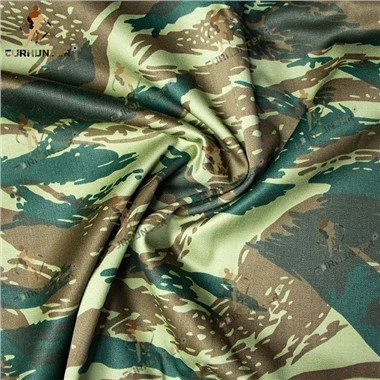
Camouflage fabric is a type of textile that is designed to blend in with outdoor environments, such as forests, jungles, or deserts. It typically features a pattern of irregular spots or patches in shades of green, brown, and tan, which mimic the natural colors and textures of vegetation and terrain. This type of fabric is commonly used in clothing and gear for outdoor activities, military uniforms, and hunting apparel.
Advantages of Camouflage Fabric
Dirtproof
To an extent, camouflage fabric doesn't get dirty or at least doesn't seem dirty due to their signature design patterns. Military use of these fabrics is done to keep the dirt out and make soldiers invisible to enemies when out in the open. Even casual camouflage clothing doesn't need a wash very often, and it can be worn a significant number of times before laundering. The stitching also makes it comfortable and doesn't let any odor set into it.
Always in Trend
Mossy oak camo clothes are always in fashion as they go with anything and everything. Formal wears have blazers and shirts, causal has Capri, hats, and t-shirts, in the sportswear section we have leggings and gym clothes. The anti-dirt and debris property transitions quite smoothly across fashion choices.
Military Background
People with a military background like to wear camouflage fabric every chance they get. It feels like a sense of pride and accomplishment and serves as a reminder of their service to their country. The super stealth-based design of a military camo suit is different from its casual counterparts. It's designed in such a way that the outline of a person is completely hidden within a tree line or during crawl combat situations.
Durable and Restorable
The advantages of camouflage fabric don't seem to run out. The stitching and matte-based texture of these fabrics make them ultra-durable and also restorable. These days, we have developed a self-healing fabric, which, when incorporated with a camo texture, makes an ultimate, one-of-a-kind product that makes the wearer feel invincible.
Types of Camouflage Fabric
Camo Bullet Fabric
Bullet fabric, also known as Bullet Liverpool fabric, is a unique medium-weight fabric featuring a durable and smooth texture on one side and an interesting bullet texture on the other. It is a knit fabric made from a blend of spandex and polyester. Though the percentage of spandex in the bullet fabric is usually only 4 to 5%, it gives the fabric a two-way stretch, and when pulled, it easily reverts to its earlier form without getting stretched out. Mostly known for its sturdiness, structural soundness, and integrity, bullet fabric is used for making apparel like jackets, shirts, skirts, dresses, blouses, and other such garments. Its versatility also makes it ideal for making accessories and household items.
Camouflage Techno Fabric
Technical fabric is a breathable fabric made from a blend of polyester. Made to be stretchy, lightweight, abrasion resistant, and waterproof, the fabric has a wide range of uses and applications, including industrial and military apparel. Generally made from polyester with a blend of spandex, techno fabric is a textured knit or woven fabric with stretch and is heavyweight. It is made from cutting-edge textile technology, whereby comfort, workability, and durability are the priority. Fiber is twisted to make yarns which are then knitted or woven to form a durable and soft fabric. Techno fabric comes in a variety of patterns, including geometric, abstract, and camouflage. Camouflage techno fabric comes in various color combinations and patterns and is used to make different kinds of apparel, shoes, or for household items.
Camo Melton Fabric
Named after Melton Mowbray, a town in England, Melton fabric is a heavily milled, tightly woven woolen fabric, and its texture and thickness can be compared to boiled wool. Generally, Melton fabric is made with a blend of polyester, cotton, or viscose, giving it a smooth surface with a warm feel. It is used for making warm apparel and stylish winter accessories like handbags, belts, scarves, or hats and is also used for making warm bedding and upholstery. Since earlier times, Camo Melton fabric has been used for making trousers, waistcoats, and military coats for use in cold weather to provide warmth and protection against wind and chilly weather. Today the use of this fabric in various camouflage prints for making coats, suits, and heavy weights jackets is quite popular.
Uniforms
The purpose of the uniform is not only to conceal and protect each soldier, but also to distinguish friend from foe. Camouflage uniforms must be produced and supplied to a big number of soldiers. Camouflage uniform design entails balancing camouflaging effect, recognisability, cost, and manufacturability. Armies serving in different theatres of operations may require distinct camouflage uniforms. Camouflage suits for temperate/jungle and desert environments are widespread. Patterns can be applied to varied landscapes to some extent by attaching pieces of vegetation to the uniform. Helmets are frequently covered with netting, and some jackets include little loops for the same purpose.
Ballistic Protection
It is critical to shield soldiers from bullets and other projectiles such as sharpnels, metal fragments, and flying debris of varying sizes, shapes, and velocity. Textile body armour may provide some protection against this. The manufacture of high strength fibres has advanced at a breakneck pace. Currently, aromatic polyamide fibres, provide ballistic protection and are available in a variety of decitexes and finishes. For this aim, a variety of ultra-high modules polyethylene fibres have been produced.
Tented Structures
Tents are made in the military to provide shelter in extreme cold conditions. To keep wetness at bay, the tent is stitched with a rubberized sheet at the base level. On one side, it is olive green, while on the other, it is white. As a result, it serves as the goal of camouflage in various scenarios. Camouflage cloth is used in this instance. The primary rationale for using camouflage textiles to build tents is that they blend in with nature and cannot be identified by enemies.
Military Bags
A military backpack, also known as a MOLLE (Modular Lightweight Load Carrying Equipment), is specifically intended to allow a soldier to modify the quantity of equipment he or she carries. The contents of a MOLLE are comparable to those carried by a backpacker, although they differ depending on the soldier's location, the length of the assignment, and the soldier's objective.
Tarpaulin
Camouflage tarps have several advantages. It is quite simple to install, and it provides great protection against inclement weather and inquisitive eyes. Their applications are comparable to those of military nets, although they have extremely distinct properties. The camouflage military tarpaulin is created from materials that dry rapidly, allowing it to be stored swiftly when needed. The camouflage cover is light and not bulky in nature. It is simple to attach to any form of support, whether natural or made for this purpose. Tarpaulins are made to be tough and resistant in nature, for military purposes, so that they can be safely protected.
The Ways for Creating Camouflage Fabric

01.The pH shifts
02.Changes in the oxidation state
03.Bond formation/breakage
04.Mechanochromism
05.Effects of electric or magnetic fields
Environmental Mimicry
Let's say you're standing in front of a tree. To conceal yourself from an enemy intent on spotting you, you could simply step behind the tree. While that would prevent detection by your foe, the problem with hiding behind a tree is it costs you the ability to surveil the enemy for however long you remain in that position. Contrarily, the easiest way to maintain eyes on the bad guys is to continue standing in front of the tree. However, you won't be easily seen there if the camouflage you're wearing consists of variously-sized and shaded shapes that, from a distance, look identical to those of the tree's bark, branches, and leaves.
Colour Replication
It's not enough to mimic the shapes of the environment. Camouflage must also accurately depict the locality's colours. For example, even if the shapes perfectly imitate those of a tree, that won't matter if the tree is a blend of brown, green, and black but the predominant colour of the camouflage is tan. Consequently, it is vital that the camouflage correctly replicate the colours encountered in your theatre of operations.
Eye-Brain Signal Interference
As enemy eyes search for you, the pictures produced by those optical organs are fed to the brain where they undergo a process of interpretation. Without camouflage, the enemy's brain will readily recognise your distant outline or silhouette as that of a human and not that of, say, a tree. By the opposite token, with camouflage your body won't be easily recognised for what it is because the brain is prevented from properly interpreting information uploaded from the eyes. However, eye-brain signal disruption is most pronounced when environmental mimicry and colour replication are optimised.

How to Tell Whether Camouflage Fabric Can Withstand A Harsh Environment?
Moisture and Mildew
One of the top priorities is to make sure the camouflage fabric is waterproof and mildew resistant. If moisture is allowed to seep into the fabric when out in the field, it can quickly lead to the growth of harmful mildew. Choosing fabrics that are constructed with fibers that inherently resist mold, such as petrolatum or polyethylene based fibers, rather than those made with natural cellulose and protein fibers, fosters an environment which doesn't encourage mold or bacterial growth.
Extreme Heat & Flames
Camouflage fabrics that meet this standard have undergone strenuous testing so you can be assured that should the occasion arise, the fabric will perform as required. High-quality military fabrics, such as those mentioned above, won't need to compromise their flexibility or durability standards in order to withstand the heat they are asked to perform under.
UV Light
Prolonged exposure to ultraviolet light and radiation is a common but serious source of damage to military fabrics. Extended time under the sun's harmful rays can lead to cracking and eventual disintegration of the material. The first, and most obvious warning sign of ultraviolet degradation is discoloration. UV resistant materials are able to absorb and disperse potentially harmful rays from not only damaging and weakening the fabric, but the skin of the person wearing the camouflage fabric uniform as well.
Abrasion & Tearing
The most visible testament to military fabric durability is its ability to withstand abrasion and tearing. Fabrics produced with knitted, or woven polyester scrims yield an extremely high resistance to tearing. Not only does the makeup of these kinds of fabrics help reduce tearing, but they increase flexibility and make them easier to use and wear. If the fabric is made into uniforms, something required to stretch and bend easily, then knitted polyester scrims are perfect for the job.

Since the use of camouflage fabric has become so widespread, it is now available in a variety of materials, colors, prints, and textures. It hence can be used to make various kinds of camouflage clothing. The fabric is made by weaving together various colored threads to form a pattern replicating the natural surroundings.
The overall process of making the camouflage fabric employs intricate weaving, dyeing, and finishing procedures, which results in the creation of hundreds of different types of patterns in various colors and shades.
Therefore whether you need it to make clothing or need camouflage fabric for quilting or making other home accessories, you will be presented with a wide variety of colors, shades, patterns, and materials to choose from. For instance, if you need the fabric for quilting, you can even opt for bright, colorful color schemes instead of the conventional brown and green hues that are signature camouflage colors.
Similarly, when it comes to clothing, besides the variety of colors and patterns, you may also have to choose the material when acquiring camouflage fabric. While the main idea is to choose colors and patterns that will help you blend in with the environment where you will be wearing the fabric, you must also choose a fabric type depending on the kind of garment you want to make.
Maintenance Tips for Camouflage Fabric
Know Your Camouflage Fabrics
Before diving into camouflage fabric care, it's important to understand the different types of camouflage fabrics you're working with. Fabrics can vary significantly in terms of fiber content and construction, so be sure to check labels for care instructions.
Regularly Check for Stains
Stains can set in if left untreated. As soon as you notice a stain, deal with it promptly. Blot rather than rub, and use appropriate stain removers based on the type of stain and fabric.
Gentle Washing
When it comes to washing your fabrics, opt for a gentle cycle with cold water. Using cold water helps prevent color fading and fabric damage. Hand-washing is ideal for delicate fabrics such as silk or lace.
Use the Right Detergent
Choose a mild, pH-balanced detergent to avoid damaging camouflage fabrics. Avoid bleach, as it can weaken fabrics and cause discoloration.
Separate Colors
Sort camouflage fabrics by color to prevent color bleeding. Washing dark and light camouflage fabrics together can lead to color transfer, potentially ruining your pieces.
Avoid Overcrowding
Overcrowding the washing machine can lead to camouflage fabric abrasion and insufficient cleaning. Allow camouflage fabrics to move freely to ensure they are cleaned properly.
Use a Gentle Spin Cycle
Opt for a slower, gentler spin cycle to reduce stress on camouflage fabric fibers. High-speed spinning can lead to wrinkles and damage.
Dry with Care
Hang dry or use the lowest heat setting on your dryer when appropriate. Overheating camouflage fabrics can lead to shrinkage, weakening of fibers, and wrinkling. Air-drying in the shade can help preserve colors and camouflage fabric integrity.
Iron at the Right Temperature
When ironing your fabrics, be sure to set the iron to the appropriate temperature based on the fabric type. Always iron inside out or with a pressing cloth to avoid direct contact between the iron and the fabric.
Store Fabrics Properly
To prevent dust, moisture, and potential damage, store your fabrics in a cool, dry place. Using fabric bins or acid-free tissue paper can help maintain their quality over time.
Avoid Prolonged Sun Exposure
Direct sunlight can cause fading and damage to camouflage fabrics over time. If you're displaying your fabrics, consider using UV-protective window coverings.
Follow Care Labels
Manufacturers often provide care labels with specific instructions. Following these guidelines can significantly extend the life of your camouflage fabrics.
Certifications

Our Factory

Ultimate FAQ Guide to Security Uniform
We're well-known as one of the leading camouflage fabric manufacturers and suppliers in China. We warmly welcome you to buy or wholesale bulk customized camouflage fabric made in China here from our factory. Contact us for more cheap products.
digital printed camo fabric for military uniform, woven twill fabric camouflage fabric, high quality cvc ripstop camouflage fabric