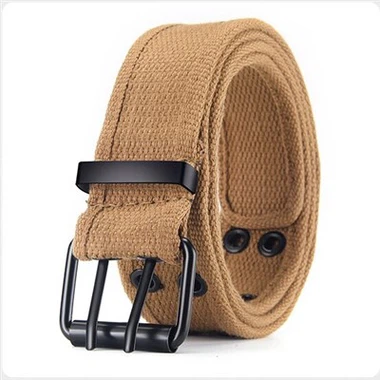



Police Law Enforcement Security Duty Belt With Gear
MOQ:200.
Shipping Port:ANY PORT IN CHINA.
Customize:Support OEM/ODM.
10 in 1 police Tactical belt Security Guard Belt,Versatile Military Modular Equipment System Molded Duty Belt Set for Law Enforcement.
Description
product parameters
| Products name |
Tactical Security Duty Belt with 10 Accessories/Police Duty Belt Accessories |
| Products material | Oxford fabric |
| Length | The total length of the belt is 1.4 meters and the width is 5 centimeters. |
| Fastener | High-strength fastener. |
| Set | Keychain / Tonfa holder / Belt / Double magazine pouch / Rope bag / Camera bag / Water spray bag / Flashlight bag / Handcuff bag / Pistol holster. |

Multi-function belt to carry gear
weapon-related equipment
Holster: This is a commonly used mounting equipment for law enforcement officers and military personnel. The design of the holster can ensure that the pistol is firmly placed in it for convenient and quick drawing. For example, a common quick-draw holster, through special fixed structure and angle design, enables the user to quickly draw the pistol with one hand in an emergency for response.
Magazine pouch: Used to store spare magazines for pistols or other small firearms. Generally, there will be multiple magazine pouches distributed around the belt. Its size and shape are designed according to the specifications of the magazine. For example, the size of a 9mm pistol magazine pouch will be different from that of a 5.56mm rifle magazine pouch to fit different magazines and facilitate quick magazine replacement to ensure the continuity of firepower.
Knife mounting sheath: Such as a sheath for a tactical dagger or multi-functional knife. Knives are very useful in wilderness survival, close combat, or emergency situations. These knife mounting sheaths can firmly fix the knife, and some also have the function of quick extraction, so that the knife can be quickly taken out when needed.
Communication Equipment
Walkie-talkie pouch: Walkie-talkies are essential tools for teamwork and communication. The walkie-talkie pouch can protect the walkie-talkie from collisions and scratches. At the same time, its size and shape are just right for placing the walkie-talkie. And the mouth of the pouch usually has a certain fastening design, such as Velcro or snap buttons, to prevent the walkie-talkie from accidentally falling.
Mobile phone pouch (in scenarios where mobile phones are allowed): In some non-combat but still communication-requiring scenarios, such as outdoor adventure rescue or police liaison and other scenarios, the mobile phone pouch can conveniently hold mobile phones. The inside of the mobile phone pouch may have some compartments or cushioning materials to protect the mobile phone screen and body.
First aid and survival equipment
First aid kit: It contains basic first aid supplies such as bandages, disinfectant cotton balls, band-aids, tourniquets, etc. It can be used for emergency wound treatment in case of injury. The first aid kit is generally designed to be small and lightweight for easy attachment to the belt for immediate access.
Survival whistle: When lost in the wild or in dangerous situations, the survival whistle can emit a sharp sound for rescue or signal communication with teammates. It is small in size and usually has a special small hook or sleeve for attachment to the belt.
Small compass: For outdoor explorers, a small compass is an important tool for identifying directions. It can help users determine their position without electronic device signals and is generally attached at a convenient location for viewing.
Other Tools
Multi-function pliers bag: The multi-function pliers contain various tools such as pliers, screwdrivers, saws, etc., which are very practical in scenarios such as wilderness survival and equipment maintenance. The pliers bag can well store the pliers and is convenient for extraction and use.
Lighting tool bag: Used for placing flashlights or headlamps. In nighttime operations or in dimly lit environments, lighting tools are essential. The design of the lighting tool bag can avoid blocking the light and is convenient for users to quickly turn on or off lighting equipment.
Handcuff bag (for law enforcement personnel): Convenient for carrying handcuffs and used to control criminal suspects. The handcuff bag usually has a quick-draw design and can firmly fix the handcuffs to prevent them from falling during operations.
Military Belt Detail

Velcro + Snap Button Display
One side has snap buttons and Velcro to fix the webbing, which is used for combining and fixing with other tactical backpacks.

Display of the back of the waist pack
The fixing straps on the back of the main pack of the waist pack are relatively tight, so it fits closely to the body when worn and won't turn outward.

1680D material
It is made of high-quality Oxford fabric which is quite remarkable.

The layout is compact and practical
With a compact layout of storage compartments, it can efficiently store all kinds of personal treasures and make them "hard to lose".

Sturdy buckles
The buckles are made of plastic, not ordinary material but high-grade polyethylene material. They are sturdy, durable for fastening, and elastic.
Best Selling

Digital Camouflage

Army Green

Jungle Camouflage

Kahki
How to clean and maintain a tactical belt? --Cleaning method
General stain cleaning
For dust, dirt and other stains on the tactical belt, first, a clean soft brush can be used to gently brush off the dust and debris on the surface. For example, after coming back from outdoor exploration, there may be some dust and small particles on the belt. Using a soft brush can easily remove these impurities.
If it is a light stain, such as sweat stains, a small amount of oil stains, etc., a mild detergent can be used for cleaning. Drop a small amount of neutral detergent (such as hand sanitizer without strong decontamination ingredients or professional fabric detergent) into warm water, then dip a clean soft cloth in the solution and gently wipe the stained area of the belt. Note that do not let the belt soak in water for a long time to avoid damaging the internal structure and material.
Treatment of stubborn stains
When there are stubborn stains on the tactical belt, such as dried paint, a large amount of oil stain or bloodstain, special detergents can be used. For example, for oil stains, detergents containing organic solvents can be selected, but first test on an inconspicuous small corner of the belt to ensure that it will not cause damage to the color and material of the belt.
If it is stained with paint, paint thinner can be used, but also operate with caution. After using these strong detergents, wipe off the detergent with a clean wet cloth as soon as possible, then rinse with clean water, and finally let the belt air dry naturally.
How to clean and maintain a tactical belt? --Maintenance points
Avoid excessive use and damage
In daily use, try to avoid making the tactical belt bear a weight exceeding its design load. For example, do not hang too many and overly heavy equipment on the belt to prevent the belt from deforming or the buckles from being damaged. If you need to hang heavier items, such as large radio equipment, ensure that the carrying capacity of the belt is sufficient and the weight is evenly distributed.
Avoid contact between the belt and sharp objects to prevent scratches. During outdoor activities, pay attention to preventing the belt from being cut by sharp objects such as branches and rocks. When passing through thorny bushes or complex terrain, you can check the route in advance or use other protective measures (such as wrapping the belt part with clothing) to protect the belt.
Regular inspection and maintenance
Regularly check whether the buckle of the belt is working properly. Check whether the opening and closing of the metal buckle is smooth and whether the spring device is effective. For example, the buckle can be checked once a week to ensure that the belt can be unfastened and fastened smoothly in an emergency.
Check whether the stitching part of the belt is loose or has broken threads. If there is a problem with the stitching, repair it in time. You can use thread of the same material as the belt for stitching. At the same time, also check whether the mounting points of the belt (such as hanging rings, fixed points of bags, etc.) are firm. If there is looseness, strengthen it in time.
Notes on storage environment
Tactical belts should be stored in a dry and well-ventilated environment. Avoid placing the belt in damp places such as basements or near bathrooms to prevent mildew and rusting of metal parts. The belt can be placed in a special equipment storage bag or a dry drawer.
Before storage, make sure the belt is clean and dry. If the belt is wet, it must be dried before storage. And avoid prolonged exposure of the belt to direct sunlight, as ultraviolet rays may cause fading of the belt's color and aging of the material.
Hot Tags: police law enforcement security duty belt with gear, China police law enforcement security duty belt with gear manufacturers, suppliers, factory, police nylon security tactical duty belt, high quality tactical security nylon belt with holsters, army combat military webbing belt, tactical belt, high quality tactical belt, high quality police nylon security tactical duty belt