

Are there tactical belts made from vegan materials?
Oct 01, 2026
 If you're a tactical gear enthusiast, security professional, or military vet, you probably know that a good belt isn't just an accessory-it's a workhorse. I've run tactical gear business for over 8 years, and one question I get asked at least once a week is: "Are there tactical belts made from vegan materials?" The short answer is yes, but there's way more to unpack than just "yes" when it comes to balancing tactical performance with ethical choices. Let me break this down, share what we've built at our shop, and clear up the confusion around vegan tactical gear.
First, let's get one thing straight: vegan doesn't mean weak or cheap. A lot of people mistakenly think vegan materials are softer, less durable, or only good for casual wear-but that's a myth we've been busting for years. Tactical belts need to hold up to heavy gear (think handcuffs, radios, batons, or extra mags), withstand harsh weather, and stay comfortable during 12+ hour shifts or multi-day missions. So when we talk vegan tactical belts, we're not just swapping leather for a random synthetic-we're using materials that meet or exceed the same military and law enforcement specs as traditional gear.
Let's start with what vegan tactical belts are made of, because that's the core of this question. The most common vegan material for tactical belts is nylon webbing, but not just any nylon-it's heavy-duty, reinforced, and treated for water resistance and UV protection. Wait, I know what some of you are thinking: nylon's been around forever, but is it actually suitable for tactical use? Let's compare that to the traditional alternative, which is leather. Leather belts have been the go-to for duty gear for decades, but they have big downsides for vegans and even non-vegans: they're made from animal hides, they can crack or stiffen in extreme heat or cold, and they require regular conditioning to stay usable. Vegan tactical belt materials skip all that.
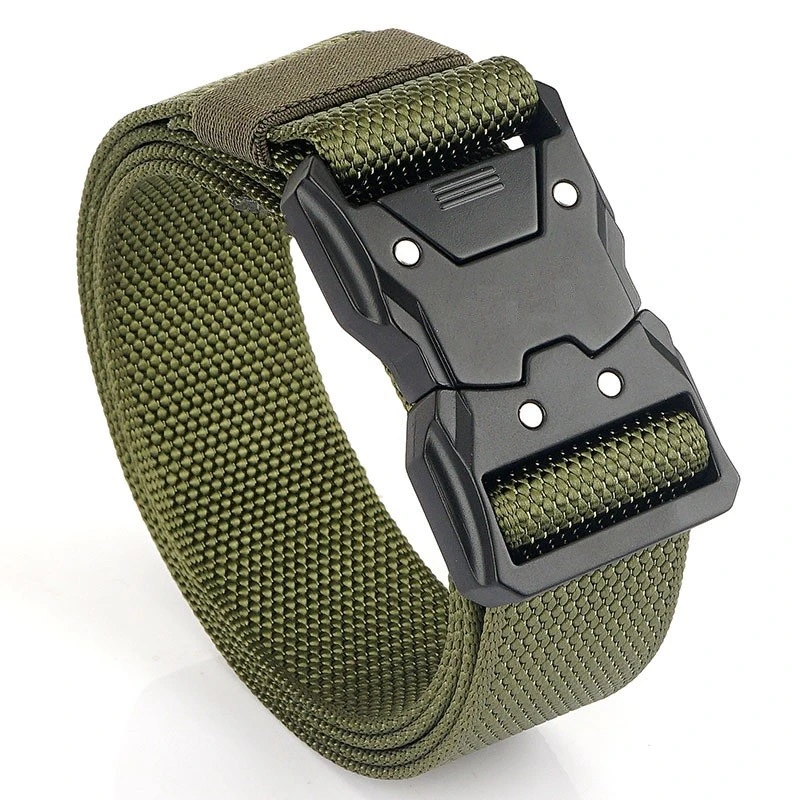
At our shop, we've tested dozens of vegan belt materials, and the best ones are 100% animal-free, often recycled (which is a bonus for eco-conscious users), and tough enough for the field. For example, our Police Nylon Security Tactical Duty Belt is a perfect example of this. It's made from 1.5-inch wide reinforced nylon webbing, has a durable polymer buckle (no leather, no metal that rusts), and is treated to resist mildew and fading. We've sent hundreds of these to security teams, police departments, and military units, and the feedback is consistent: it holds their gear tight, doesn't break after months of use, and it's fully vegan, no hidden animal products. That's the kind of balance we care about.
Another key vegan material you'll see in tactical belts is canvas, especially for training or lighter duty use. Camouflage canvas is a big hit for security training units because it's affordable, durable, and fits right in with field gear. Our Camouflage Canvas Tactical Belt & Suspenders for Security Training is 100% vegan, made from heavy-duty cotton canvas (wait, cotton is vegan, right? Yep, it's a plant-based fiber), reinforced with nylon stitching for extra strength. We made this one for teams that don't need a super heavy-duty belt for daily duty, but still need something that can handle drill after drill, rough terrain, and all the gear training requires. It's way more affordable than leather, easy to clean, and no animal products involved-total win for training crews.
Now, let's talk about the elephant in the room: when do you actually need a vegan tactical belt? For a lot of people, it's not just a preference-it's a necessity. A growing number of law enforcement officers, security guards, and military personnel are vegan or vegetarian, and they don't want to wear gear that uses animal products. Even non-vegans are leaning into vegan tactical belts lately because of the durability and low maintenance. I had a cop reach out to me last year saying he'd been wearing a leather duty belt for 5 years, and it finally cracked during a snowstorm, so he switched to one of our nylon belts and hasn't looked back. He said it's lighter, doesn't need conditioning, and fits all his gear just as well. That's the kind of real-world use that matters most.
But wait-are all tactical belts labeled "vegan" actually true vegan? That's a question we get a lot, and it's important to call out. Some cheap, mass-produced tactical belts claim to be vegan but use hidden animal products, like leather in the lining or glue made from animal byproducts. That's why we test every belt we sell to make sure every single component is animal-free: buckles are made from reinforced polymer or stainless steel, stitching is nylon or polyester, and we never use glue with animal derivatives. If you're shopping around, always check the product specs, and if a vendor says their belt is vegan, ask for details on the materials-no one wants to waste money on something that's not actually ethical.
Let's also talk about tactical use cases, because not all belts are the same. For example, Army Combat Military Webbing Belt is a great option for military personnel, and it's fully vegan. It's designed to be used with load-bearing equipment, so it's extra wide, has reinforced edges, and a heavy-duty quick-release buckle for emergency situations. We've worked with several National Guard units that use these for field exercises and deployments, and they say they hold up to rucksacks, rifle mags, and all the other gear soldiers carry-no issues, no leather, no problem. Then there's our Police Law Enforcement Security Duty Belt With Gear, which is a complete system: the belt itself is vegan nylon, and all the included gear holders (handcuff case, radio pouch, mag holder) are made from the same animal-free materials. That's perfect for officers who want a full set of gear without any animal products.
What about men's tactical belts? A lot of our customers are looking for tactical belts for men military use, and vegan options are more popular here than ever before. Our Tactical Belts For Men Military line is all vegan, with different widths and strengths for different uses-some are slim for everyday carry, some are extra wide for heavy loadouts, all made from durable nylon webbing. I remember when we first launched our vegan tactical belt line, most of our male customers were skeptical, but after testing them, they realized they didn't need leather to get a reliable belt. One Army veteran told me he's worn our vegan belt for 3 years, deployed twice, and it's still in perfect shape-way better than the leather belt he had in the military that wore out in a year.

Another point that's often overlooked: vegan tactical belts are often better for the environment too. Leather production is super resource-intensive-it takes thousands of gallons of water to tan one hide, and a lot of tanneries use toxic chemicals that pollute water sources. Our vegan belts are made with recycled nylon and canvas in most cases, use less water in production, and don't have the same chemical footprint. So it's not just about ethical treatment of animals-it's a more sustainable choice for anyone who cares about that, too. I know a lot of tactical gear users prioritize durability, but sustainability is starting to factor in more, and vegan belts check that box without sacrificing performance.
Now, let's address some common myths to clear up any confusion. First myth: vegan belts are less durable. We've put our belts through the wringer-we test them in extreme heat (120°F in the desert), extreme cold (-20°F in the mountains), we load them up with 50+ pounds of gear, yank them hard, soak them in water, and they still work. Our vegan belts outlast many leather belts we've tested over the same time period. Second myth: vegan belts are less comfortable. Leather can get stiff and rub after a while, especially when it's cold. Nylon webbing is flexible, molds to your waist over time, and doesn't get stiff in cold weather. We've had officers say our vegan belts are more comfortable during long shifts than their old leather ones. Third myth: all tactical belts are vegan now. Nope-plenty of major brands still make most of their belts with leather, so you have to look for dedicated vegan lines, like the ones we carry.
At our shop, we built our vegan tactical belt line because we saw the demand growing, and we wanted to offer a product that works for everyone-whether you're a vegan officer, a military vet who wants a reliable belt, or someone who just hates maintaining leather. We didn't cut corners either-every belt goes through a 10-step quality check before it ships to make sure it meets our high standards. We also work with teams to customize belts for their specific needs-wider for heavy gear, camouflage for field training, whatever they need.
If you're in the market for a tactical belt and want a vegan option, here's the thing: you don't have to settle for something that's less than what you need. The lines I mentioned earlier are all tested, field-proven, and 100% animal-free. But if you're still not sure, feel free to reach out to our team-we're gear heads, just like you, so we can walk you through which belt is right for your use case, answer any questions about materials, or help you build a complete set of duty gear.
For anyone who's still on the fence, let me leave you with this: tactical gear is supposed to work for you, not against you. If you care about animal welfare, sustainability, or just want a belt that's low-maintenance and tough, vegan tactical belts are the way to go. They're not a trend-they're a real solution that's here to stay, and more and more tactical professionals are making the switch every day.
If you're ready to browse our vegan tactical belt line, or want to talk to us about custom gear for your team, hit us up. We're here to help you find the right gear that works for your needs, no matter what they are.
References
- North American Meat Institute. (2022). Leather Production and Environmental Impact.
- U.S. Military Specification for Nylon Webbing, MIL-W-4088.
- Vegan Society. (2023). Animal-Free Standards for Textile Products.
- National Institute for Occupational Safety and Health. (2021). Ergonomics of Duty Gear for Law Enforcement Personnel.
- Textile Institute. (2022). Performance Comparison of Synthetic vs. Natural Fibers for Tactical Applications.