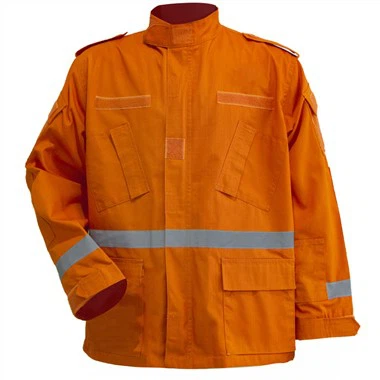
All-Season Tactical Shirt CCW Concealed Carry Pockets, Underarm Ease, and Quick-Dry Fabric Parameters
Jun 26, 2026
1. Introduction: What Is an All-Season Tactical Shirt?
The tactical shirt is a daily base‑layer garment for military and law enforcement personnel, outdoor enthusiasts, and EDC (Everyday Carry) users. Unlike tactical pants, softshell jackets, and other categories, the tactical shirt must balance the presentable appearance of daily wear with the functional demands of tactical missions - making it a quintessential embodiment of the "low-profile tactical" philosophy.
"All‑season" means this shirt must meet the needs of:
- Summer: breathable and moisture-wicking, without stuffiness
- Spring and Autumn: suitable as an inner layer under a jacket or worn alone, adapting to temperature fluctuations
- Winter: functional as a mid-layer, paired with a softshell or down jacket
An excellent all-season tactical shirt must achieve balance across three dimensions: concealed carry compatibility, fabric performance, and freedom of movement in fit. This article explores these three dimensions, breaking down the design essentials and parameter standards of tactical shirts.
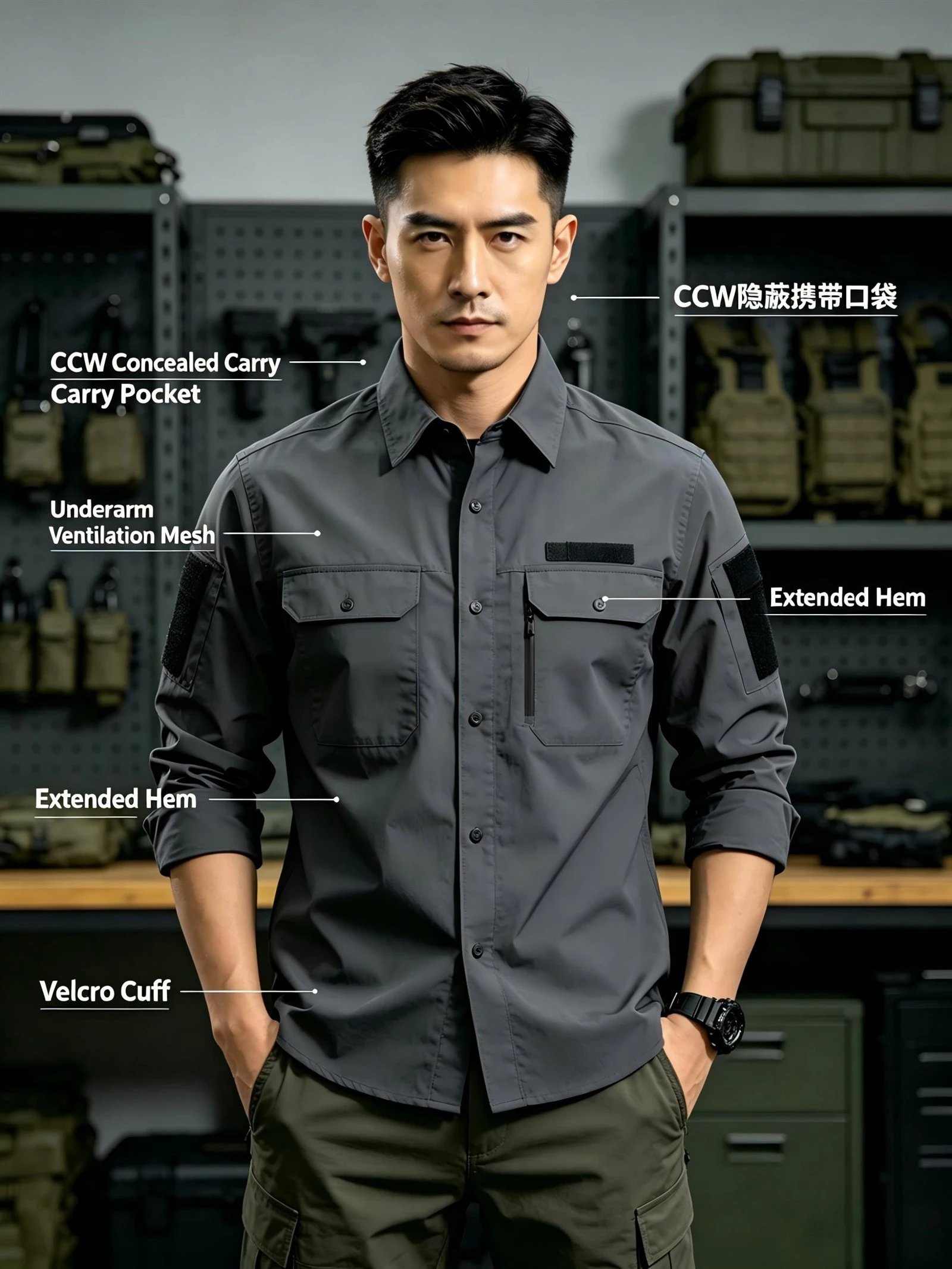
2. Core Design Element 1: CCW Concealed Carry Compatibility
CCW (Concealed Carry Weapon) is one of the most critical functional requirements of a tactical shirt. Unlike dedicated CCW jackets or vests, the shirt must allow the wearer to discreetly carry a handgun, spare magazine, or other EDC gear without altering its outward appearance.
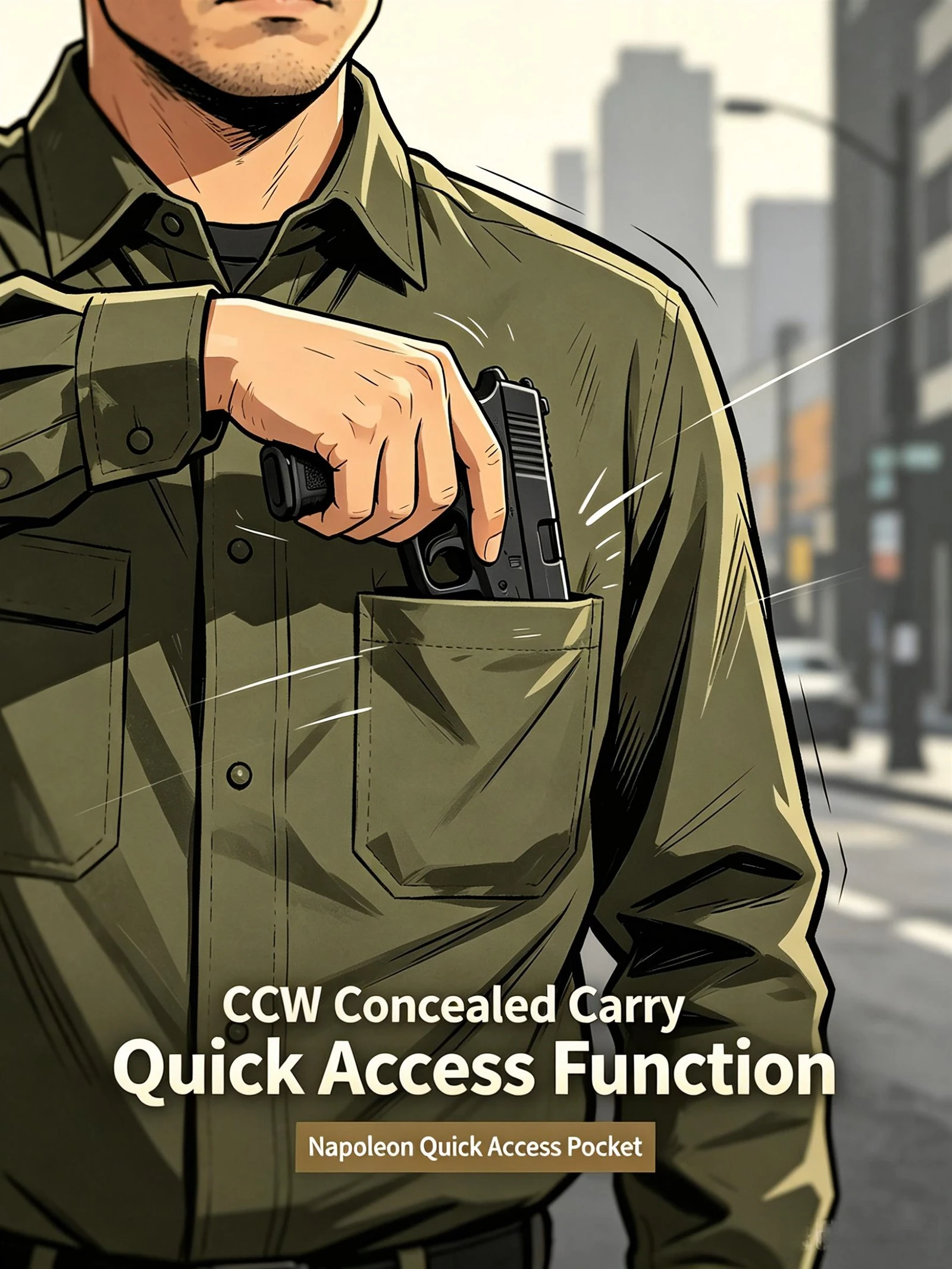
2.1 Quick-Access Pockets
The key to CCW pocket design on a tactical shirt lies in balancing access speed and concealment.
Pocket position options:
| Position | Advantages | Disadvantages | Best for |
| Inner chest (Napoleon pocket) | Fast access, both hands can reach | Pocket outline is somewhat visible | Small pistols, spare magazines |
| Inner waist (hidden hem pocket) | Excellent concealment, no external trace | Requires bending or lifting the hem to access | Medium‑sized pistols, IWB carry |
| Side‑seam hidden pocket | Discreet appearance, natural access | Limited pocket capacity | Small gear, phones, ID cards |
Rapid-open front placket system: Taking 5.11 Tactical's RAPIDraw™ front placket as an example, snaps replace traditional buttons. The wearer simply pulls firmly to open the placket in under one second, clearing the way for drawing a firearm or accessing gear - reducing the "unbuttoning" motion to less than a second.
Recommended pocket parameters:
| Parameter | Recommended value | Notes |
| Chest pocket depth | 13‑16 cm | Fits phones or small pistols |
| Hidden pocket depth | 12‑15 cm | Fits magazines or small gear |
| Pocket closure type | Hook‑and‑loop or snap | Prevents contents from falling out |
| Internal pocket dividers | Elastic webbing or divided pouches | Secures gear to prevent shifting |
2.2 Anti-Printing Fit
"Printing" refers to the outline of a firearm or gear showing through the fabric. Anti-printing is the most easily overlooked yet most critical detail in CCW shirt design.
Key anti-printing measures:
1. Increase fabric weight: Lightweight fabrics (<120 g/m²) tend to cling and reveal outlines; 150-200 g/m² medium-weight fabrics are recommended.
2. Extended front liner: The 5.11 Oscar shirt uses a "front extended liner" design - adding an extra layer of fabric at the 5-to-7 o'clock IWB (inside-the-waistband) carry position to effectively blur the firearm's outline.
3. Relaxed fit: Add ease to the chest, waist, and hem - key areas - to create an air gap between the fabric and the body.
4. Pattern/print assistance: Bold or complex prints can visually "break up" the firearm's silhouette, reducing printing.
Fit ease reference (size M) :
| Measurement point | Regular shirt (cm) | CCW tactical shirt (cm) | Increase |
| Half‑chest | 54‑57 | 58‑63 | +4‑6 |
| Hem width | 56‑60 | 62‑68 | +6‑8 |
| Length (center back) | 72‑75 | 78‑82 | +6‑7 |
2.3 Rapid-Open Snaps and Concealed Closure
Traditional buttons are difficult to undo quickly in an emergency. Tactical shirts typically use the following solutions:
- Snap closure: A firm pull opens the placket 3-5 times faster than buttons.
- Fake-button design: The exterior maintains the formal look of traditional buttons, while the actual closure is a snap or magnetic fastener.
- Concealed zipper: A zipper is set inside the front placket, providing both rapid access and a clean exterior.
3. Core Design Element 2: All-Season Fabric and Thermal Management System
The fabric choice for an all-season tactical shirt must balance multiple properties: moisture wicking, quick-dry, breathability, abrasion resistance, and wrinkle resistance.
3.1 Mainstream Fabric Types and Parameters
| Fabric type | Composition | Weight | Characteristics | Best season |
| Polyester stretch quick‑dry | 100% polyester + elastic fibers | 3.9‑4.5 oz | Moisture wicking, quick‑dry, lightweight | Summer, Spring/Autumn |
| Cotton/spandex blend | 97% cotton + 3% spandex | 3 oz | Soft, comfortable, wrinkle‑resistant, slight stretch | All‑season |
| Cotton/poly/spandex blend | 57% cotton + 40% polyester + 3% spandex | 3 oz | Combines cotton comfort with polyester quick‑dry | All‑season |
| Nylon/poly/spandex | 75% nylon + 11% polyester + 14% spandex | - | High abrasion resistance, high stretch, moisture wicking | All‑season |
| Polyester/cotton blend | 65% polyester + 35% cotton | - | Quick‑dry, wrinkle‑resistant, everyday use | Spring/Autumn, Winter base layer |
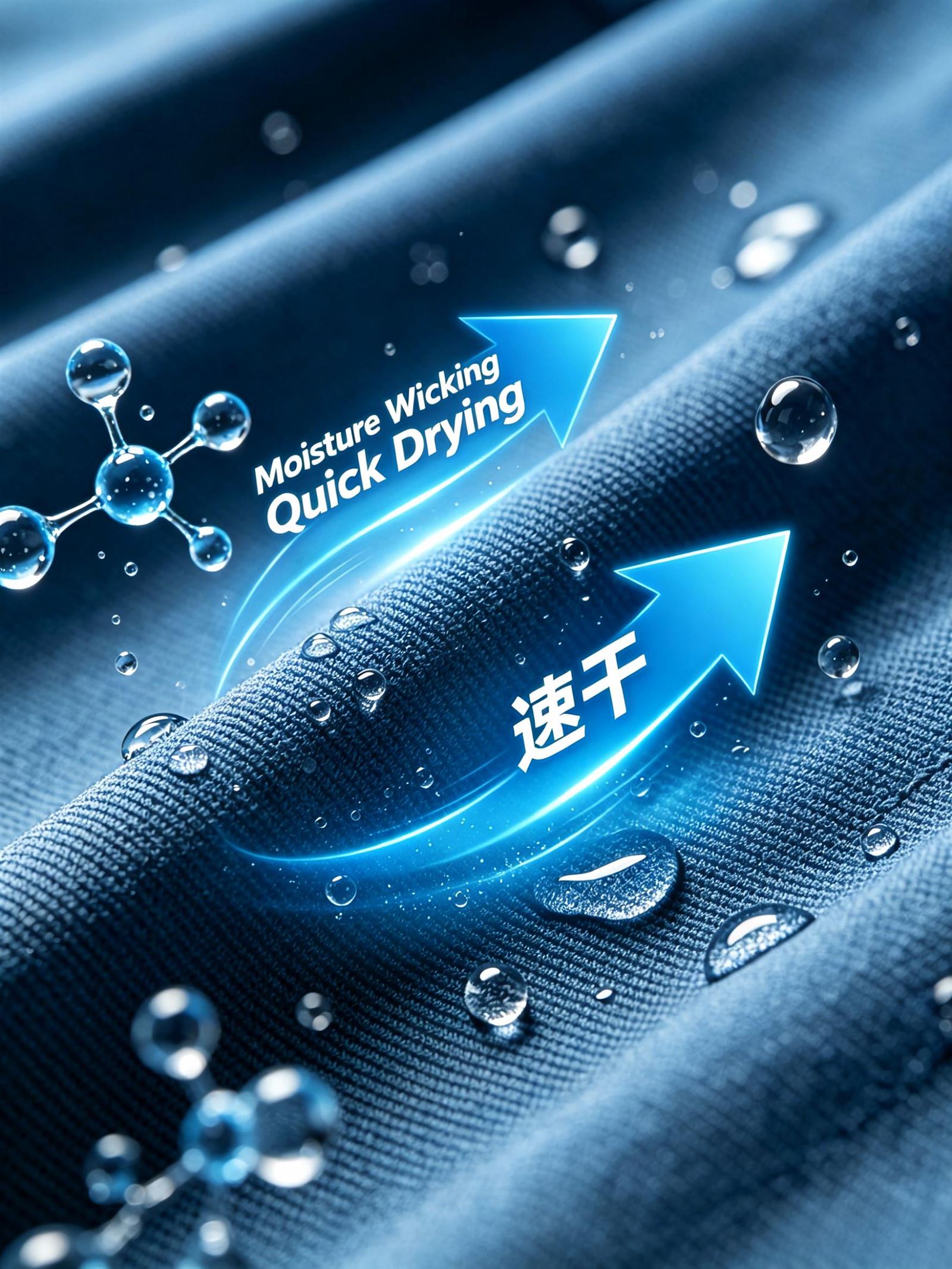
3.2 Moisture Wicking and Quick-Dry Performance
Key technical parameters for all-season tactical shirt fabrics:
Moisture wicking:
- Water absorption time: ≤1 second (high-quality wicking fabric)
- Wicking height: premium quick-dry fabrics can reach 108 mm, three times that of pure cotton
- Principle: through special finishing agents or cross-sectional fiber shapes, sweat is rapidly "wicked" from the skin surface to the outer layer of the fabric
Quick-dry (evaporation rate) :
- Premium quick-dry fabric drying time: ~123 minutes, roughly twice as fast as pure cotton (204 minutes)
- Drying rate: ≥70% (industry standard)
Representative technologies:
- 5.11 Vent‑Tac™: high-breathability fabric for coolness
- Omni-Dry: absorbs sweat three times better than cotton, evaporates twice as fast
- Dissolvable yarn technology: special yarn construction increases breathability
3.3 Thermal Management System (All-Season Temperature Control)
All-season tactical shirts use structural design for temperature regulation:
- Back vent mesh: mesh panels on the back accelerate moisture vapor release
- Underarm vents / mesh panels: ventilation areas under the arms improve heat dissipation
- Curved‑point paneling: special seam construction creates air convection channels
- Ventilation grommets: placed at underarms, sides, and back
3.4 Other Functional Treatments
- Wrinkle resistance: ready to wear after machine washing, no ironing needed
- UV protection (UPF) : some tactical shirts offer UPF 50+ sun protection
- Anti-odor / antimicrobial: suppresses odor-causing bacteria
- Four-way stretch: fabric stretches in both warp and weft directions for greater freedom of movement
4. Core Design Element 3: Fit and Freedom of Movement
A tactical shirt must support a wide range of motion (reaching overhead, bending, twisting, drawing a firearm). The pattern must provide adequate room for movement.
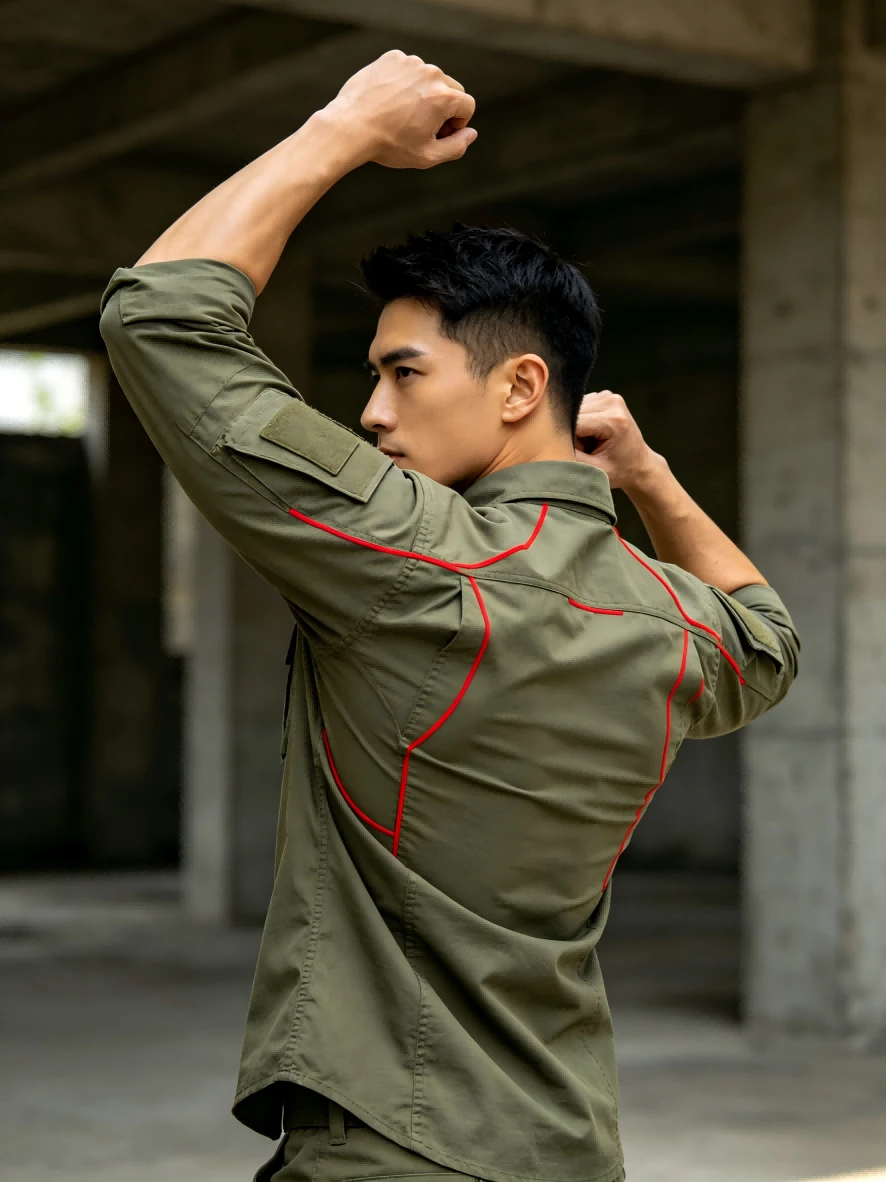
4.1 Underarm Ease (Underarm Gussets)
The underarm is the most restrictive area on a tactical shirt. A regular shirt's armhole design pulls and constricts when the arms are raised.
Underarm gusset (triangular underarm panel):
- An independent triangular piece of fabric is set into the underarm
- Purpose: increases armhole ease so the fabric does not pull the torso when raising arms
- Result: unrestricted range of motion
Back mobility design:
- Back yoke: extra ease added across the shoulder blade area
- Raglan sleeve: the sleeve extends diagonally from the collar to the underarm, reducing shoulder restriction
- 3D shoulder tailoring: replaces traditional flat cutting with three-dimensional shaping for better shoulder and sleeve mobility
4.2 Drop-Back Hem (Extended Rear Hem)
The hem design of a tactical shirt directly affects both CCW concealment and everyday comfort:
- Extended rear hem: when bending over, the back hem does not pull out from the belt, preventing exposure of gear
- Side-seam slits: splits at the hem allow easier access to waistband-carried gear
- Hem coverage: fully covers the buttocks, ensuring gear is not exposed when bending or squatting
4.3 Cuff and Collar Design
- Adjustable cuffs: hook-and-loop or button adjustment to fit different wrist sizes and rolling needs
- Concealed sleeve-retention tab: when rolling up sleeves, the tab holds them in place, allowing two-way wear (long/short sleeves)
- Anti-roll collar: internal interlining keeps the collar crisp
- Comms loop (communication loop): a loop sewn inside the back collar to secure communication earpiece cords
5. All-Season Tactical Shirt Design Checklist
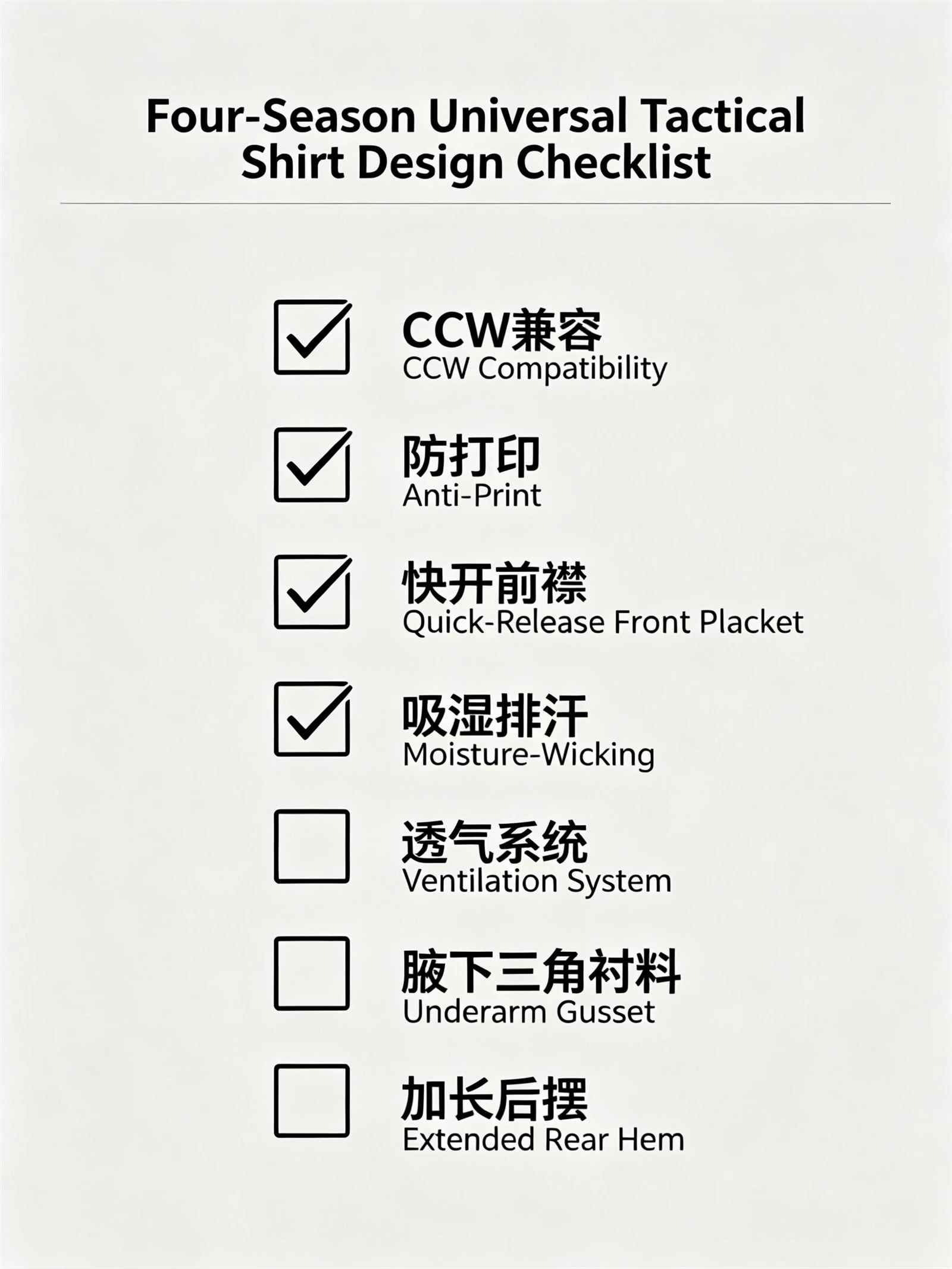
- CCW compatible: equipped with quick-access pocket or dedicated CCW pocket
- Anti-printing: fabric weight ≥150 g/m², with layered reinforcement or ease at key areas
- Rapid-open placket: snap or rapid-open system, access time ≤2 seconds
- Moisture wicking: water absorption time ≤1 second, or use professional quick-dry fabric
- Ventilation system: mesh or vent openings at back/underarms
- Underarm gussets: unrestricted movement, no pulling when raising arms
- Extended rear hem: hem stays tucked when bending over
- Fabric weight: 150-200 g/m² (ideal range for all-season use)
- Wrinkle resistance: wearable directly after machine washing
- Four-way stretch: fabric has elasticity for enhanced freedom of movement

6. Product Case References
5.11 Oscar Short‑Sleeve Shirt
- Fabric: 100% polyester Vent-Tac™, moisture wicking
- CCW: RAPIDraw™ rapid-open placket + extended front liner for anti-printing (5-7 o'clock position)
- Pockets: left chest hook-and-loop pocket + Ready Loop™ phone tether
- Fit: straight hem + side-seam slits
Vertx Dadeland CCW Shirt
- Fabric: 3 oz cotton/spandex stretch twill (97% cotton + 3% spandex), wrinkle-resistant + moisture wicking
- CCW: snap-open placket + extended rear hem + relaxed anti-printing fit
- Mobility: underarm gussets + back yoke for unrestricted movement
- Storage: low-profile placket pocket + 4 hidden mini pockets + 2 chest wallet-trap pockets
- Other: back collar comms loop + lay-flat sports collar
Dragon Tooth Shadow Tactical Quick-Dry Long-Sleeve Shirt
- Fabric: 75% nylon + 14% spandex + 11% polyester, bluesign® certified
- Functions: moisture wicking + UV protection + four-way stretch + abrasion resistance
- Pockets: dual chest pockets (hook-and-loop) + dual hidden side pockets
- Fit: 3D elbow shaping + raglan shoulder sleeves + bartack reinforcement
7. Frequently Asked Questions (FAQ)
- Q: Will an all-season tactical shirt feel hot in summer?
A: No. All-season tactical shirts typically use lightweight quick-dry fabrics (3-4.5 oz), combined with back vent mesh and underarm vents for heat dissipation. For summer, choose polyester stretch quick-dry fabric - it is more breathable than cotton.
- Q: What's the difference between a CCW shirt and a regular tactical shirt?
A: A CCW shirt adds anti-printing ease, quick-access pockets, and a rapid-open placket system to the fit. A regular tactical shirt may only offer storage features without dedicated concealed-carry design.
- Q: Can a tactical shirt be machine washed?
A: Yes. Most tactical shirt fabrics are wrinkle-resistant and ready to wear after machine washing and spinning. Wash inside out, use mild detergent,and avoid fabric softener (which can impair moisture-wicking performance).
- Q: How can I tell if a tactical shirt's CCW design is adequate?
A: Three criteria: ① no printing is visible from 1 meter away when wearing the shirt with a training gun (model); ② the draw can be completed within 2 seconds; ③ the shirt does not bind or expose gear when bending, raising arms, or squatting.