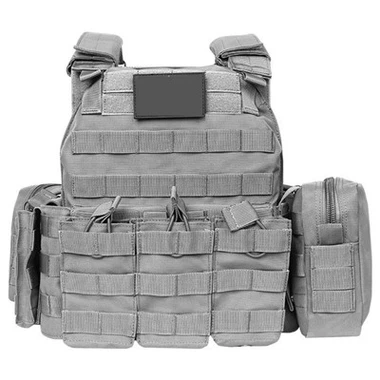
Interpretation of the New National Standard GB/T 17591-2025 “Flame-Resistant Fabrics”: B-Class / B₁-Class Grading, TPP Thermal Protective Performance Testing, and Compliance Strategies for Tactical Uniforms
Jul 28, 2026
1. Introduction: The First Major Revision in Two Decades
GB/T 17591 "Flame-resistant fabrics" is a foundational national standard in the textile industry's flame-resistance sector. Nearly twenty years have passed since the 2006 edition was implemented, during which flame-resistant material technologies, testing methods, and fire-safety concepts have evolved significantly. At the same time, countries such as the US, Europe, and Japan have incorporated textile flame retardancy into fire regulations, and China has been progressively refining its own standards system.
Against this backdrop, GB/T 17591-2025 "Flame-resistant fabrics" was officially released on 28 February 2025 and became mandatory on 1 September 2025. The new standard replaces the 2006 edition, is managed by the National Technical Committee on Textiles of the Standardization Administration of China (TC209), and is supervised by the China National Textile and Apparel Council.
This revision is centred on enhancing fire safety protection capabilities. Through measures such as new terminology, strengthened flame-retardant grades, restricted hazardous substances, and upgraded test methods, it comprehensively covers the three major application areas: interior decoration, transport interiors, and protective clothing, driving the industry towards high performance, green development, and scenario-specific transformation.
For tactical clothing factories, whether the product is a military/police training uniform, flame-resistant tactical clothing, or protective equipment, as long as flame-resistant functionality is involved, the new standard will have a direct impact. This article provides a systematic interpretation from four dimensions: classification system, core changes, test methods, and factory response strategies.

2. Scope of Application and Product Classification
2.1 Scope of Application
GB/T 17591-2025 specifies the product classification, requirements, inspection rules, packaging, and marking of flame-resistant fabrics, and describes the corresponding test methods. The standard applies to woven and knitted fabrics for the following three major product categories:
| Application area | Typical products |
| Interior decorative fabrics | Curtains, tablecloths, drapes, sofa covers, bed covers, etc. |
| Transport interior fabrics | Seat covers, curtains, sun blinds in aircraft, ships, cars, trains, etc. |
| Flame‑resistant protective clothing fabrics | Military/police training uniforms, firefighting suits, industrial protective clothing, etc. |
2.2 Three Product Categories
The standard classifies flame-resistant fabrics by end-use into three categories:
1. Interior decorative fabrics: curtains, tablecloths, drapes, sofa covers, bed covers, etc.
2. Transport interior fabrics: seat covers, curtains, sun blinds, etc., in vehicles
3. Flame-resistant protective clothing fabrics: fabrics for all types of flame-resistant protective garments
For tactical clothing factories, Category 3-"flame-resistant protective clothing fabrics" is the primary focus. However, note that some tactical garments (e.g., training uniforms, duty uniforms) may also be subject to flame-resistant requirements for interior decoration or transport interior applications in certain contexts.

3. Burning Performance Classification System: B₁/B₂/B₃ Three-Level System
One of the most significant changes in the new standard is the expansion of the burning performance classification from the original B₁/B₂ two-level system to a B₁/B₂/B₃ three-level system.
3.1 Definitions of the Three Levels
| Grade | Meaning | Application scenarios |
| B₁ | Flame‑retardant grade – highest flame resistance | Strict flame‑resistance requirements (military/police protective clothing, transport interiors) |
| B₂ | Combustible grade – moderate flame resistance | General flame‑resistance scenarios |
| B₃ | Flammable grade – basic flame resistance | Newly added grade for lower‑risk scenarios |
3.2 Grading Requirements for Different Application Areas
The new standard sets differentiated grading requirements for different application areas:
Interior decorative fabrics:
- Added B₃ grade requirements
- Overall added molten drip assessment
- Added smoke density rating for B₁ grade
Automotive interior fabrics:
- Added B₃ grade requirements
- Added vertical burning rate and smoke density rating for B₁ and B₂ grades
- B₁ requires burning rate ≤100 mm/min and smoke density rating ≤15
Train interior fabrics:
- Removed flame-application-time assessment
- Added smoke density rating assessment
Flame-resistant protective clothing fabrics (key focus for tactical clothing factories):
- Added B₂ and B₃ grade requirements
- Added Thermal Protective Performance (TPP) assessment for B₁ and B₂ grades
3.3 Typical B-Grade Requirements for Protective Clothing Fabrics
Based on actual government procurement and bidding requirements, typical B-grade indicators for flame-resistant protective clothing fabrics under GB/T 17591-2025 include:
| Assessment indicator | Typical B‑grade requirement |
| Char length | ≤150 mm |
| Afterflame time | ≤5 s |
| Afterglow time | ≤5 s |
Note: The above are typical government procurement requirements. Specific values may vary by product grade (B₁/B₂/B₃) and application scenario. Factories should always refer to the official standard text and specific order specifications.

4. Key New Terminology and Critical Indicators
The new standard introduces 8 key terms, providing a unified basis for quantifying flame-retardant performance:
| New term | Meaning | Significance for tactical clothing |
| Char length | Length of material charred or melted after burning | Core indicator of flame‑retardant effectiveness |
| Afterflame time | Time of flaming combustion after ignition source removal | Reflects self‑extinguishing capability |
| Afterglow time | Time of glowing (smouldering) without flame after ignition source removal | Prevents smouldering‑related fire risk |
| Molten drip | Molten droplets during combustion | Prevents secondary burns (new assessment) |
| Smoke density | Concentration of smoke produced during combustion | Prevents smoke inhalation risk (new for B₁) |
| Burning rate | Speed of flame spread | Measures fire spread risk |
| Char area | Area of fabric destroyed by burning | Comprehensive assessment of flame retardancy |
| Thermal Protective Performance (TPP) | Fabric's ability to resist heat flux | Core indicator for protective clothing |
4.1 Thermal Protective Performance (TPP): The "Safety Yardstick" for Protective Clothing
TPP (Thermal Protective Performance) is a newly added core assessment indicator for flame-resistant protective clothing fabrics in this standard. It simulates the burn threshold of the human body under heat flux (radiant + convective heat) and measures the protection time that the fabric can provide to the wearer.
Significance of TPP:
- Higher TPP values mean better resistance to heat flux
- Directly relates to the wearer's survival time in fire or explosion environments
- One of the most critical flame-retardant performance indicators for military/police protective clothing and firefighting suits
Test method: The new standard requires TPP testing according to GB/T 38302, which simulates real burn thresholds.
4.2 Smoke Density: Upgrading from "Fire Protection" to "Smoke Protection"
The new standard adds smoke density rating requirements for B₁ grade assessment. This means that the safety evaluation of flame-resistant fabrics no longer focuses only on "whether it catches fire," but also on "how much smoke it produces when burning."
In fires, smoke is often more deadly than flames-most fire-related casualties are caused by smoke inhalation. When selecting flame-resistant fabrics, tactical clothing factories should not only focus on afterflame time and char length but must also consider smoke density rating.

5. Key Upgrades in Test Methods
The new standard introduces several scientific improvements to test methods:
5.1 Smoke Density Testing Upgrade
Adopts GB/T 8627 standard, using optical attenuation for more precise smoke density measurement.
5.2 New Addition: Thermal Protective Performance (TPP) Testing
Adds GB/T 38302 test standard to simulate real burn thresholds.
5.3 Washing Method Update
The washing-durability requirement for flame-resistant protective clothing fabrics has been increased from 30 washes to 50 washes. The washing duration has also been extended from 8 hours to 12.5 hours.
This means:
- The fabric must retain its flame-resistant performance after 50 washes
- Tactical clothing factories purchasing flame-resistant fabrics must require suppliers to provide flame-retardant test reports after 50 washes
5.4 New Physical/Chemical Property Assessments
The new standard adds the following assessment items for physical/chemical properties of flame-resistant protective clothing fabrics:
| New assessment item | Significance |
| Fibre content | Ensures composition authenticity |
| Pilling resistance | Ensures wearing comfort and durability |
| Air permeability | Ensures wearing comfort (critical for tactical clothing) |
| Thermal stability | Dimensional stability of fabric at high temperatures |
| Dimensional change after dry‑cleaning | Dimensional stability after dry‑cleaning |
| Colourfastness to dry‑cleaning | Colour stability after dry‑cleaning |
At the same time, outdated indicators such as yarn slippage resistance and bending length have been removed.
5.5 Other Test Method Updates
- Test method for colorfastness to washing updated
- Test method for moisture vapour transmission rate updated
- Wet rubbing colorfastness requirements for dark-coloured products have been raised

6. Summary of Key Changes from the 2006 Edition
| Technical dimension | 2006 edition requirement | 2025 edition additions/changes |
| Terminology | Basic burning parameters | Added 8 new terms including char area, smoke density, TPP |
| Burning classification | B₁/B₂ two‑level | Expanded to B₁/B₂/B₃ three‑level system |
| Test items | 4 basic indicators | Added 5 items including molten drip and smoke density |
| Protective clothing grading | Basic requirements | Added B₂/B₃ grades; B₁/B₂ now include TPP assessment |
| Wash cycles | 30 washes | Increased to 50 washes |
| Smoke density test | None | Added GB/T 8627 standard |
| TPP test | None | Added GB/T 38302 standard |
| Physical/chemical properties | Basic items | Added air permeability, thermal stability, dry‑cleaning dimensional change, etc. |
| Washing duration | 8 hours | Extended to 12.5 hours |

7. Compliance Strategies for Tactical Clothing Factories
GB/T 17591-2025 became mandatory on 1 September 2025. Tactical clothing factories should take immediate action in the following five areas:
7.1 Fabric Sourcing Upgrades
- Require suppliers to provide flame-retardant test reports after 50 washes (previous standard only required 30 washes)
- Confirm that the fabric's TPP value meets B₁/B₂ grade requirements
- Verify that the fabric's smoke density rating meets the standard (mandatory for B₁ grade)
- Confirm that the fabric passes the molten drip assessment (new requirement)
- Verify that the fabric's air permeability and thermal stability meet the new requirements
7.2 Product Testing Adjustments
- Flame-resistant protective clothing products must undergo TPP testing according to the new standard (GB/T 38302)
- Smoke density testing must use GB/T 8627 optical attenuation method
- Wash-durability testing must reach 50 washes (12.5 hours washing duration)
- Dark-coloured products must meet the stricter wet rubbing colorfastness requirements
7.3 Supply Chain Management
- Confirm with existing flame-resistant fabric suppliers whether their products meet the new standard
- Replace suppliers whose products do not meet the new standard, or require them to upgrade their products
- Establish a new incoming fabric inspection process (TPP, smoke density, 50 wash durability, etc.)
- Pay attention to restrictions on hazardous flame retardants and promote halogen-free flame-retardant technology
7.4 Product Grade Positioning
| Product type | Recommended flame‑resistant grade | Key assessment indicators |
| Military/police training uniforms | B₁ | TPP value, smoke density, 50‑wash durability |
| Tactical duty uniforms | B₁ or B₂ | TPP (B₁), afterflame/afterglow time |
| Flame‑resistant workwear | B₂ | Char length, afterflame/afterglow time |
| General protective clothing | B₂ or B₃ | Basic flame‑retardant indicators |
7.5 Advanced Planning and Compliance Timeline
The new standard became mandatory on 1 September 2025. Factories must focus on this deadline and plan material replacement, testing certification, and process adjustments in advance to gain a competitive edge through compliance.

8. Frequently Asked Questions (FAQ)
Q: Is GB/T 17591-2025 a mandatory standard?
A: Yes. It is a key mandatory national standard for the textile industry and became mandatory on 1 September 2025.
Q: What is the main difference between B₁ and B₂ in the new standard?
A: B₁ is the flame-retardant (highest) grade, with stricter requirements - it must test smoke density rating and TPP (for protective clothing fabrics). B₂ is the combustible grade, primarily testing char length, afterflame time, afterglow time, and other basic indicators.
Q: What is TPP and why is it important for tactical clothing?
A: TPP (Thermal Protective Performance) is the core indicator of a fabric's ability to resist heat flux, simulating the burn threshold of the human body under radiant + convective heat. Higher TPP values mean longer survival time for the wearer in fire or explosion environments. The new standard requires TPP testing for B₁ and B₂ protective clothing fabrics.
Q: Why was the wash-durability requirement increased from 30 to 50 washes?
A: The increase ensures long-term flame retardancy the fabric must maintain flame-resistant performance after repeated washing, which is especially important for military/police personnel who use protective clothing for extended periods.
Q: How can a tactical clothing factory quickly determine whether a fabric meets the new standard?
A: Require the supplier to provide a full test report according to the new standard (GB/T 17591-2025) . Key checks: ① does it include TPP testing (for protective clothing fabrics); ② does it include smoke density testing (for B₁ grade); ③ does it meet 50-wash durability; ④ does it pass the molten drip assessment.

Conclusion: GB/T 17591-2025 "Flame-resistant fabrics" is the most significant standard upgrade in the flame-resistance sector in nearly two decades. From the B₁/B₂/B₃ three-level classification system to the introduction of TPP testing, from the 50-wash durability requirement to the smoke density assessment - the new standard imposes more comprehensive, more scientific, and stricter requirements on flame-resistant protective clothing fabrics.
For tactical clothing factories, understanding the new standard is not only a compliance necessity but also an opportunity to enhance product competitiveness-those who adopt fabrics compliant with the new standard first will gain a competitive edge in military/police procurement and the high-end protective clothing market. Factories are advised to immediately engage with fabric suppliers to verify whether existing products meet the new standard, and to complete product testing and process adjustments as soon as possible.