
Essential Knowledge for the Apparel Industry: Fabric Guide
Apr 03, 2026
It's often said that when buying clothes for spring and summer, quality matters more than quantity. A well-made, high-quality garment brings a sense of effortless ease and freedom to your outfits.

Especially during the spring-to-summer transition, lightweight, comfortable clothing all relies on quality fabrics - which are also the key to achieving that effortless "easy chic" look and wearing a sense of sophistication.

Especially during the spring-to-summer transition, clothes that are light and comfortable enough all rely on high-quality fabrics - which are also the key to achieving that effortless 'easy chic' look and wearing a sense of sophistication.

So, whether you're a true fashionista or in the clothing business - if you want to find the right pieces and sell better - hurry up and join Sir Zhong to unlock the knowledge of the most in-demand spring/summer fabrics and how to care for them!
01. Linen
The minimalist trend never fades, and linen fabric only looks more sophisticated with time. Breathable, simple, and natural, linen has become one of the most popular fabrics for summer.

summer&chic

Linen fabric is breathable, has a nice natural luster, and is resistant to fading and shrinking.

It has temperature-regulating, anti-allergy, and anti-static properties. It is also antibacterial, resistant to moths, and not easily affected by moisture. Linen also has excellent moisture absorption, capable of taking in up to 20 times its own weight in water, which is why linen often feels dry to the touch.
However, its texture is relatively rough, it wrinkles easily, and it has poor drape.
Care Instructions:
1.Washing:
① For linen shirts with a loose weave, hand washing is recommended.
② Do not use detergents with bleaching agents.
③ Dark-colored linen shirts should be washed separately in cold water for the first wash.
2.Drying:
Lay flat to dry in a shaded, well-ventilated area. Keep the fabric as smooth as possible while drying to avoid wrinkles. Do not expose to direct sunlight to prevent fading. White linen shirts may yellow if exposed to strong sunlight.
3.Ironing:
It is best to iron while the fabric is still slightly damp. Iron gently - excessive drying or ironing can stiffen the fabric. After ironing, hang or lay the garment flat to allow it to dry naturally.
02. Cotton
Cotton often gives people the impression that "cotton equals good quality." And honestly, it has never let that favor down. Whether in spring, summer, autumn, or winter, cotton is a fabric people never seem to part with.

No matter how popular tech-innovative fabrics become, or how many synthetic fibers designers use, the soft, skin-friendly qualities of cotton clothing remain as constant as ever - gently caring for your skin.

It is made from cotton, most of which comes from Xinjiang, China - which is why it is also called "Xinjiang Cotton." This fabric, produced through textile processes, offers properties such as moisture absorption, moisture retention, heat resistance, alkali resistance, and hygiene.
It has good heat absorption and resistance, and is very comfortable to wear. However, it also wrinkles easily, shrinks, and deforms…
Care Instructions:
1.Washing: Various detergents can be used. Both hand washing and machine washing are acceptable.
① Do not scrub vigorously to avoid deforming the garment. Do not pour laundry powder directly onto cotton fabrics to prevent localized fading.
② Light-colored and white cotton items can be soaked for 1–2 hours before washing for better stain removal. Dark-colored items are best washed in cold water and should not be soaked for too long to avoid fading.
③ White garments can be washed at high temperatures with strong alkaline detergents for a bleaching effect. Underwear should not be soaked in hot water to prevent yellow sweat stains.
2.Drying: Since cotton items wrinkle easily, do not wring them out. Hang them directly to dry. Avoid direct sunlight - drying in the shade or by air is best.
3.Ironing: For printed or dyed cotton items, iron on the reverse side. Use medium heat for folded areas.
4.Storage: Pure cotton garments absorb moisture easily. Store them in a wardrobe away from humidity and acidic fumes.
03. Denim
"Denim" is a transliteration of the word - commonly known as jeans. A true classic, it remains a trend in every season.

Denim refers to a coarse twill cotton fabric and is one of the oldest textiles in existence. From jeans to denim jackets - its emergence sparked a fashion craze. Even now, the fashion world still regards it as a classic. It has become a fabric that never goes out of style and stays forever young.

Denim is thick, breathable, and moisture-permeable, offering excellent comfort when worn.
Care Instructions:
1.Washing: Before washing, take steps to preserve the color, otherwise jeans will fade quickly.
① Soak the jeans in a basin of water with a small amount of white vinegar or salt for about half an hour before washing.
② Always turn the jeans inside out before washing - this effectively reduces fading.
2.Drying: After washing, hang them from the waistband, smooth out the fabric, and dry them inside out in a dry, well-ventilated area away from direct sunlight.
3.Storage: It is recommended to store denim separately from other clothing to prevent color transfer.
04. Silk
Silk, also known as "silk fabric," includes mulberry silk, tussah silk, castor silk, cassava silk, and more. Its skin-friendly qualities are unmatched by any other fabric.

As a protein fiber, silk is soft, smooth, and light to the touch, with excellent moisture absorption and release. Known for its comfort and breathability - as well as being notoriously high-maintenance - it is often hailed as "the second skin of the human body."

But this delicate fabric wrinkles easily, clings to the body, lacks durability, fades quickly, and provides little warmth.
Care Instructions:
1.Washing: Hand washing is best, using a detergent specifically designed for silk. Do not scrub vigorously or brush harshly.
2.Ironing: Iron when the fabric is about 80% dry. Do not spray water directly onto the fabric. Iron on the reverse side at a temperature between 100–180°C (212–356°F). This also helps kill bacteria and insects.
3.Storage: It is best to store silk clean, dry, and folded. Keep it sealed in a cabinet, and avoid using mothballs or camphor balls.
05. Acetate
Acetate is a man-made fiber produced from cellulose or wood pulp. Its fabric has a rich texture, very similar to silk.

Good resilience and natural eco-friendliness are its trademarks. It has strong moisture absorption, resists static electricity and pilling, but has poor breathability.
We often see urban professionals wearing satin-like blouses, suits, and other garments - these are items made from acetate fiber.

Good resilience and natural eco-friendliness are its trademarks. It has strong moisture absorption, resists static electricity and pilling, but has poor breathability.
We often see urban professionals wearing satin-like blouses, suits, and other garments - these are items made from acetate fiber.

Care Instructions:
1.Washing: Both dry cleaning and machine washing are acceptable. However, acetate is not acid-resistant, so use a neutral detergent or soap when washing. (When hand washing, water temperature should not exceed 40°C / 104°F. Wash gently and do not wring or twist.)
2.Drying: Dry in a shaded, cool area. Avoid direct sunlight and tumble drying.
3.Ironing: Always use steam when ironing. Do not exceed 110°C (230°F). Do not dry iron.
06. Polyester Fiber
Every time after we publish fabric knowledge, many friends say they want to learn about polyester fiber - so here it is.
Polyester fiber is also known as PET fiber. It has excellent elasticity and recovery. The fabric is crisp, wrinkle-resistant, and resilient. It is durable, has good light resistance, but is prone to static electricity and pilling. It also has poor dust absorption and moisture absorption.

Polyester fabric is a "staple" in our everyday clothing. It is often found in more structured garments, such as skirts, blazers, and outerwear.
Care Instructions:
1.Washing: Machine washable. However, to prevent tangling or damage, turn the garment inside out before putting it into the washing machine.
(For hand washing white garments, soak overnight in warm water with detergent to help remove dirt or stains.)
2.Drying: Dry in the shade. Do not expose to direct sunlight to avoid wrinkles.
3.Ironing: Use low heat and press with a cloth. For dark-colored garments, iron inside out. Avoid pushing or pulling too much - let the garment stretch and align naturally.
4.Storage: Fold neatly and store flat, separating dark and light colors. Do not hang in the wardrobe for long periods to avoid stretching and deformation.
07. Chiffon
Chiffon's technical name is "georgette," also known as "crepe georgette." It has a light, airy, flowing quality that is very popular in summer.

Most of the chiffon commonly found on the market today is made from synthetic fibers. It feels smooth and soft to the touch, with good comfort and drapability.
It can be seen as an affordable alternative to "silk chiffon" - easy to care for, with good colorfastness and abrasion resistance, and not prone to pilling or wrinkling.

Care Instructions:
1.Washing: Soak and wash promptly, but remember to wash separately from other garments. Water temperature should not exceed 45°C (113°F). After washing, let it drip dry naturally - do not wring it out forcefully, as this may weaken the fabric's texture.
2.Drying: Avoid direct sunlight and tumble drying. Dry in a shaded, cool area.
3.Ironing: If ironing is needed, stretch the fabric while ironing to prevent shrinkage.
4.Storage: Fold neatly and lay flat in the wardrobe. For chiffon garments with sleeves, use padded fabric hangers to prevent "shoulder bumps" from forming.
PS: If you have a habit of wearing perfume daily, avoid spraying it directly onto chiffon garments, as it may leave yellow stains.
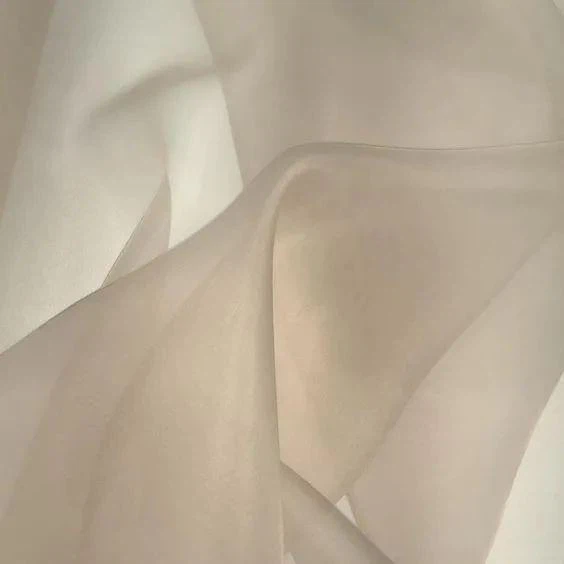
It has a certain stiffness that makes it easy to shape and structure, which is why it is widely used in the making of wedding dresses, dresses, and gowns in Europe, America, and other countries.

Care Instructions:
1.Washing: Do not soak in cold water for too long - 5 to 10 minutes is recommended. Avoid machine washing; hand washing is preferred. Rub gently and avoid heavy scrubbing to prevent fiber damage.
2.Drying: Dry in the shade and avoid direct sunlight, which may affect the fiber's strength and colorfastness.
(When drying, you can turn the garment inside out and avoid direct sunlight. Remove it when it is about 80% dry. This way, the organza garment will feel softer and be less prone to fading.)
3.Storage: Do not spray perfume, fresheners, deodorants, etc., on the garment.
① Avoid using mothballs during storage, as the fabric may absorb the odor and change color.
② When placing in a wardrobe, hang it on a hanger. Avoid metal hangers to prevent rust stains.
③ If folding for storage, place it on an upper shelf in the wardrobe to prevent deformation and wrinkling from being pressed.
Tips:
In addition to the fabric care knowledge above, here's a universal tip for washing and caring for clothes - pay attention!
Before washing clothes, always read the care label on the garment. The best way to wash clothes is to follow the instructions on the label. Following the label instructions will help maintain the garment's appearance and softness for a longer time.

① If the label says "Dry Clean Only," the item should be taken to a professional dry cleaner rather than washed at home.
② If the label simply says "Dry Clean," it can usually be safely washed by hand.
Eileen Chang once said in The Changing Clothes: "Each of us lives in our own clothes." The clothes on our bodies are like our inner desires, and the fabric is the soul of the garment.


