
Shrinkage Issues in Military Training Camouflage Uniforms: Why Do They Get Smaller After Washing? Pre-Shrinking and Washing Advice
Sep 24, 2026
1. Introduction: Training Uniforms Get Smaller After Washing – What's the Problem?
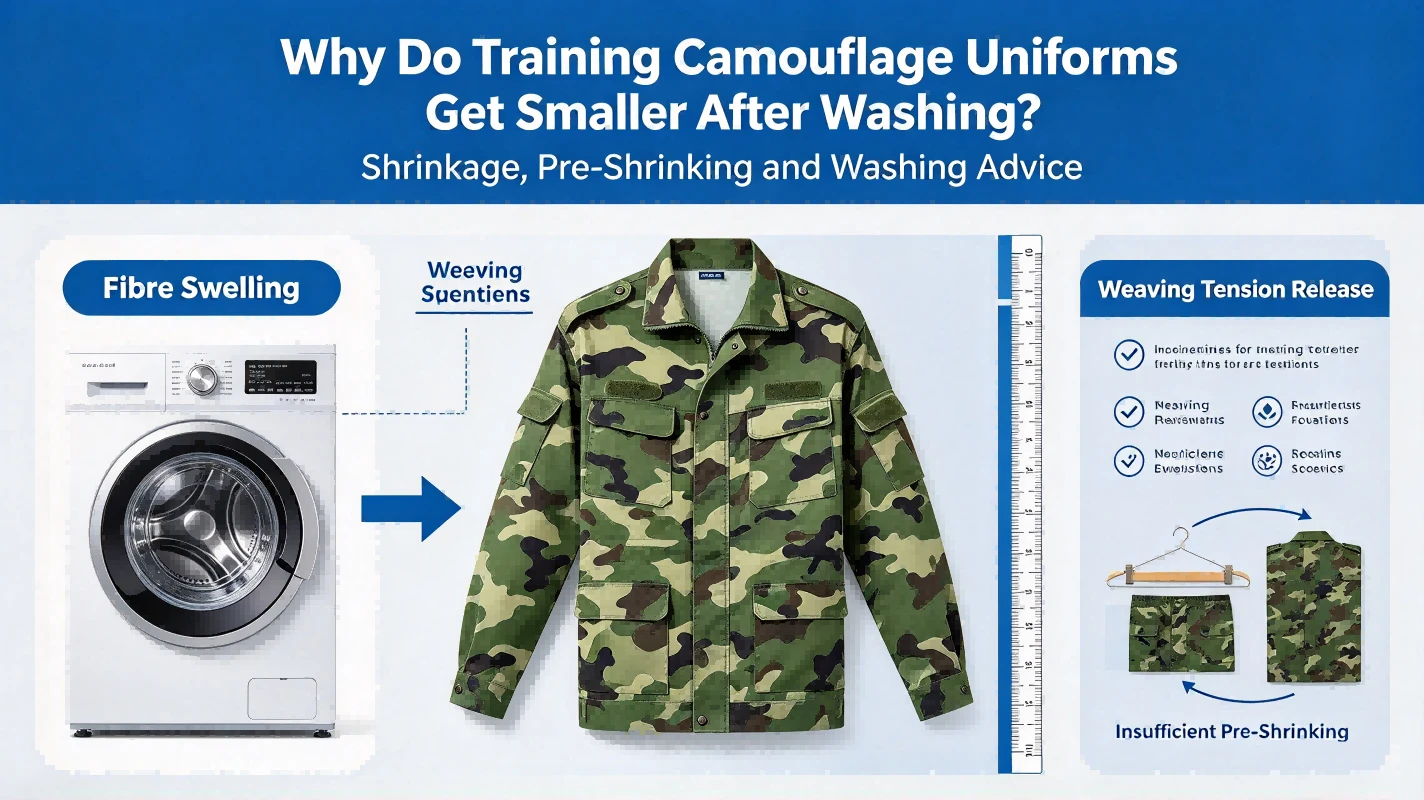
Many students have had this experience: after military training, they throw their camouflage uniform into the washing machine, and when it dries, they find the garment has "shrunk"-the sleeves are shorter, the trouser legs hang above the ankles, and the overall length is noticeably reduced. It fitted perfectly when purchased-why did it get smaller after just one wash?
This is not an illusion-it is the dimensional change that textile materials undergo during washing. Shrinkage is the result of the combined effects of fibres, yarns, weaving processes, and finishing. Understanding the principles of shrinkage not only explains "why it gets smaller after washing," but also helps us take the right measures when buying and washing.
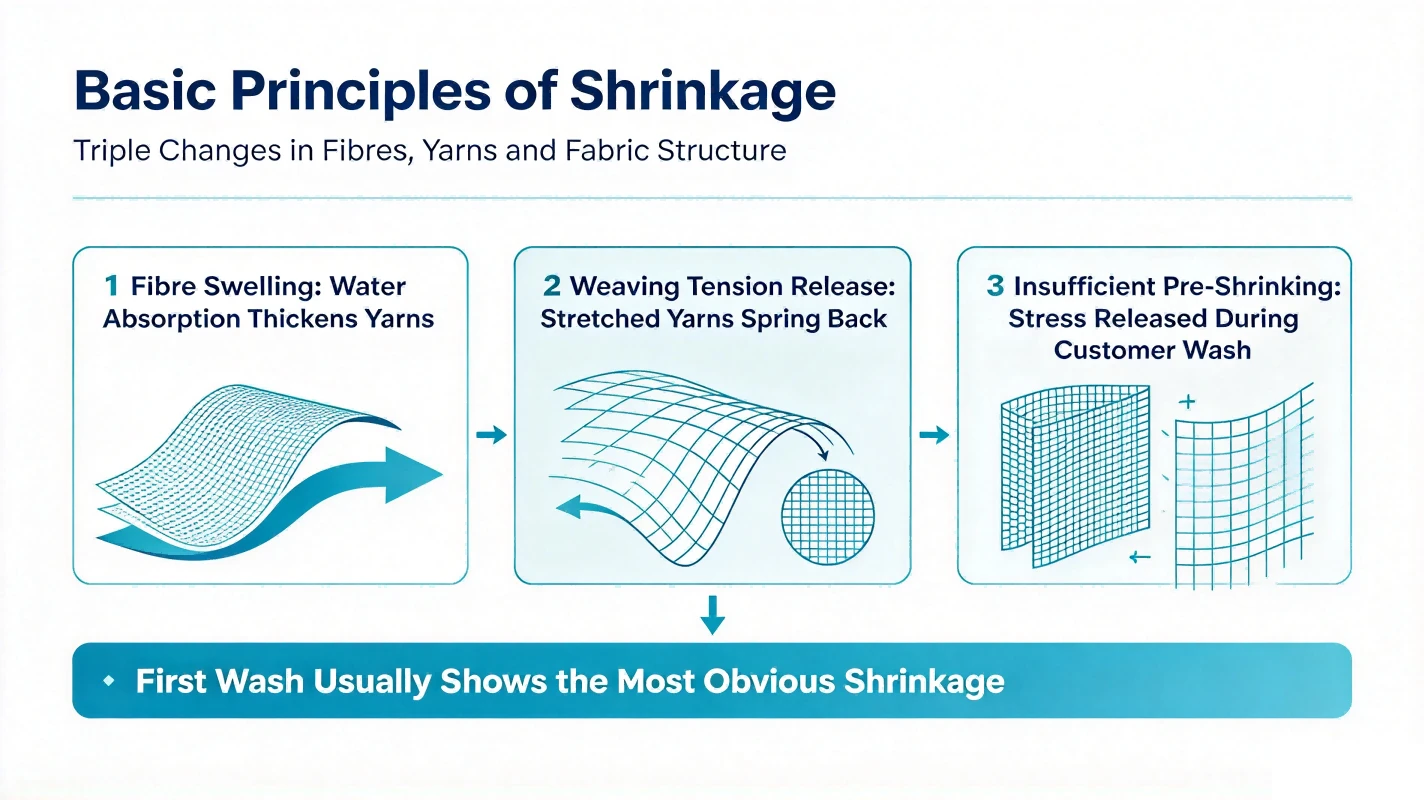
2. Basic Principles of Shrinkage: The Triple Changes in Fibres, Yarns, and Fabrics
2.1 Fibre Swelling Due to Water Absorption
Most natural fibres (such as cotton, linen, and viscose) are hydrophilic. When they absorb water, the fibres swell laterally and contract longitudinally. The cross-section of cotton fibres can swell by about 20%–30% after water absorption, causing the yarns to thicken and the fabric structure to change. When the fibres swell, the gaps between yarns are compressed, and the overall fabric dimensions shrink.
2.2 Release of Weaving Tension
During weaving, warp and weft yarns are subjected to tensile tension. These tensions are "frozen" into the fabric after weaving is completed. When the fabric first encounters water, the fibres swell and the friction between yarns decreases. The previously stretched yarns spring back, causing the fabric to contract. This is why the first wash usually shows the most obvious shrinkage.
2.3 Insufficient Pre-Shrinking During Finishing
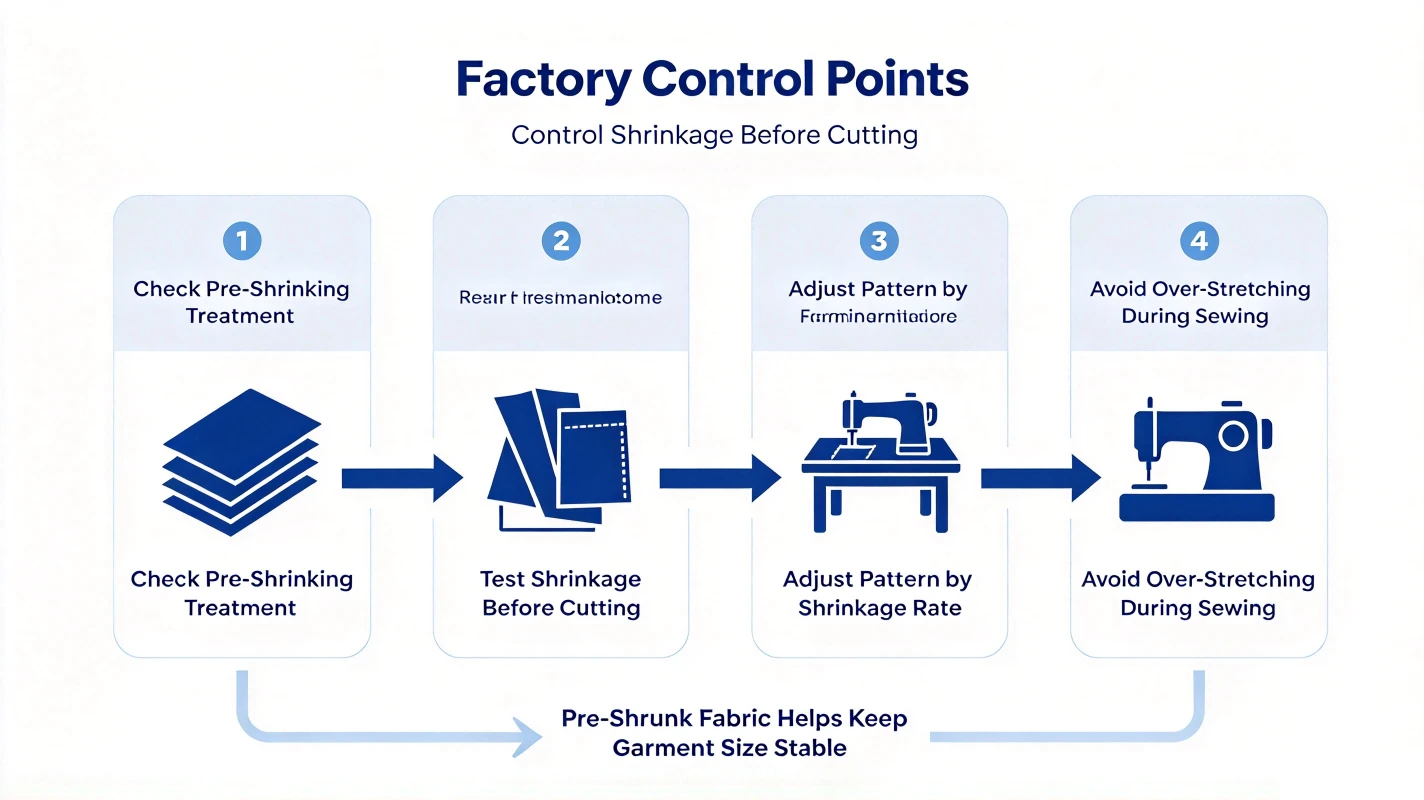
If the fabric has not undergone sufficient pre‑shrinking treatment before leaving the factory, shrinkage problems will erupt when the consumer washes the garment. Reputable factories use mechanical pre‑shrinking, steam pre‑shrinking, or wash pre‑shrinking to release internal stresses in advance and keep shrinkage within standard limits.
3. Differences in Shrinkage Rates Among Different Fabrics
Common fabrics for military training camouflage uniforms include pure cotton, polyester‑cotton blends, and pure polyester. Their shrinkage rates differ significantly.
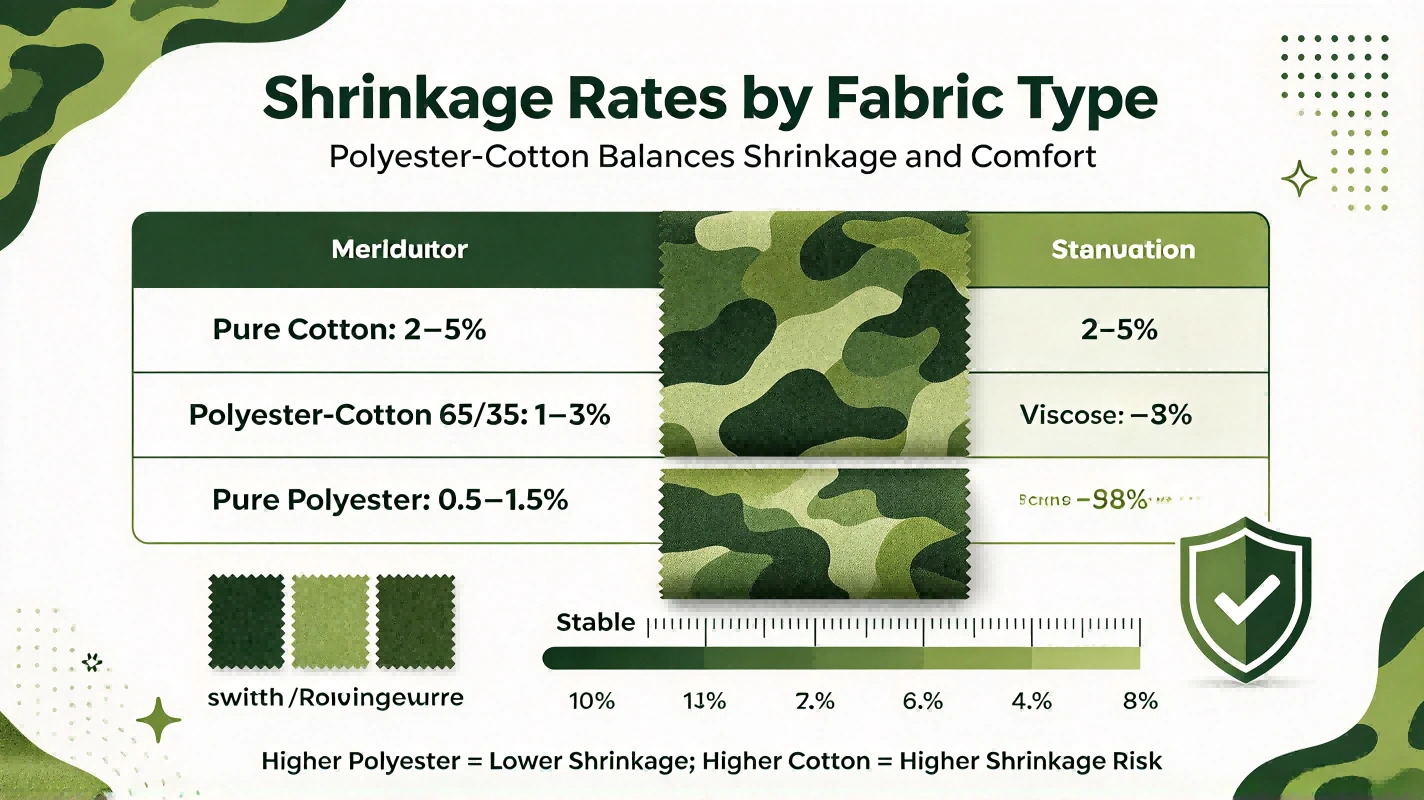
|
Fabric type |
Shrinkage rate range |
Cause |
Suitability for training uniforms |
|
Pure cotton |
2%-5% |
Cotton fibres are hydrophilic and swell; weaving tension is released |
Comfortable but shrinks noticeably; pre-shrinking required |
|
Polyester-cotton blend (T/C 65/35) |
1%-3% |
Polyester is hydrophobic and dimensionally stable; the cotton component still shrinks |
Balances shrinkage and comfort – the most common |
|
Pure polyester |
0.5%-1.5% |
Hydrophobic fibre with good dimensional stability |
Low shrinkage, but stuffy and not breathable |
|
Viscose/rayon |
5%-8% |
Strong hydrophilicity, low wet strength |
Not commonly used in training uniforms |
Conclusion: Military training camouflage uniforms generally use polyester-cotton blends, because polyester's hydrophobicity and dimensional stability can significantly reduce shrinkage. The higher the cotton content, the greater the shrinkage risk; the higher the polyester content, the lower the shrinkage-but breathability and comfort decrease.
4. National Standard Requirements for Shrinkage Rates
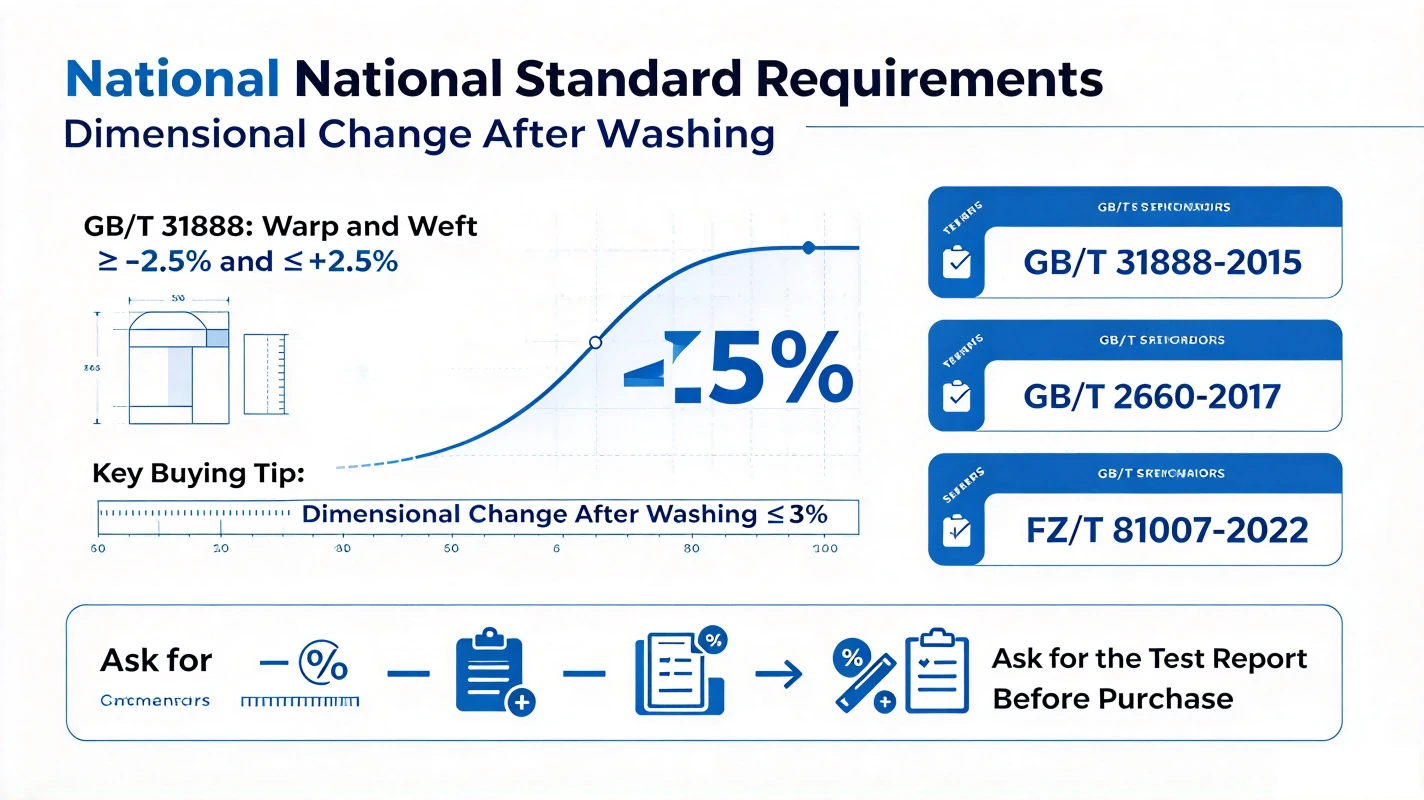
Although military training camouflage uniforms do not have a separate mandatory national standard, they usually refer to the following standards:
GB/T 31888-2015 "Primary and secondary school uniforms" : specifies dimensional change after washing, generally requiring warp and weft ≥-2.5% and ≤+2.5% (i.e., shrinkage not exceeding 2.5%)
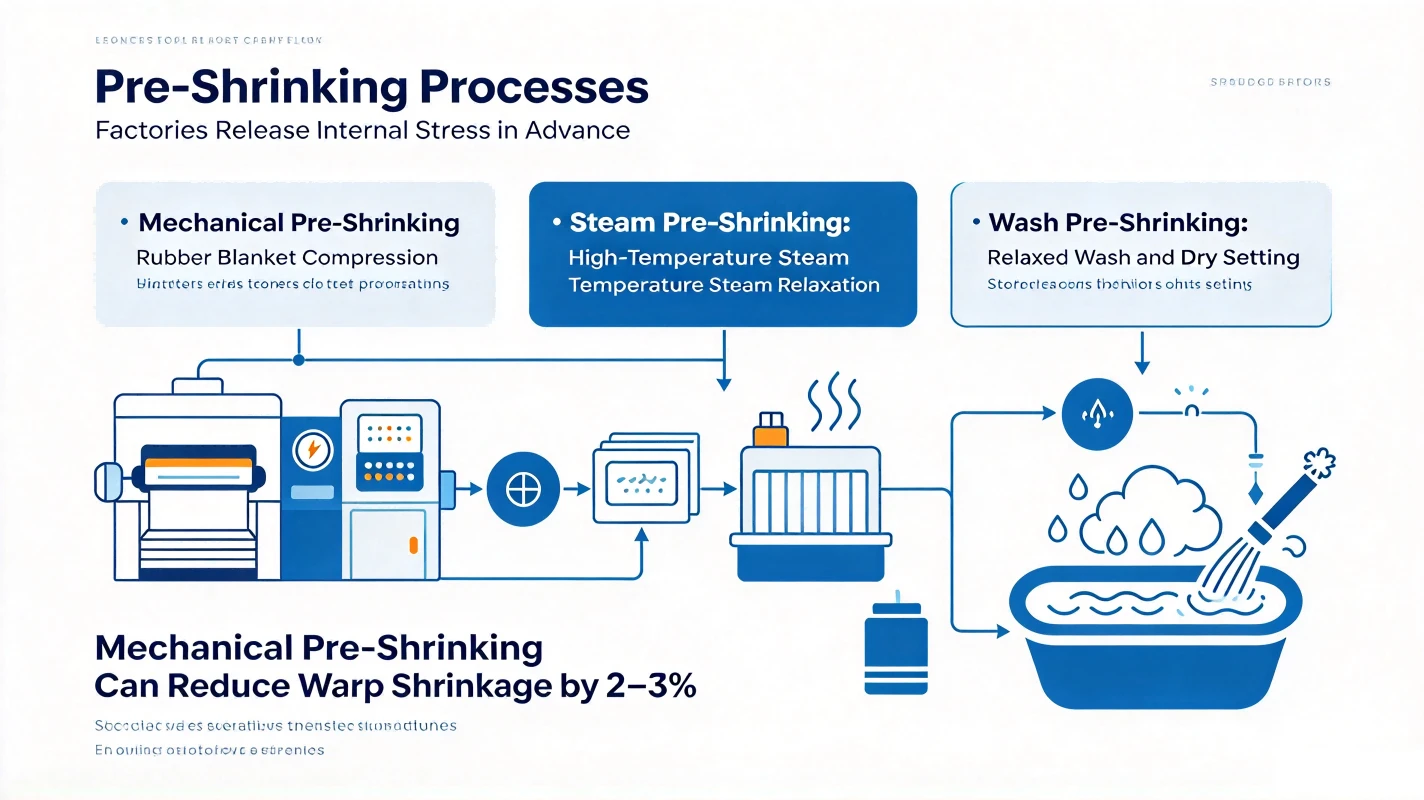
- GB/T 2660‑2017 "Shirts" : stricter requirements for dimensional change after washing
- FZ/T 81007-2022 "Single and lined garments" : applicable to general garments, specifying the range of dimensional change after washing
Key indicator: Dimensional change after washing, usually expressed as a percentage. Negative values indicate shrinkage; positive values indicate elongation. When purchasing training uniforms, suppliers should be required to provide test reports for dimensional change after washing to ensure they are within standard limits.
Buying tip: If the label states "dimensional change after washing ≤3%," the fabric has undergone pre-shrinking treatment and the shrinkage risk is relatively low. If there is no such marking, the first wash may show noticeable shrinkage.
5. Pre-Shrinking Processes: How Do Factories Control Shrinkage?
Pre-shrinking is an important process before fabric leaves the factory. Its purpose is to release internal stresses in advance and keep shrinkage within standard limits. There are three common pre-shrinking processes:
5.1 Mechanical Pre-Shrinking
Using a specialised pre-shrinking machine, the compression effect of a rubber blanket or felt causes the fabric to contract in the warp direction, releasing weaving tension in advance. Mechanical pre-shrinking can reduce warp shrinkage by 2%–3%.
5.2 Steam Pre-Shrinking
High-temperature steam causes the fibres to swell and the yarns to spring back. The fabric is then cooled and set, releasing internal stresses. Steam pre-shrinking works well for cotton fabrics.
5.3 Wash Pre-Shrinking
The fabric is washed in a relaxed state, allowing the fibres to fully swell and the yarns to contract, followed by drying and setting. Wash pre-shrinking is the most thorough but also the most costly, and is mostly used for premium fabrics.
Factory control points:
- Confirm whether the fabric has undergone pre-shrinking treatment before entering the factory
- Conduct shrinkage tests before cutting and adjust pattern dimensions according to the shrinkage rate
- Avoid excessive stretching of the fabric during sewing to reduce garment shrinkage
6. Washing Advice: How to Reduce Shrinkage in Training Uniforms?
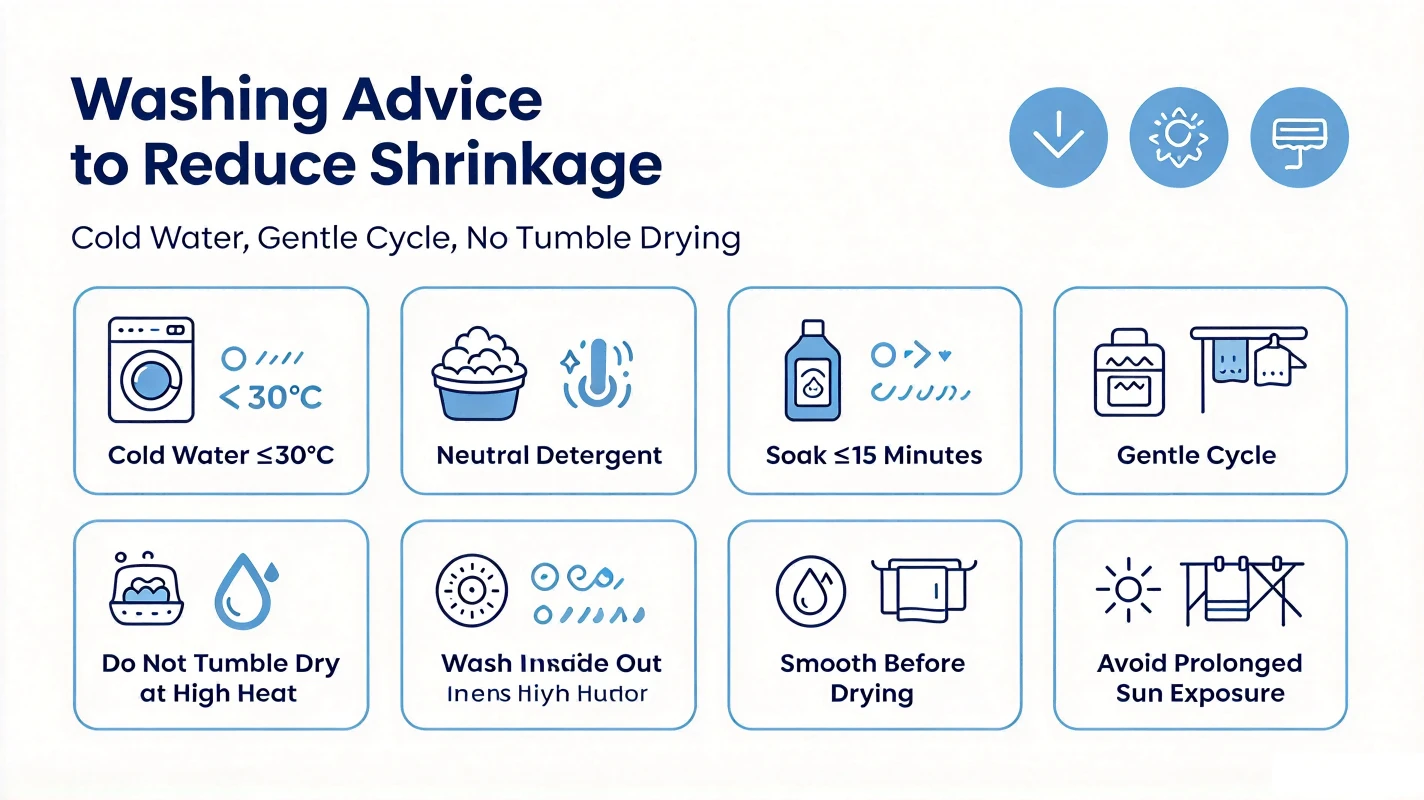
Even if the fabric has been pre‑shrunk, improper washing can still cause shrinkage. The following washing advice can effectively reduce shrinkage:
- Cold water washing: water temperature should not exceed 30°C; high temperatures accelerate fibre swelling and contraction
- Neutral detergent: avoid alkaline detergents that damage fibres
- Do not soak for long periods: soaking should not exceed 15 minutes to reduce fibre swelling time
- Gentle washing: choose a gentle cycle on the washing machine; avoid vigorous agitation
- Do not tumble dry at high heat: excessive drying temperatures cause fibre contraction; air drying is recommended
- Wash inside out: reduces surface friction and protects the camouflage pattern
- Smooth out before drying: smooth the garment before hanging to reduce contraction during drying
- Avoid prolonged sun exposure: long exposure accelerates fibre ageing and fading
7. Frequently Asked Questions (FAQ)
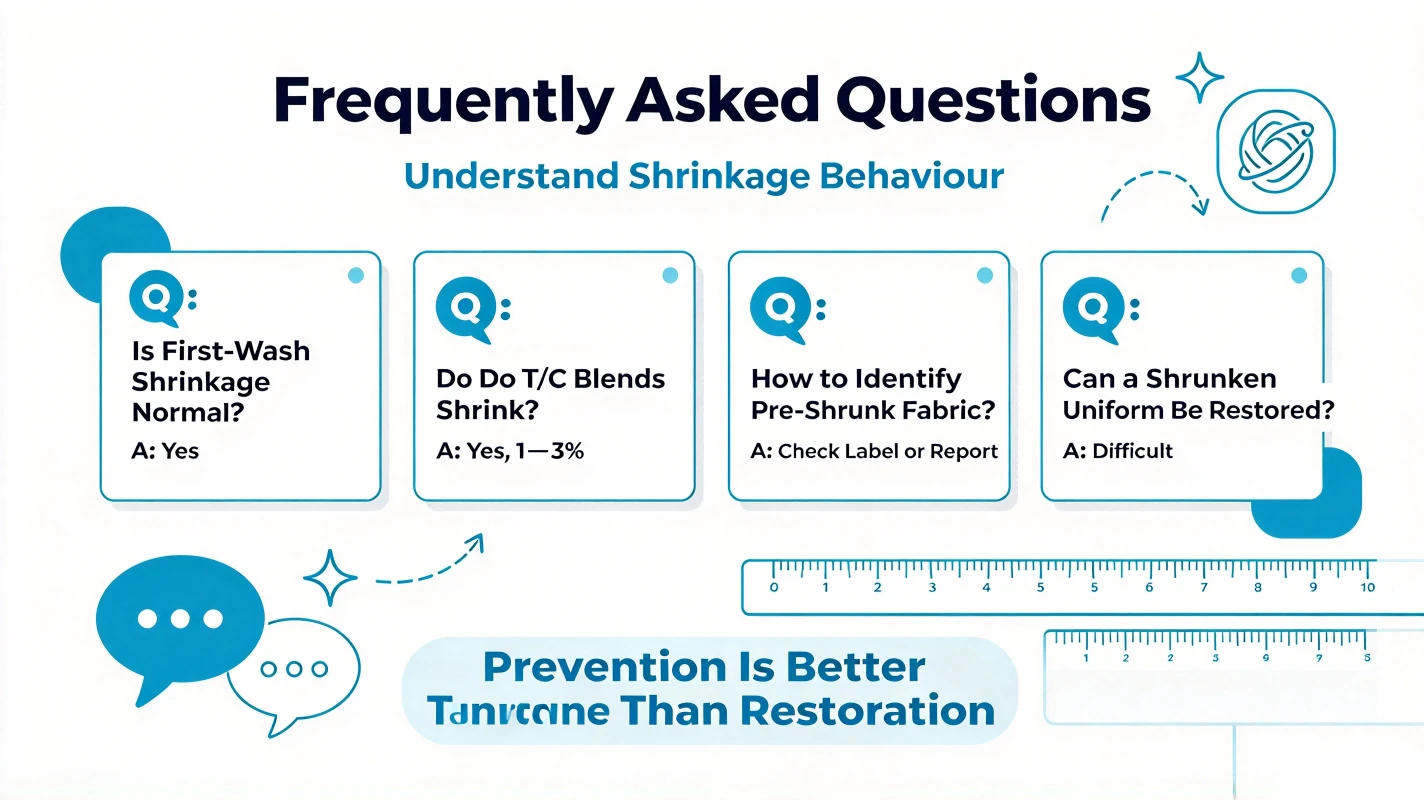
Q: The first wash shows the most obvious shrinkage-is that normal?
A: Yes. During the first wash, weaving tension and internal fibre stresses are released intensively, so shrinkage is most noticeable. Subsequent washes will show less shrinkage.
Q: Do polyester-cotton blend training uniforms shrink?
A: Yes, but to a lesser extent. Polyester's hydrophobicity gives the fabric good dimensional stability, but the cotton component can still shrink. The shrinkage rate of a 65/35 blend is usually 1%–3%.
Q: How can I tell if a training uniform has been pre-shrunk?
A: Check the label or product description. Reputable products will state "pre-shrunk" or "dimensional change after washing ≤3%." If there is no such marking, you can ask the seller.
Q: Can a shrunken training uniform be restored?
A: It is difficult to fully restore. You can try stretching and ironing with a steam iron, but the effect is limited. Preventing shrinkage is more important than restoring it afterwards.
8. Buying Advice
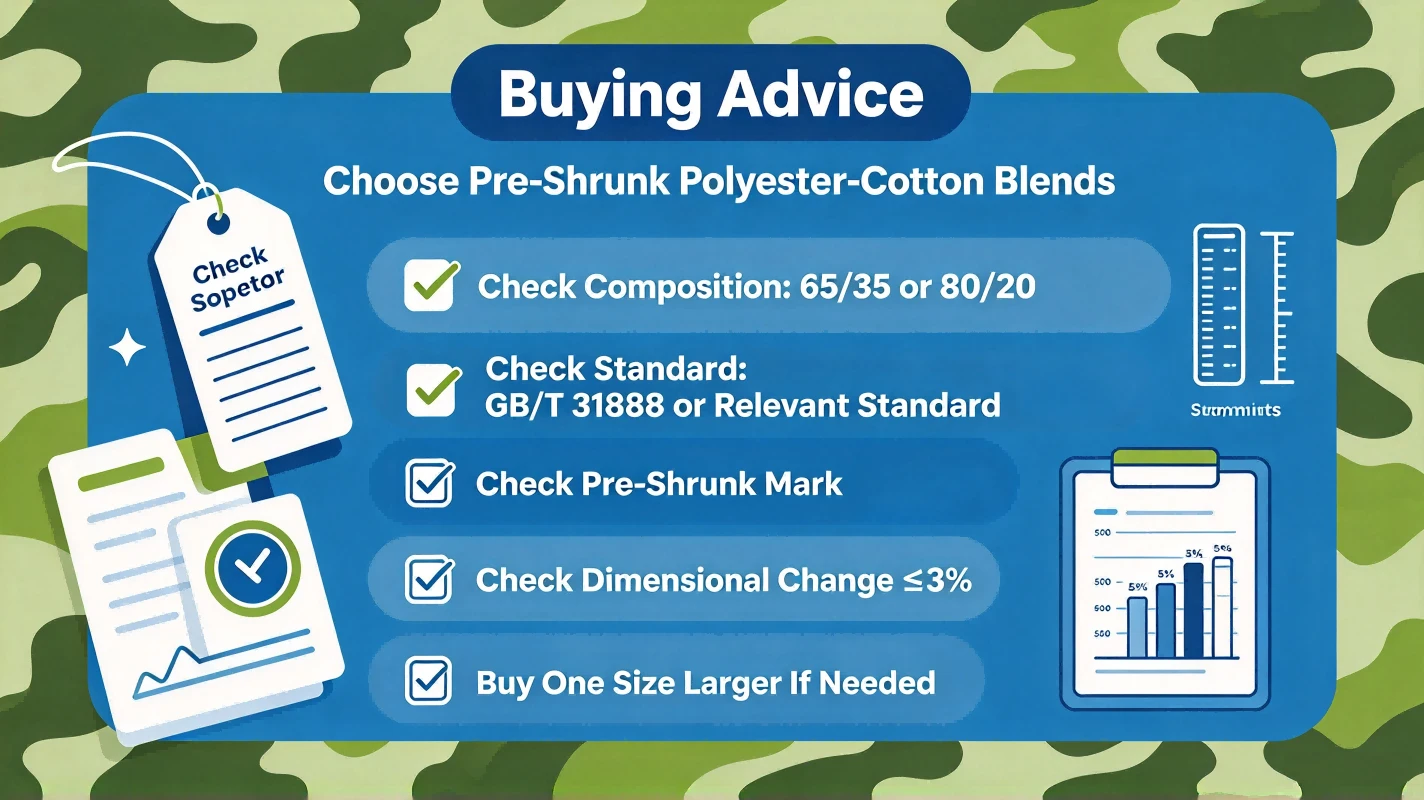
Check the composition: prefer polyester-cotton blends (65/35 or 80/20) – lower shrinkage rates
Check the standard: confirm compliance with GB/T 31888 or relevant standards; dimensional change after washing ≤3%
Check for pre-shrinking: choose products labelled "pre-shrunk"
Check reviews: refer to other buyers' washing feedback
Buy one size larger: if you are worried about shrinkage, you can appropriately buy one size up
Conclusion
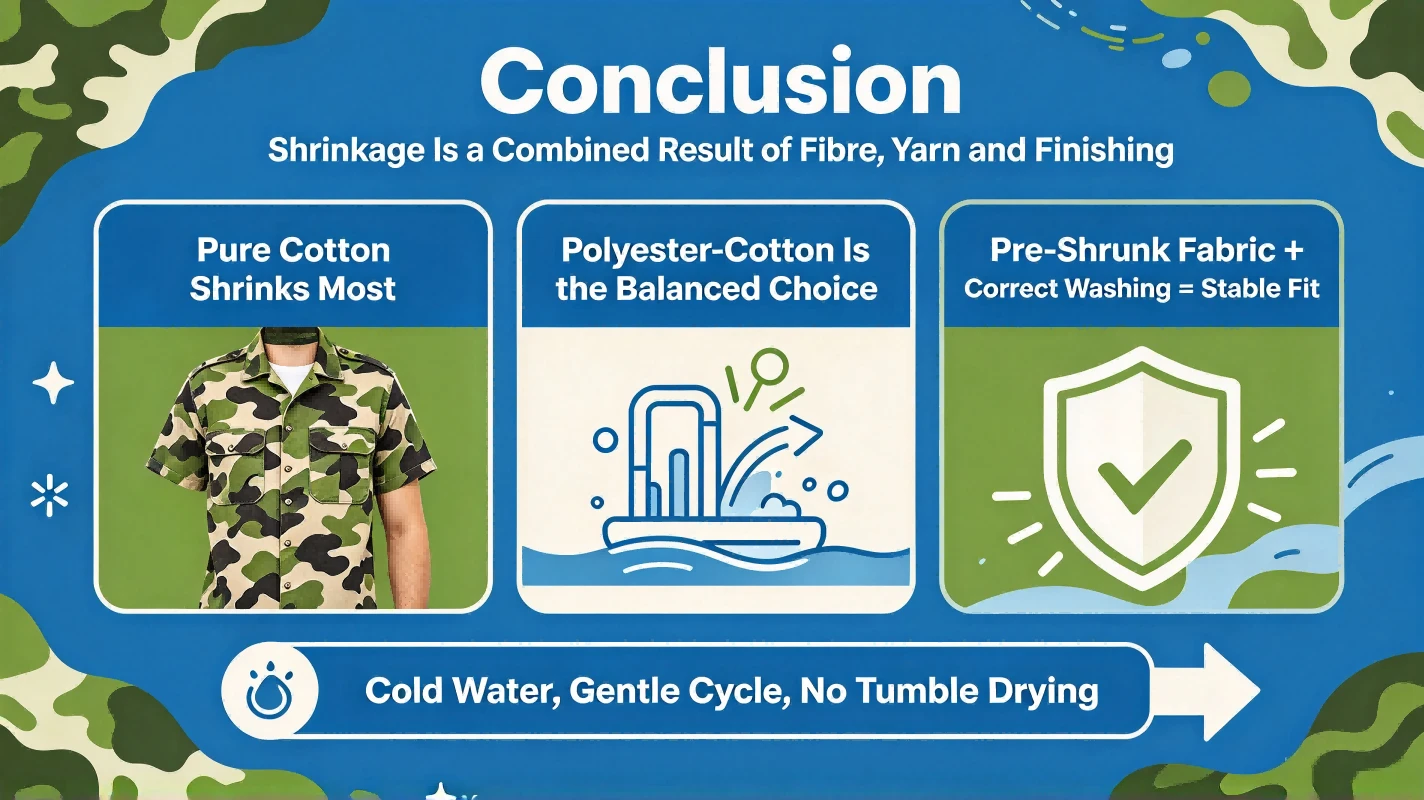
Shrinkage in military training camouflage uniforms after washing is essentially the combined result of fibre swelling due to water absorption, release of weaving tension, and insufficient pre-shrinking during finishing. Pure cotton shrinks the most, polyester-cotton blends next, and pure polyester the least. By choosing pre-shrunk polyester-cotton blend fabrics and adopting correct washing methods, shrinkage can be kept within an acceptable range.