Take stock of 12 individual pieces of equipment on a former West German soldier
Jul 25, 2025
After World War II, old Germany was divided into West Germany and East Germany. West Germany aligned with the Western bloc, while East Germany aligned with the Soviet bloc. By the mid - 1950s, as the Cold War became increasingly tense, West Germany joined the NATO bloc led by the United States and established a new armed force, with the full name "Bundeswehr" (Federal Defence Force of Germany). And this military force was fully Americanized.
Now, in this article, we are going to take an inventory of 12 pieces of equipment on a former West German soldier.
Ⅰ.M1 Helmet

Due to the American - style transformation of the West German military, the appearance of its soldiers was very similar to that of the US military during the same period. The individual soldiers also wore American - made M1 steel helmets. Normally, there was no helmet cover on the outside, but during combat, a camouflage net would be attached to it to enhance concealment. Meanwhile, some branches, weeds, etc. could be hung on the net to further improve the camouflage effect.

However, the American - made M1 steel helmets worn by West German soldiers at that time were not the products of World War II, but later - upgraded versions. The material of the helmet was thickened, making it harder, and the inner lining was improved, which enhanced the wearing comfort and also had the function of ventilation.
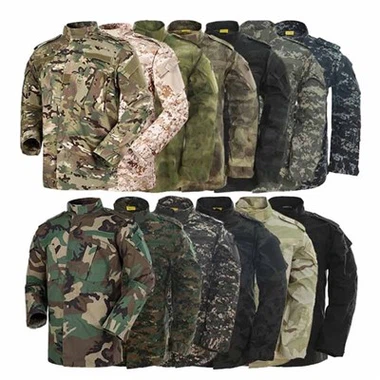
Ⅱ.Type 2 Swamp - style Camouflage Uniform

In the 1960s and 1970s, almost every West German soldier was equipped with a set of camouflage field uniforms during combat, with the main style being the Type 2 Swamp Camouflage Uniform. The main color of the uniform was khaki, and the camouflage patches on it were composed of khaki and sand colors, which could well adapt to the local combat environment at that time. The camouflage uniform was equipped with a windproof hood. In addition to four pockets (two on the top and two on the bottom), there was an extra small pocket at the corner of the clothes, allowing more items to be stored.
Ⅲ.35L Mountain Backpack

Even in the 1960s, West German soldiers still equipped with mountain backpacks that inherited the style of World War II. However, the style was not the one used in World War II, but a newly designed 35L mountain backpack. The size of the backpack was moderate, making it more suitable for marching and combat.

The 35L backpack of West Germany mainly served the purpose of holding survival equipment and extra items for soldiers, such as field mess tins, field canteens, individual rations, tableware, etc. However, some space was also used to hold additional rifle magazines.
Ⅳ.Field Canteen

The field canteens of the West German military did not directly continue the use of the World War II - era M31 model, but were equipped with a newly designed version. This type of canteen not only had a larger capacity and better heat preservation effect, but also featured multiple functions.
The canteen has a military green metal outer shell, which can help maintain the water temperature. This is more practical than the fleece canteen cover used during World War II. When soldiers use it, they need to open the upper part, which can also be used as a water cup. When reattached, it can protect the canteen as well.
Ⅴ.Mess Tin

The mess tins used by West German soldiers were directly designed with reference to American military mess tins. The body of the tin was made of aluminum, making it very lightweight. A single mess tin could be divided into three parts, which could hold both liquid and solid food. The lid of the mess tin was also equipped with a handle, which made it convenient for soldiers to cook food and prevented them from getting scalded during use.
Ⅵ.Entrenching Tool

In the 1960s, every West German soldier was equipped with an entrenching tool during marches and combat, which facilitated tasks such as removing obstacles, building defensive works, or setting up temporary positions.

The entrenching tools equipped to West German soldiers at that time were independently designed by themselves rather than imitating the American-style ones. The West German entrenching tools were compact and robust, with both the shovel head and handle made of metal, making them more durable than the regular wooden-handled entrenching tools. Additionally, the shovel handle could be extended and folded, which not only facilitated carrying during marches but also allowed adaptation to various environments. Even the modern German military still uses this type of entrenching tool.
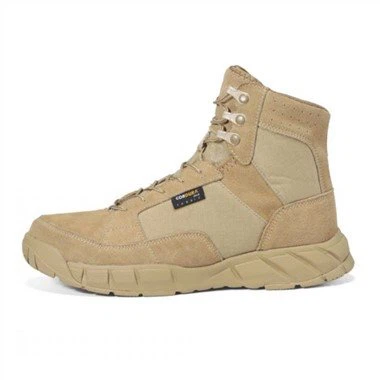
Ⅶ.1957 Pattern Long Boots

When the West German military was first established, its soldiers were all equipped with 1957 pattern long boots, which were worn both in daily life and training. The surface of these boots was made of cowhide, and the soles were made of rubber, making them overall sturdy, wear-resistant and waterproof. However, after the 1970s, these boots were phased out and replaced by more modern combat boots.
Ⅷ.Ammunition Pouch

In the 1960s and 1970s, West German soldiers were equipped with automatic rifles firing 7.62x51mm full-power ammunition, so they carried ammunition pouches designed to hold large magazines. These pouches could hold 20-round magazines for G3 or FAL automatic rifles. Made mainly of cowhide, they were tough and waterproof. Under normal circumstances, a soldier would carry four of them, hung on the abdomen via a 武装带 (webbing belt).
Ⅸ.Y-Strap

In the 1960s and 1970s, West German soldiers still used the Y-straps from World War II. These straps were indeed practical; despite their simple structure, they served important purposes. While securing clothing, they could also be used to hang various pieces of equipment, such as magazine pouches, canteens, mess tins, and other combat gear. Even in the 21st century, active-duty soldiers of the German Army still use Y-straps made of canvas, which shows the significance of this piece of equipment in the eyes of German soldiers.
Ⅹ.Automatic Rifle

When the West German military was first established, the rifles it was equipped with were mainly the FN FAL automatic rifles from Belgium. This model remained one of the most commonly used rifles in the world from the 1960s to the 1980s, with 军警 forces in over 90 countries having been equipped with the FN FAL rifle. It fires 7.62x51mm NATO full-power rifle ammunition, is fed by a 20-round double-stack magazine, has an effective range of 650 meters, and can fire in semi-automatic or fully automatic mode, with a theoretical rate of fire of approximately 650 rounds per minute.

Later, Germany's HK company designed the new HK G3 series of automatic rifles based on the Spanish CETME rifle. Not only do the two share a similar appearance, but they also have the same internal structure and ammunition caliber. The G3 rifle also fires 7.62x51mm NATO rifle ammunition, uses a 20-round magazine for feeding, has an effective range of 800 meters, and can also fire in single-shot or burst mode, with a theoretical fully automatic rate of fire of approximately 600 rounds per minute. Moreover, the G3 was among the most accurate automatic rifles of its time, and even now, many countries around the world still equip this series, including the active-duty German Army.
Ⅺ.Gas Mask

In the 1960s and 1970s, individual gas masks were still in use in the West German military. Whether in combat or on the march, soldiers would carry a gas mask canister on their backs, which contained the gas mask. Its design inherited that of the M30 model from World War II, except that some metal parts of the mask were replaced with engineering plastic parts.
Ⅻ.1957 Pattern Mountain Cap

In daily situations, every West German soldier wore a standard mountain cap. This style was introduced in 1957, and its design still retained the consistent features of the German M43 mountain cap from World War II, such as the upward-curving front of the cap and two buttons on the lower part. However, the 1957 pattern mountain cap of the West German military appeared to be better crafted with more adequate materials. Whether for officers or soldiers, the quality was the same. Similarly, the German Army still issues mountain caps of this style to this day.
That's all for this episode. Do you have any different thoughts on these 12 individual pieces of equipment of the former West German soldiers? Please express them in the comments below. For more information, remember to follow us, and we will continue to update for you in the next episode.