
The History and Military Uniforms of the German Field Gendarmerie in World War II
Nov 28, 2025
The Feldgendarmerie was a branch of the German Wehrmacht during World War II. It was nicknamed "Kettenhunde" (literally "chain dogs") because its members wore metal chain-attached identity plates around their necks. However, the Feldgendarmerie is different from the concept of military police (also known as military provosts) as we know it today. In Germany, gendarmes served as local security police in peacetime and only became field gendarmes responsible for military discipline during wartime. Today, we will introduce the history of the Feldgendarmerie.
Origin of the Gendarmerie
The German Gendarmerie originated in France, so it is necessary to introduce the history of the French Gendarmerie.
In 1373, the King of France established a unit called the Maréchaussée. This unit accompanied the French army on the battlefield and was mainly responsible for judicial work within the army, dealing with acts such as looting, desertion and absconding from service. During the reign of Louis XII, the responsibilities of the Maréchaussée began to expand from the military to the entire territory and population of France. On January 25, 1536, the jurisdiction of the Maréchaussée was extended to all civilians, and it traveled to various places to handle various cases and conflicts, especially in rural areas. Since the judicial power in rural areas was previously held by feudal lords, the King of France used the Maréchaussée to regain judicial power from various regions.
The Cavalry of the Maréchaussée in 1780
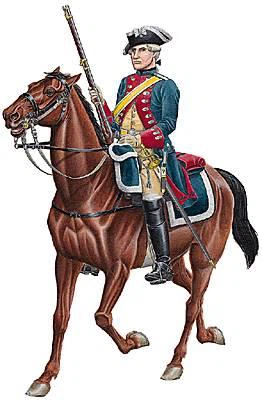
By 1720, the Maréchaussée was symbolically placed under the administrative jurisdiction of the Gendarmerie de France. The Gendarmerie was an elite cavalry unit at that time, second only to the Maison du Roi (Royal Guard). The term "Gendarmerie" derives from the French "gens d'armes", meaning "armed men". Originally, the Gendarmerie was the first standing army established by King Charles VII of France in 1445. It was a fully armed heavy cavalry unit, consisting of 15 companies with 100 men each. In 1720, the Maréchaussée was reorganized into a unified unit, with one cavalry company responsible for each of France's 33 provinces. By 1738, the Maréchaussée had 3,000 officers and cavalrymen.
The Gendarmerie in the 16th Century
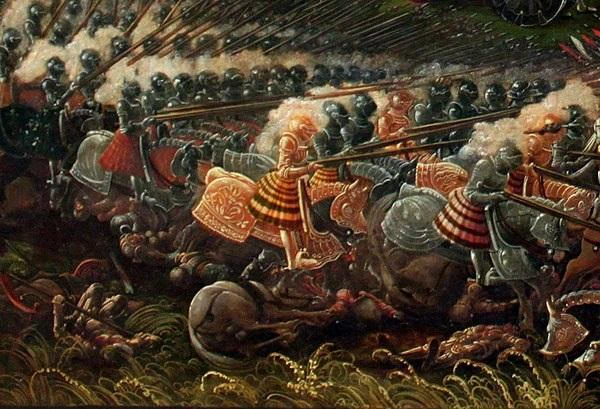
However, due to economic reasons, the Gendarmerie as a cavalry unit disappeared at the end of the 18th century, while the Maréchaussée was retained. In 1778, the Maréchaussée underwent reform, and all 33 companies were reorganized into 6 divisions with a total of 4,114 personnel on the eve of the French Revolution. During the French Revolution, the commanders of the Maréchaussée were generally under the jurisdiction of local constitutional authorities. Although they had ties to the King of France, they were regarded as forces supporting the reforms of the French National Assembly. To avoid using the name of the old regime, the Maréchaussée was renamed the Gendarmerie Nationale (National Gendarmerie) on February 16, 1791. It was divided into 28 divisions, each commanded by a colonel and responsible for 3 provinces, with 2 Gendarmerie companies in each province.
With the progress of the Napoleonic Wars, the concept of the Gendarmerie spread to various countries in Europe.
German/Prussian Gendarmerie
Following the model of the French Gendarmerie Nationale, the German states also began to establish gendarmerie units. On July 30, 1812, Prussia founded the Königlich Preußische Landgendarmerie (Royal Prussian Rural Gendarmerie). The responsibilities of the Prussian Gendarmerie included maintaining permanent police stations, transporting prisoners, supervising deserters, delivering official correspondence, and conducting anti-crime patrols.
On December 30, 1820, King Frederick William III of Prussia implemented a thorough reform of the Prussian Gendarmerie, thereby defining the division of its military and civil administrative powers. Organizationally, the Prussian Gendarmerie was subordinate to the Ministry of War, which was responsible for its salaries and equipment. In daily operations, however, it fell under the jurisdiction of the Ministry of the Interior and local civil authorities, tasked with maintaining public order in rural areas. One brigade was stationed in each province, totaling 8 brigades, with each brigade divided into 2 battalions. The entire Prussian Gendarmerie had 1,144 personnel, of whom 1,080 were cavalrymen. Gendarmes were initially recruited exclusively from former army non-commissioned officers, and later also from the navy. The training period for gendarmes was six months, concluding with a qualifying examination.
Prussian Gendarmerie Structure in 1862:1 Gendarmerie Commander (rank: General), 1 Adjutant, 8 Gendarmerie Brigade Commanders (rank: Colonel), 35 District Commanders (rank: Captain), 101 Non-Commissioned Officers (NCOs), 1,570 Gendarmes (including 1,121 Cavalrymen).
During the Franco-Prussian War, the Prussian Gendarmerie was mobilized into the Prussian Army and formed into the Feldgendarmerie (Field Gendarmerie). At that time, the main responsibilities of the Feldgendarmerie included maintaining battlefield order, ensuring traffic safety, and carrying out counter-espionage tasks.
After the outbreak of World War I in 1914, the German Army established 33 Feldgendarmerie battalions, which were later expanded to 115. One-third of their personnel were recruited from the Gendarmerie, and the rest from other Army units (mainly cavalry). Due to personnel shortages, the Ministry of the Interior also selected personnel from replacement units provided by the Ministry of War to serve as auxiliary gendarmes. Their responsibilities included protecting agriculture, preventing enemy sabotage (including railways, highways, canals, pipelines, granaries, and mills), monitoring prisoners of war (POWs), preventing their escape, and recapturing escaped POWs. During the war, the Feldgendarmerie also received support from dragoons and hussars, who undertook some gendarmerie duties such as headquarters security and POW guarding.
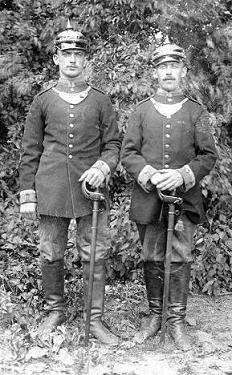
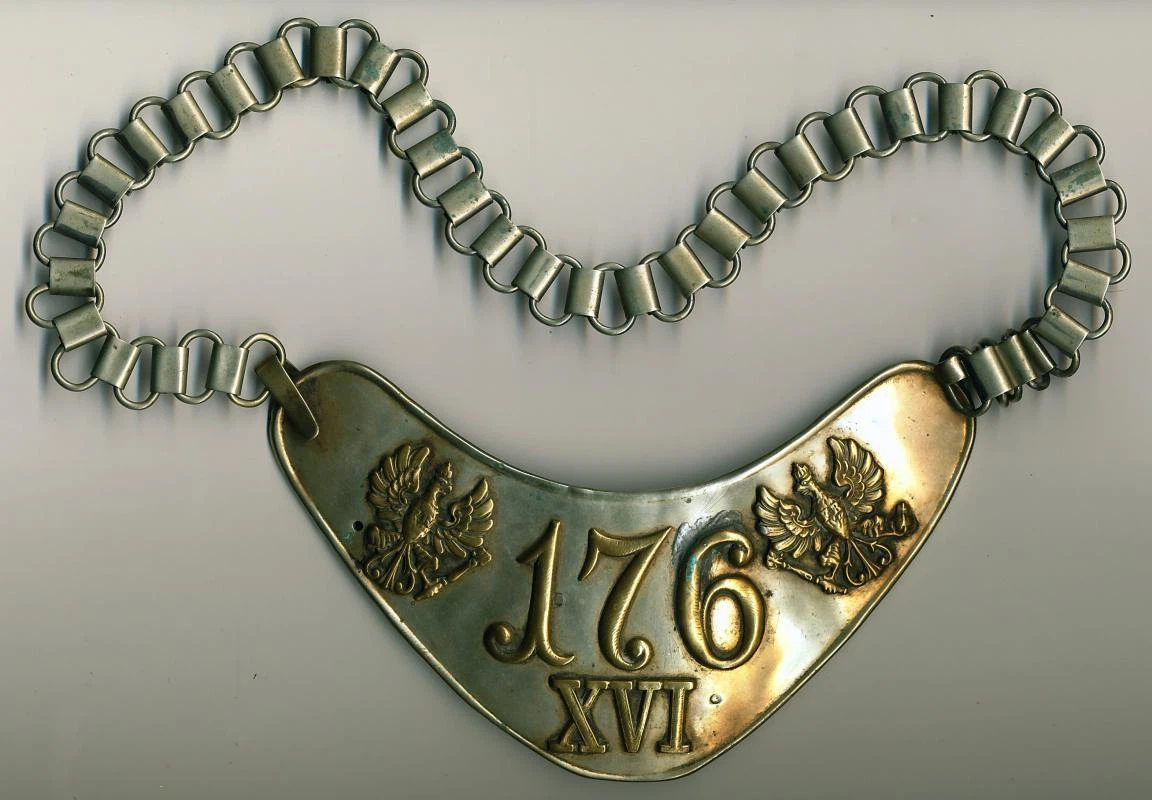
The Feldgendarmerie of Germany in World War I and their worn identification badges
The Gendarmerie of Nazi Germany
After the end of World War I, all Feldgendarmerie units were disbanded, and there were no gendarmerie units in the Weimar Reichswehr. The gendarmerie returned to civil administrative duties, serving as rural police under the Ministry of the Interior. They were responsible for public security in rural and mountainous areas with a population of fewer than 2,000, while garrison tasks were undertaken by soldiers performing relevant duties. After the Nazis came to power, local police forces in Germany were integrated into the Ordnungspolizei (Order Police), and the gendarmerie was also placed under the Ordnungspolizei umbrella.
The German Wehrmacht had no standing Feldgendarmerie units in peacetime. Only during major military exercises or pre-war deployments would Feldgendarmerie units be formed by gendarmes on orders. For example, during the military operation to annex Austria in March 1938, Feldgendarmerie-Abteilungen (Feldgendarmerie Battalions) 571 and 582, Feldgendarmerie-Trupps (Feldgendarmerie Platoons) 407, 413, and 473, as well as other Feldgendarmerie platoons deployed by various divisions during the operation, were all disbanded in April 1938.
s part of the Wehrmacht's mobilization preparations in the summer of 1939, the Feldgendarmerie was among the first units to be mobilized-they were a crucial link in the smooth deployment of the Wehrmacht. Under the 1939 mobilization plan, Feldgendarmerie detachments of active divisions had to be ready for deployment within 12 hours of receiving the mobilization order. This timeframe was significantly earlier than that for divisional and corps staffs, which only needed to complete preparations within 56 to 72 hours. In fact, to prepare for the invasion of Poland, Feldgendarmerie units of some formations were already fully established in early August 1939. At the start of World War II, the Ordnungspolizei transferred a total of 280 officers and 7,879 soldiers to the Wehrmacht. The Waffen-SS and Luftwaffe ground forces also formed their own Feldgendarmerie units, with the same organization and equipment as the Army. In most cases, the Army Feldgendarmerie performed Wehrmacht-wide duties, meaning they were responsible for all branches of the Wehrmacht under special orders.
Tasks of the Feldgendarmerie
Military Tasks:
1.Supervise military order and discipline.
2.Establish prisoner of war (POW) collection points on the front lines.
3.Investigate crimes committed by soldiers.
4.Apprehend deserters.
5.Supervise and control stragglers on the battlefield; if necessary, cooperate with the Wehrmacht Streifendienst (Patrol Service, established in 1941) and Feldjäger units (Field Hunters, founded in 1943 specifically for deserter apprehension).

Traffic Tasks:
1.Reconnoiter and mark roads.
2.Direct and regulate land traffic.
3.Control traffic at water crossings.
4.Monitor military road traffic.
5.Guide the flow of refugees.
6.Ensure priority passage for special transports.

Security Tasks:
1.Assist in counter-sabotage, counter-espionage, and counter-subversion operations.
2.Safeguard the security of headquarters.
3.Perform police duties in occupied territories (where local police organizations had not yet been established).
4.Protect rear-area communication lines and key facilities.
5.Conduct anti-guerrilla operations.
Starting from 1941, the latter two tasks became the main responsibilities of the Feldgendarmerie. Particularly in the Soviet Union and the Balkans, Feldgendarmerie battalions of each army/army group carried out security tasks almost constantly-they were among the few fully motorized units performing such duties in the rear areas of army groups and armies.

Establishment of the Feldgendarmerie
Army (Armee) / Army Group (Heeresgruppe)
Initially, each Army was to receive a Feldgendarmerie battalion consisting of 3 companies, which was usually assigned to the Kommandant rückwärtiges Armeegebiet (Army Rear Area Commander). This commander was responsible for ensuring security, logistics supply, personnel movement, and tactical coordination in the Army's rear area. In individual cases, only an independent motorized Feldgendarmerie company would be assigned.
On the Eastern Front (Soviet Union), the Befehlshaber rückwärtiges Heeresgebiet (Army Group Rear Area Commander) was also allocated a Feldgendarmerie battalion.,
Corps (Korps)
Both Army and Waffen-SS Corps had motorized Feldgendarmerie platoons, which also applied to Luftwaffe Field Corps and Parachute Corps. Starting from the end of 1943, each Corps began to receive an independent motorized Feldgendarmerie company, composed of 3 platoons.
Division (Division)
Each Division had one Feldgendarmerie platoon:
Infantry Divisions (including Mountain Divisions, Light Infantry Divisions, Luftwaffe Field Divisions, and Parachute Divisions) were assigned Motorized Gendarmerie Platoon Type a.
Panzer Divisions, Motorized Infantry Divisions / Panzergrenadier Divisions were assigned Motorized Gendarmerie Platoon Type b.
Security Divisions had no organic Feldgendarmerie; Feldgendarmerie units were subordinate to Field/Kreis/Local Commandants (Feldkommandanturen/Kreiskommandanturen/Ortskommandanturen)-armed forces of the German military in occupied territories.
From the end of 1943, some fully motorized Divisions were equipped with a Feldgendarmerie company instead of a platoon, such as the Großdeutschland Panzergrenadier Division and many Waffen-SS Divisions (1st to 3rd, 5th, 6th, 10th to 12th, 16th to 18th). The Prinz Eugen Division sometimes had two Feldgendarmerie platoons: one motorized and one mounted.
Commandants (Kommandanturen)
Ortskommandanturen (Local Commandants), Kreiskommandanturen (District Commandants), and Feldkommandanturen (Field Commandants) usually (but not always) had a partially motorized Feldgendarmerie Platoon Type c or d. Other Feldgendarmerie platoons were subordinate to Fixed Post Commandants or Fortification Commandants. These three commandants were under the jurisdiction of the Army Rear Area Commander, with a hierarchical order from Field Commandant down to Kreis Commandant and Local Commandant.
In some larger cities, there were independent partially motorized Feldgendarmerie companies, often designated by the city name (e.g., Paris). These companies were also subordinate to Local Commandants or Wehrmachtskommandanturen (Wehrmacht Commandants).
Other Units
Many independent Brigades had one Feldgendarmerie Platoon Type a or b, such as Waffen-SS Brigades, the 900th Motorized Training Brigade, and the Führer Grenadier Brigade.
The 602nd, 605th, and 616th Motorized Transport Regiments had Feldgendarmerie platoons responsible for traffic control. Each transport regiment had approximately 2,000 vehicles, capable of transporting a full Infantry Division.
Wehrmacht-Erfassungs-Kommandos (later renamed Feldwirtschafts-Kommandos / Field Economic Commands) also had varying numbers of Feldgendarmerie units. Established in 1942 and 1943, these units were tasked with exploiting war booty and military supplies in France and Italy.
Personnel Establishment
"Motorized" means military personnel are transported by cars, motorcycles, sidecar motorcycles, trucks, military buses, etc.; "partially motorized" includes the aforementioned vehicles plus bicycles.
Motorized Feldgendarmerie Battalion
Headquarters (3 officers, 3 non-commissioned officers [NCOs], 3 soldiers), Maintenance (1 NCO, 3 soldiers), Transport & Logistics (4 NCOs, 8 soldiers)
3 × Feldgendarmerie Companies (116 personnel each):
Company Headquarters (1 officer, 3 NCOs, 3 soldiers), Maintenance (1 NCO, 3 soldiers), 3 × Feldgendarmerie Platoons (1 officer, 20 NCOs, 10 soldiers each), Transport & Logistics (4 NCOs, 8 soldiers, including accountants, drivers, and cooks)
Independent Motorized Feldgendarmerie Company (177 personnel)
Company Headquarters (1 officer, 4 NCOs, 6 soldiers), Maintenance (1 NCO, 3 soldiers), 3 × Feldgendarmerie Platoons (2 officers, 35 NCOs, 13 soldiers each), Transport & Logistics (4 NCOs, 8 soldiers, including accountants, drivers, and cooks)
Feldgendarmerie Platoons
Motorized Feldgendarmerie Platoon Type a (2 officers, 21 NCOs, 10 soldiers)
Motorized Feldgendarmerie Platoon Type b (3 officers, 41 NCOs, 20 soldiers)
Partially Motorized Feldgendarmerie Platoon Type c (1 officer, 25 NCOs, 7 soldiers)
Partially Motorized Feldgendarmerie Platoon Type d (1 officer, 20 NCOs, 6 soldiers)
Military Uniforms
Since the Feldgendarmerie was recruited from the Gendarmerie of the Ordnungspolizei, during the early transitional period of formation, its members wore Gendarmerie police uniforms. These uniforms were supplemented with Wehrmacht eagle insignias and shoulder straps, and a green cloth armband was worn on the left arm for identification-embroidered with "Feld-Gendarmerie" in yellow silk thread via machine.
The collars and cuffs of the Gendarmerie police uniform were dark brown, and there was no Wehrmacht eagle insignia on the right chest pocket.

The green Feldgendarmerie armband was also worn by some Wehrmacht soldiers serving as temporary Feldgendarmerie personnel.

Three Feldgendarmerie personnel in police uniforms wore green armbands on their left arms. Their uniforms had been modified: a Wehrmacht eagle insignia was added to the right chest pocket, and white trim indicating the NCO rank was added above the dark brown collars.

A Feldgendarmerie member in a police uniform

The Motorisierte Gendarmerie (Motorized Gendarmerie) was responsible for traffic control on rural roads and highways. During World War II, the Feldgendarmerie provided a large number of personnel for this unit. Below are the armband and photos of the Motorisierte Gendarmerie.

After the transitional period, the Feldgendarmerie officially adopted the Wehrmacht field uniform and various military uniforms, with orange as their branch color.

After the transitional period, the Feldgendarmerie officially adopted the Wehrmacht field uniform and various military uniforms, with orange as their branch color.

The Feldgendarmerie retained an orange oval eagle insignia on their left arms, which was the emblem of the Ordnungspolizei.

The collar tabs and shoulder straps of Feldgendarmerie soldiers featured the orange branch color.


The service cap of Feldgendarmerie non-commissioned officers (NCOs) featured orange branch color piping.

In accordance with regulations, the Feldgendarmerie wore a 3.2-centimeter-wide armband 14.5 centimeters above the left cuff. The armband was woven from brown rayon, with gray stripes along the upper and lower edges, and the word "Feldgendarmerie" embroidered on the front in gray Gothic script.

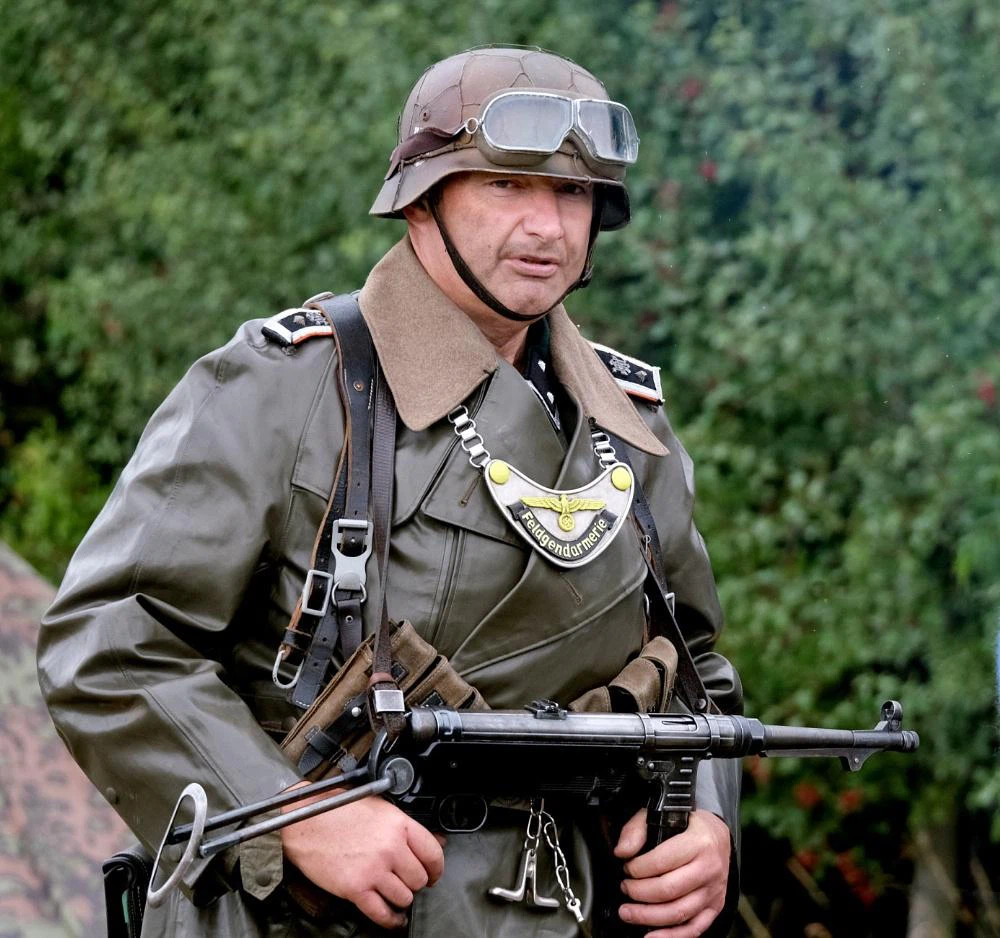
This is the standard attire of a Feldgendarmerie corporal in the picture.

he most distinctive insignia of the Feldgendarmerie was the crescent-shaped metal gorget worn on the chest. Introduced in late 1938, the gorget was entirely crescent-shaped and made of stamped sheet metal. At its center was the Wehrmacht's spread-eagle insignia, below which was a ribbon inscribed with "Feldgendarmerie." The left and right ends of the top were adorned with cobblestone-patterned buttons. The eagle insignia, inscriptions, and buttons were luminous yellow, capable of glowing in the dark. The ribbon had a matte dark gray finish, and the entire gorget featured a matte silver appearance.

For Luftwaffe Feldgendarmerie personnel, the gorget featured the Luftwaffe eagle insignia instead.

On the back of the gorget were two brazed metal strips and a clasp. The metal strips were located at the top left and the left of the center, while the clasp was at the top right. One end of the metal chain was fixed to the clasp at the top right, and the other end was inserted into the metal strip at the top left-this end was removable. The middle metal strip was designed to slot into the buttonhole of the field uniform, keeping the gorget securely in place without wobbling. The back of the gorget was fitted with a protective pad (made of cardboard or wool) to prevent clothing abrasion. The suspension chain was crafted from matte silver metal, consisting of 41 oval wire links connected by bent metal plates.


The metal gorgets worn by the Feldgendarmerie of the Großdeutschland Division were modified: a metal plate with a black background and white borders was added to the upper half of the crescent, featuring the Großdeutschland Division's insignia "GD".


End of the full text