The Sixteen Most Popular Individual Equipments Loved by U.S. Soldiers, with Various Uses for All Purposes
Jun 27, 2025
The weaponry and equipment of contemporary U.S. soldiers are recognized worldwide as the most advanced, and they have always been imitated by others. In addition to carrying weapons and ammunition, a U.S. soldier is equipped with a variety of advanced individual gears. Moreover, different missions or military branches involve distinct configurations, encompassing almost all types of equipment such as electronic devices, protective gear, and detection equipment.
This issue will briefly introduce the 16 most favored individual equipments among contemporary U.S. soldiers.

1.ACU Camouflage Uniform
ACU Full Name: Army Digital Camouflage Universal Combat Uniform
Developed by the Natick Research Center in the early 21st century, it was put into service in 2005 and fully replaced the previous uniforms in the U.S. Army by 2008. Helmet covers, body armor, tactical vests, canteens, gloves, wrist guards, and other accessories were also introduced based on the original camouflage pattern, with each soldier issued four sets.
ACU camouflage boasts excellent concealment, perfectly blending into urban, ruin, desert, and suburban environments. The pattern uses three colors-light gray, dark gray, and white-composed of pixel-like small squares, hence the name "digital". This design not only camouflagesagainst the naked eye but also evades detection by night-vision goggles and other electronic scanning devices.
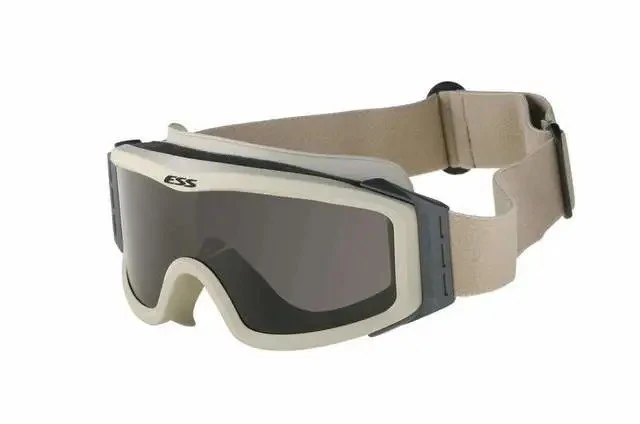
2.ESS Profile NVG Goggles
ESS Profile NVG Goggles Designed for desert operations, these dustproof goggles are mounted on the helmet's brow pad. They can be quickly flipped down to eye level during use and retracted above the helmet when not needed, with a protective cover available for storage. The frame combines nylon and silicone, featuring a foam-backed cushion that contours tightly to the head, ensuring a secure fit and optimal eye protection.
The 2.4mm-thick glass lenses undergo specialized treatment to prevent fragmentation. Even when struck by shotgun pellets at 10 meters, the lenses will crack but remain intact, providing 100% protection against shrapnel. Popular among U.S. special forces and Marines, these goggles excel in high-risk environments.

3.FAST Tactical Helmet
FAST Tactical Helmet As the dedicated helmet for U.S. special operations, FAST stands out for its modular design, enabling tactical accessories to be mounted based on mission requirements. The top allows attachment of tactical gear, while the front supports night-vision goggles. Side rails accommodate infrared laser pointers or high-intensity flashlights, and pre-cut slots on both sides ensure comfortable fitting of headsets and microphones. Velcro panels on the crown secure helmet covers or battle insignias.
Constructed from Kevlar fiber, the helmet combines high tensile strength with lightweight durability, effectively protecting the head while serving as a functional tactical tool. Its design integrates seamlessly with mission-specific equipment, making it a cornerstone of special forces gear.
4.GPNVG-18 Ground Panoramic Night Vision Goggle
GPNVG-18 Ground Panoramic Night Vision Goggle As the go-to advanced night vision device for U.S. Navy SEAL Team Six, the GPNVG-18 (Ground Panoramic Night Vision Goggle) stands out with its four-lens configuration, delivering exceptional nighttime visibility. Equipped with thermal imaging switching capability, it offers near-360° field-of-view during operations, eliminating blind spots. Constructed from engineering plastic and nylon, the goggle features two lens pairs as a set, with battery compartments at the rear or compatibility with external battery packs mounted on the helmet via cables-extending operational life and enhancing combat efficiency.
Priced at over $60,000 per unit, this high-cost system is primarily issued to SEAL Team Six. A lightweight variant is also deployed to A-10 Thunderbolt II attack aircraft pilots and C-130 Hercules gunship gunners, balancing functionality with mission-specific requirements.

5.IBA "Interceptor" Heavy-Duty Body Armor
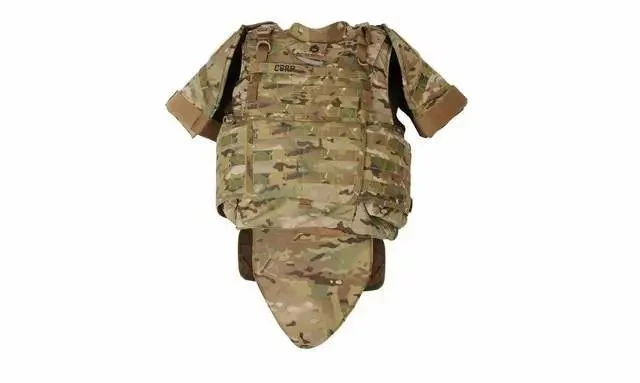
The "Interceptor" body armor, a heavy-duty individual protective gear adopted by the U.S. Army, entered service in 2001 under the abbreviation IBA (Improved Body Armor). Unlike conventional tactical vests, it features modular panels that can be 拼接 to protect the upper arms, neck, shoulders, chest, abdomen, and groin. Available in multiple models, it accommodates various body types and mission requirements.
Constructed with a KM-2 Kevlar® fiber inner liner and covered by a camouflage-patterned outer shell matching combat uniforms, the armor effectively stops 5.56mm rifle rounds, 9mm pistol ammunition, and-at long ranges-7.62mm rifle fire. However, its weight is substantial: fully equipped with all protective modules, it tips the scales at 7.4 kilograms.
6.ILBE Hydration Backpack
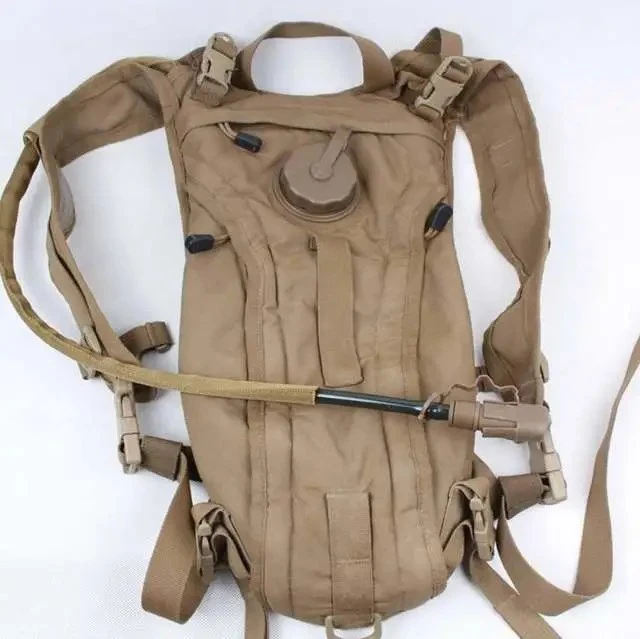
ILBE Hydration Backpack Also known as the "Zushi Bird Hydration Backpack," the ILBE (Improved Load Bearing Equipment) is a unique backpack-style water carrier in the U.S. military. Mounted on the soldier's back during operations, it features a drinking tube integrated into the shoulder straps for easy access-allowing not only the wearer but also nearby teammates to hydrate. The backpack's rear is equipped with a nylon cover that opens for refilling, housing a leather water bladder capable of holding 6 to 10 liters of water.
This design proves particularly practical in desert environments. Beyond its hydration function, the backpack provides rudimentary back protection: if struck by gunfire, the water bladder acts as a buffer, increasing the likelihood of the round hitting the bladder before the body. Its ergonomic fit and dual-purpose functionality make it a staple in combat loadouts.
7.LA-8 Finger-Mounted Laser Friend-or-Foe Identifier
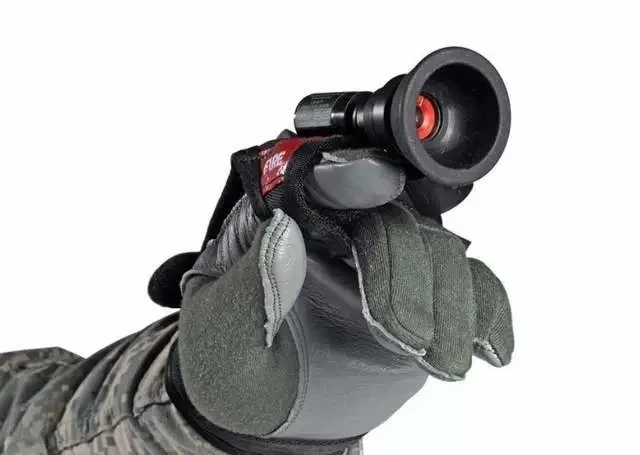
The LA-8 is a compact finger-mounted FOF (Friend-or-Foe) identifier, though it can also be attached to clothing or firearms during operations. Through command systems or night vision goggles, it marks friendly forces with special encoded images. Equipped with a GPS positioning system, it provides real-time data on personnel location and mission progress.
8.M25 Electronic Stabilized Telescope
The M25 electronic stabilized telescope is typically issued to U.S. military sniper teams, enabling snipers to mark targets and observe enemy positions. In normal conditions, it functions as a standard sight, but at night, it can switch to night vision or thermal imaging mode, ensuring usability in all environments without performance degradation. Constructed from engineering plastic and nylon, it measures 20.96 cm in length, 19.05 cm in width, and 8.89 cm in height, with a 4.3° field of view and 14x magnification. Weighing 2.04 kg, it features a gyro-stabilization mechanism for handheld use or mounting on a stand, requiring two AA batteries for nighttime operations.
Highly favored by U.S. special forces sniper teams, the M25 is employed by units such as Delta Force and the SEALs, integrating seamlessly into tactical reconnaissance and long-range engagement missions.


9.M145 MGO Sight
The M145 MGO is a scope designed for the M249 squad automatic weapon, and it can also be mounted on rifles or the M240 general-purpose machine gun. It attaches to firearms via a Picatinny rail interface at the base, with side screws for tightening and engaging the rail slots. Constructed from engineering plastic, the scope offers 2-3x magnification. Renowned for its high accuracy and practicality, the M145 MGO is issued to almost all branches of the U.S. military.
10.M151 Enhanced Target Viewing Scope
The M151 enhanced target viewing scope serves as a primary asset for U.S. military sniper teams, typically functioning as an auxiliary observer's scope. It enables target locking, confirmation of neutralization, and wind condition monitoring for snipers, compatible with rifles like the M24, M40A1, and MK13. With 12-40x magnification, a 60mm objective lens, and a length of 55 cm, the 800g scope can be mounted on rail-based stands, supporting round-the-clock sniping operations.


11.PED Lightweight Laser Pointer Rangefinder
The PED, one of the U.S. military's most advanced laser rangefinders, incorporates modules such as a thermal imager, day camera, laser pointer dot projection, electronic display, eye-safe laser rangefinder, digital magnetic compass, and anti-spoofing GPS. It can be used detatchably as a standalone unit, combined with a mount and independent external battery pack, or integrated into infantry fighting vehicles or Humvees. Soldiers can deploy it from a distance of 5 kilometers, and it supports precision strikes by guiding munitions to targets.
12.Revision Military "Desert Locust" Goggles
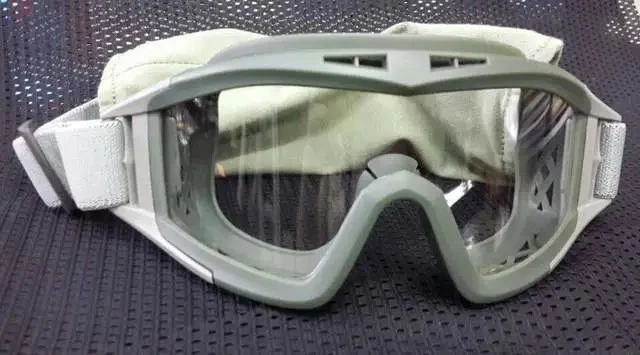
The "Desert Locust" goggles are the second most commonly used eye protection device in the U.S. military. Similar to the ESS goggles mentioned above, they are constructed from treated high-density glass, providing ballistic protection at a certain distance. The frame combines engineering plastic and nylon, with an adjustable elastic strap at the rear for mounting over helmets. A secondary protective layer behind the lens conforms tightly to the soldier's face without gaps, ensuring effective eye protection. Currently issued to the U.S. Marine Corps, National Guard, and Army infantry.

13.ROTHCO Combat Boots
One of the most commonly used military combat boots in the modern U.S. military, ROTHCO boots come in both waterproof and non-waterproof versions. Constructed from high-grade cowhide leather with a thickened rubber sole for slip resistance and abrasion protection, their design prioritizes rugged durability over aesthetics. Though appearing simple and rough, these boots are built to last-many soldiers wear the same pair from issuance to discharge. Their earth-tone yellow color and desert-adapted design make them ideal for arid environments, and they are standard issue across all branches of the U.S. military.
14.TRIGR Laser Target Locator
The TRIGR is a man-portable laser target locator used by the U.S. military, designed to mark targets for friendly air and artillery support. It integrates adjustable thermal imaging, night vision, sensing, and GPS positioning systems, enabling precise fire coordination through multiple modalities. Lightweight and constructed with an engineering plastic housing (rubberized at the eye piece for comfort), it supports detachable or external battery packs for extended operation. Currently fielded with U.S. Army infantry squads and Marine Corps combat units.

15.AN/PPS-26 Through-Wall Detection Sensor System
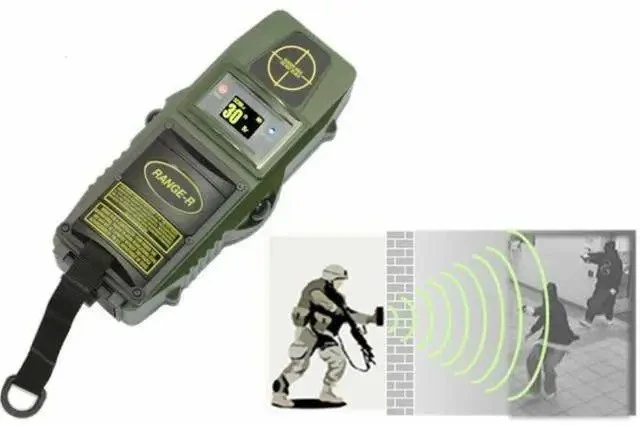
The AN/PPS-26 is a sensor system used by the U.S. military for breaching and CQB (Close Quarters Battle) operations. When placed against walls or doors, its sensors detect the position and distance of enemies behind obstacles, with the screen displaying information such as enemy numbers and configurations. Equipped with a detachable battery, the unit features an engineering plastic housing wrapped in a rubber protective sleeve and a lanyard, safeguarding against drops, water ingress, and loss during combat.
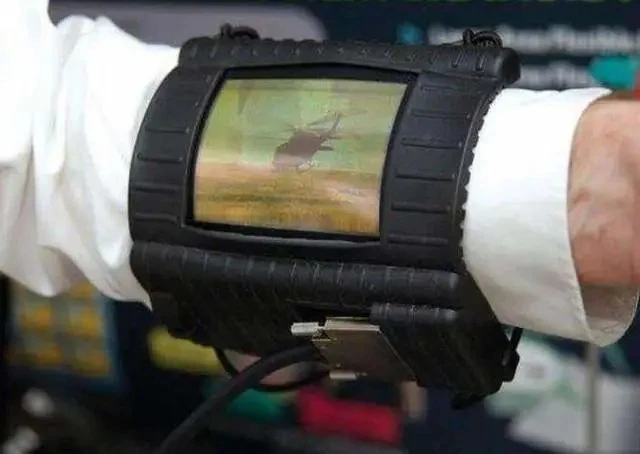
16.Wrist-Mounted Video Wireless Network
First fielded to special forces in 2003, this equipment serves as a man-portable tactical computer that has evolved through multiple generations to become increasingly lightweight. Its display features an ergonomic inward-curved design, surrounded by a black rubber guard to prevent static discharge while ensuring comfortable wear. It can operate via external power or specialized batteries.
The tactical computer receives battlefield intelligence from drones or command posts and enables communication with headquarters. As an indispensable asset for future soldiers, it has already been implemented in some U.S. Army infantry combat squads.
That's all for the inventory of the 16 most favored individual equipments of U.S. soldiers in this issue. If you have any different ideas or want to add something, welcome to express them in the comments. If you want to know more about weapons and equipments, please remember to follow us. We will continue to update for you in the next issue.