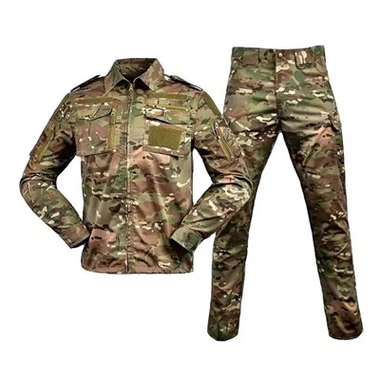
Camouflage fabrics can be customized according to requirements, and various ingredient ratios can be made
Jul 15, 2025
1. Moisture-wicking and sweat-releasing fabrics
They mainly use physical methods to spin several types of profiled fibers such as cross-shaped, Y-shaped, T-shaped and honeycomb-shaped ones. The surface of these fibers has a number of micro-grooves. With the help of the capillary moisture-conducting structure of the grooves, moisture can be discharged from the body instantly. They are widely used in sportswear, outdoor travel clothing, casual wear, underwear, shirts and other fields.

2. Antibacterial fabrics
Different from the traditional simple process of adding antibacterial agents to fabrics, antibacterial silver ion materials are melted into the spinning melt, and then processed into new functional silver ion fibers through spinning, which have antibacterial, bactericidal and bacteriostatic properties, with a bacteriostatic rate of 99%. They are widely used in bedding, home furnishing, clothing, underwear and other fields.

3. Flame-retardant fabrics
Flame retardants are used in polymer polymerization, blending, copolymerization, composite spinning to make fibers have permanent flame-retardant properties. The main types include aramid, flame-retardant acrylic, flame-retardant viscose, flame-retardant polyester, flame-retardant vinylon, etc. They are widely used in military, fire protection, petroleum, electric power, natural gas, chemical industry, aviation, maritime and other industries. They are also used to make general clothing, especially children's clothing, pajamas, carpets, bedding and so on.

4. Cotton-nylon fabrics
These are various fabrics woven from blended yarns of cotton fibers and nylon fibers. Taking advantage of the excellent wear resistance and elastic recovery of nylon, they are widely used in military uniforms and work clothes.

5. Antistatic fabrics
They are fabrics woven from yarns mixed with conductive fibers or embedded with conductive filaments. At present, the antistatic raw materials used mainly include organic conductive filaments, staple fibers and stainless steel fibers. Different raw materials and proportions are selected according to different uses of clothing.

6. Multi-functional composite fabrics
Two or more new functions are combined into the same fabric through special raw material proportioning and processes. In response to the multiple requirements for work clothes in industries such as coal mining, petroleum, chemical industry, military and fire protection, which require antistatic function as well as antibacterial and flame-retardant properties, we have developed products with multiple functions such as antistatic, moisture-wicking, sweat-releasing, antibacterial and flame-retardant. These products have met the needs of many mainstream customers at home and abroad, and have extremely huge development space in the future.