Detailed Explanation of Hermann Göring's Reichsmarschall Uniform
Dec 08, 2025
Reichsmarschall, whose full title is Reichsmarschall des Großdeutschen Reiches (Reich Marshal of the Greater German Reich), was an honorary military rank specially conferred upon Hermann Göring during World War II. It was also the legally highest rank in the Wehrmacht of Nazi Germany. Higher in grade than the field marshals of the army, navy, and air force, the rank was merely a ceremonial appointment intended to emphasize Göring's position as Adolf Hitler's designated successor. In practice, however, the authority of the Reichsmarschall did not exceed that of the army and air force field marshals.
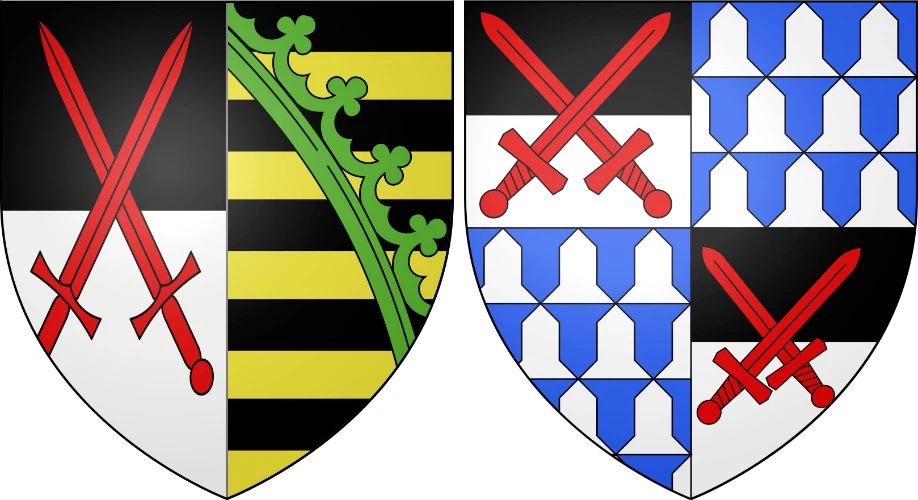
The title of Reichsmarschall had its origins in the Holy Roman Empire. Since the reign of Otto I, the Reichsmarschall had been one of the highest-ranking positions in the imperial court and was closely associated with the Prince-Electors. In the Golden Bull, the Elector of Saxony was appointed Reichserzmarschall (Grand Marshal of the Empire) and Master of Ceremonies; he bore the imperial sword on ceremonial occasions, which is why the official emblem of the Elector of Saxony featured two crossed red swords emblazoned on its coat of arms.
There was also a deputy position known as Reichserbmarschall (Hereditary Marshal of the Empire), which was exclusively bestowed upon the Count of Pappenheim. In the late Middle Ages, these two positions held the responsibility of commanding the entire imperial army. However, starting from the Renaissance period, they were only tasked with fulfilling ceremonial duties during coronations and other royal rituals.
The coats of arms of the Elector of Saxony and the Count of Pappenheim
The rank of Reichsmarschall did not exist during the periods of Prussia and the German Empire.
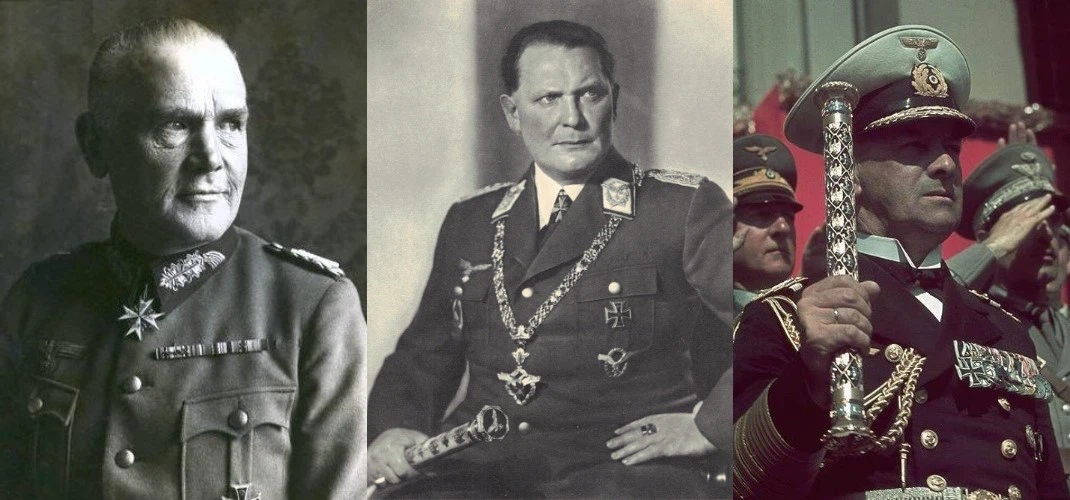
From September 1, 1939 to before July 1940, the highest rank in the Wehrmacht of Nazi Germany was that of Field Marshal of the Army, Navy, and Air Force. The holders of this rank were Werner von Blomberg, the Minister of War, who was promoted on April 20, 1936; Hermann Göring, the Minister of Aviation and Commander-in-Chief of the Air Force, who was promoted on February 4, 1938; and Erich Raeder, the Commander-in-Chief of the Navy, who was promoted on April 1, 1939.
From left to right: Blomberg, Göring and Raeder
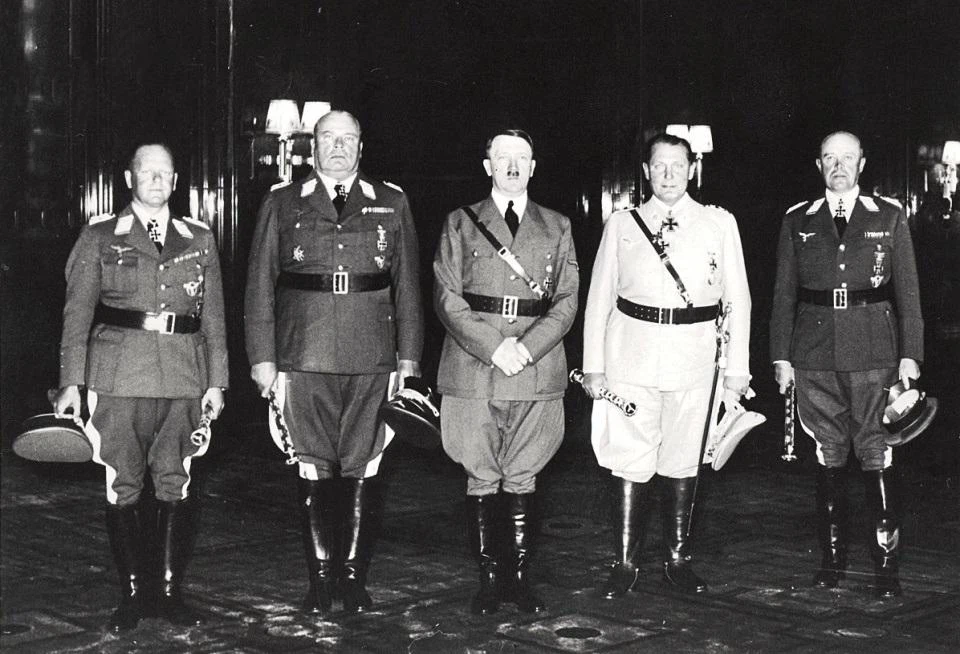
After the Battle of France on July 19, 1940, Hitler held a grand promotion ceremony at the Reich Chancellery, elevating 9 army generals and 3 air force generals to the rank of Field Marshal. For his part, Air Force Field Marshal Hermann Göring was promoted to the newly established rank of Reichsmarschall. This move was symbolic, intended to underscore Göring's status above the other marshals of the Wehrmacht and to satisfy his craving for honors, though it conferred no additional authority upon him.
From left to right: Erhard Milch, Hugo Sperrle, Hitler, Göring and Albert Kesselring
the rank of Reichsmarschall
Early Shoulder Boards and Collar Tabs (August 1940 – March 1941)
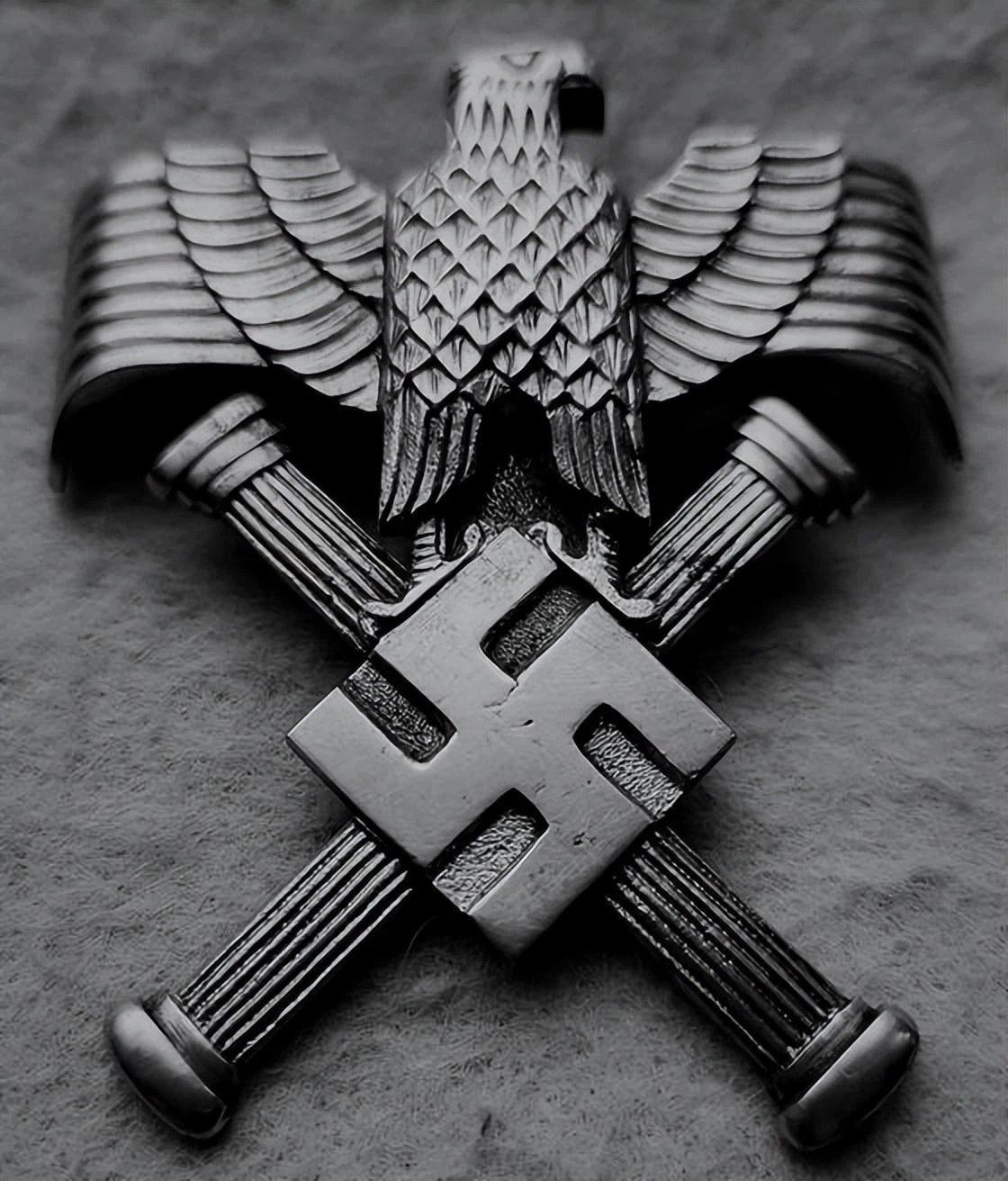
The insignia on the early shoulder boards featured an eagle with spread wings standing atop a 45-degree swastika, with the eagle's wingtips curving downward. On the reverse side of the swastika were crossed marshal's batons. The eagle on the shoulder boards was relatively flat overall. The image below shows the Reichsmarschall shoulder board from one of Göring's greatcoats.
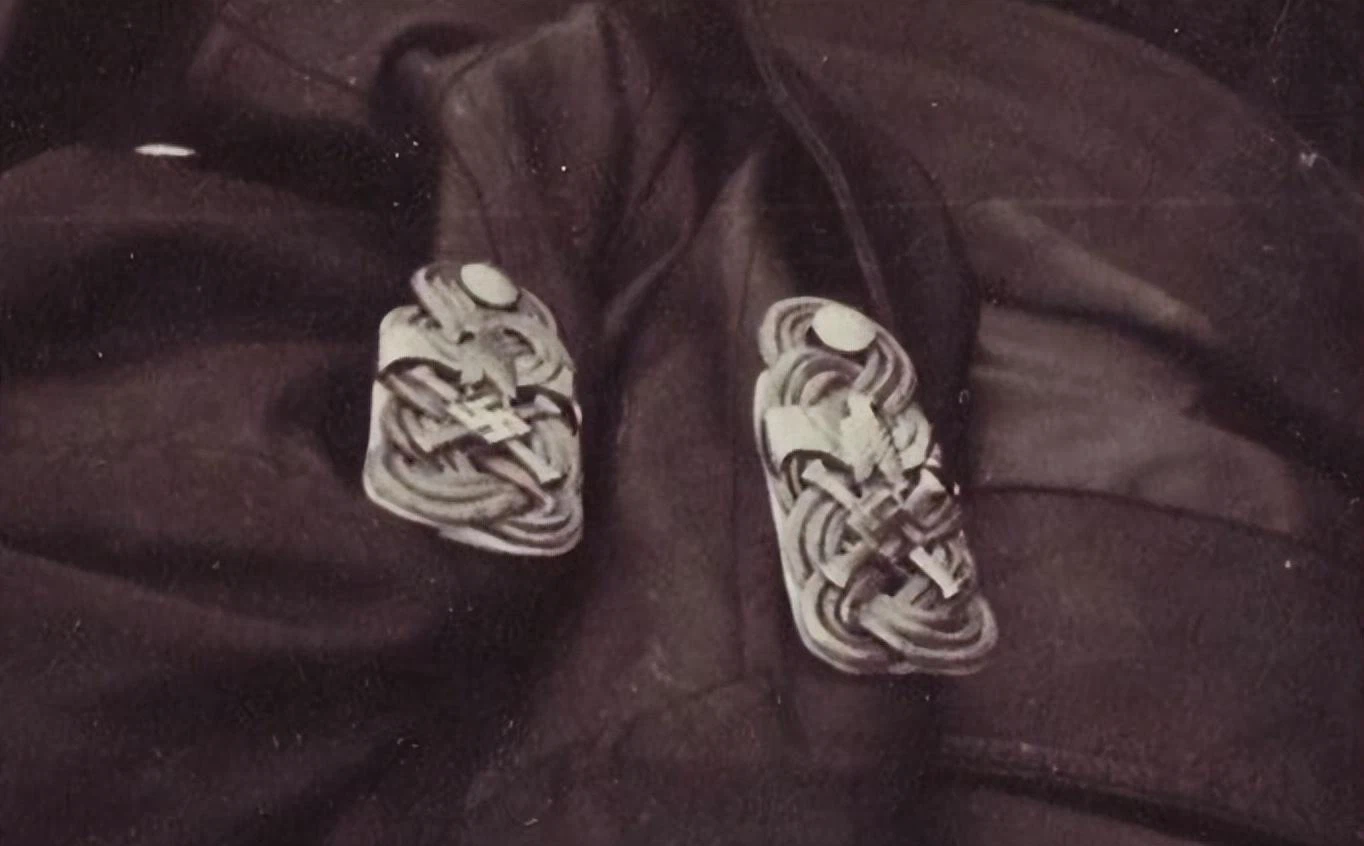
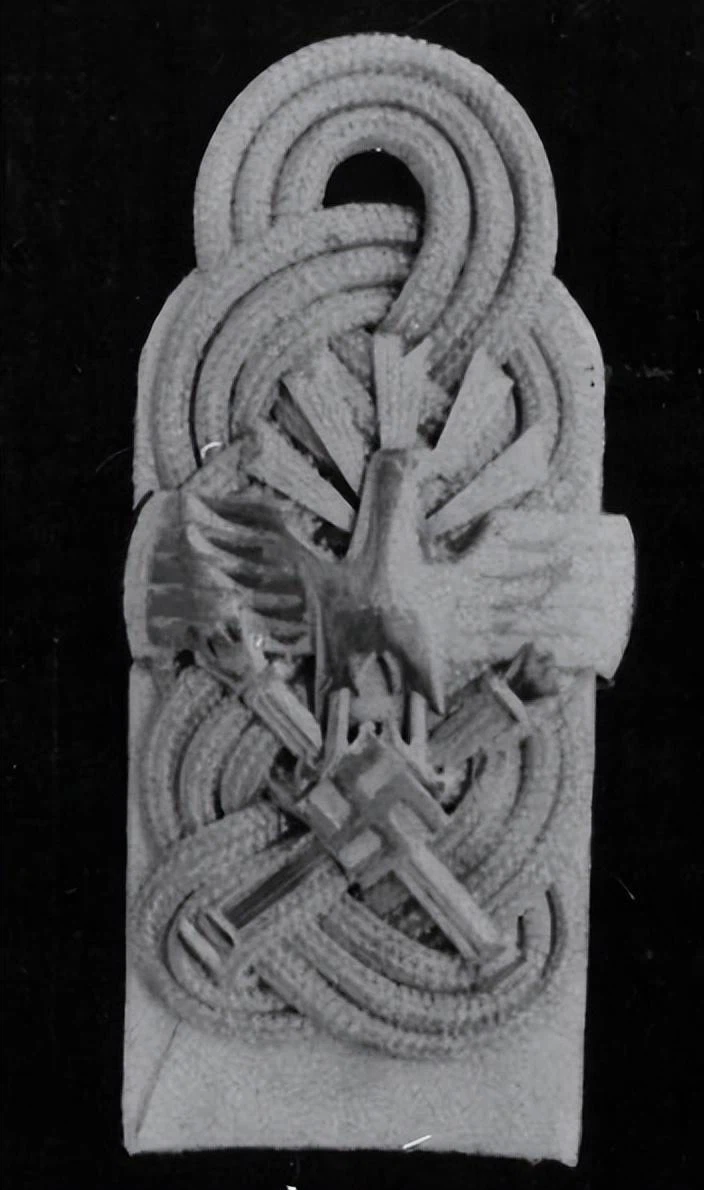
There was another version of the insignia on the early shoulder boards: the eagle's wingtips did not curve downward and were shorter, five golden rays were added to the back of the eagle's head, and the crossed marshal's batons were flatter in shape.
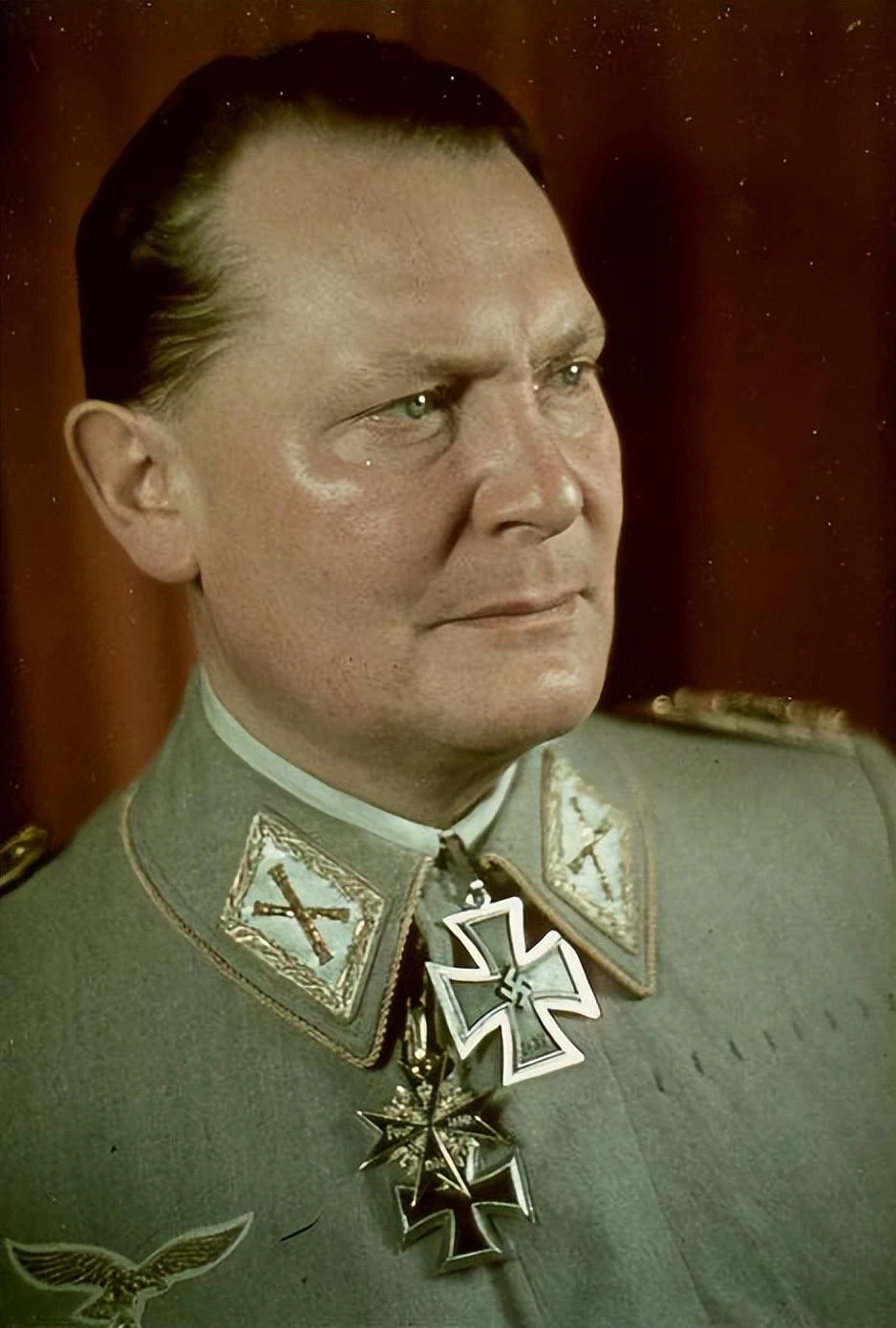
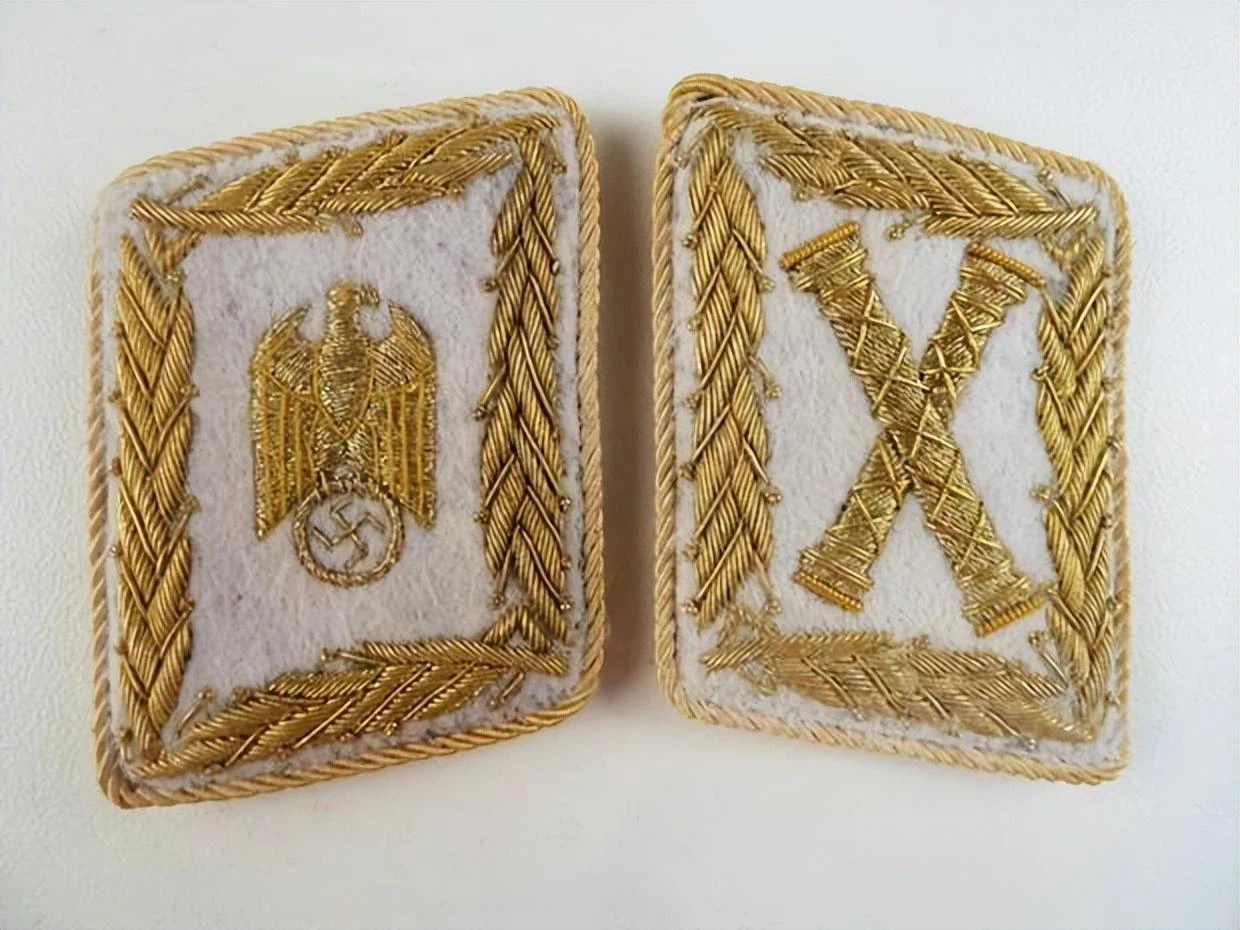
The early collar tabs were parallelogram-shaped, with their patterns embroidered in gold thread on white flannel. The right collar tab (from the wearer's perspective) bore the Wehrmachtsadler (Wehrmacht eagle insignia), depicting a folded-wing eagle standing atop a swastika wreath. The left collar tab featured a pair of crossed marshal's batons. Both collar tabs were edged with a golden cord trim and embroidered with a four-sided laurel wreath. The early collar tabs were worn alongside the early shoulder boards; however, they were also paired with the later-pattern shoulder boards for a short period of time.
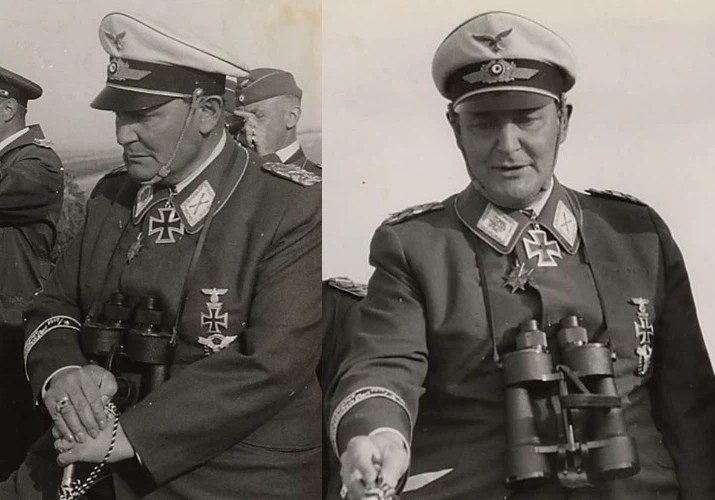
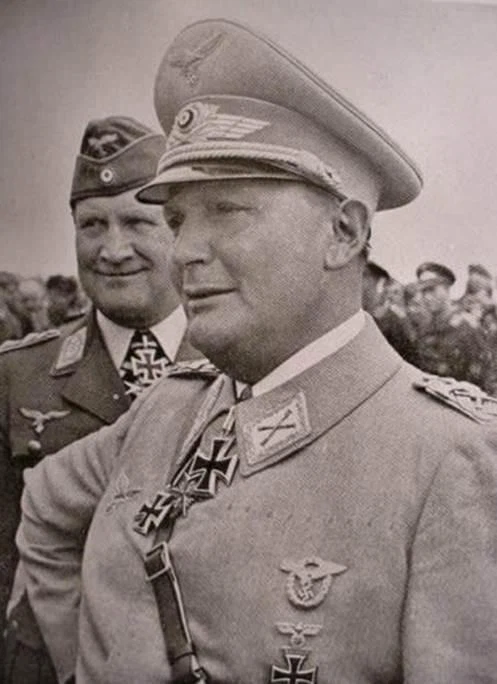
 the initial stage of the Battle of Britain in 1940, Göring wore the early pattern shoulder boards and collar tabs of the Reichsmarschall rank. At that time, he was still dressed in the blue-grey air force general's uniform instead of the dedicated Reichsmarschall uniform. The styles of the early shoulder boards and collar tabs can be seen in the picture.
Göring was dressed in a light grey Reichsmarschall uniform, adorned with the early-pattern shoulder boards and collar tabs.
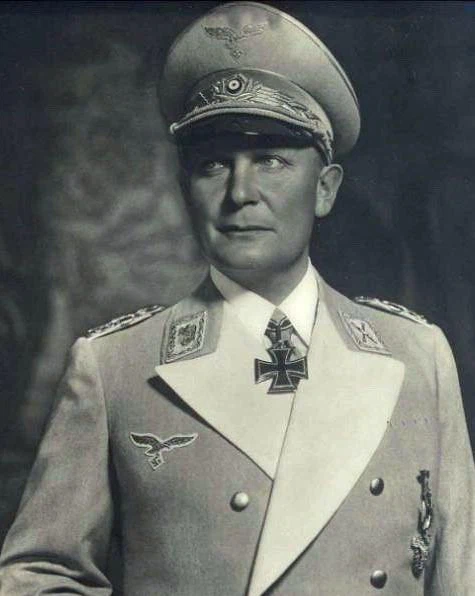
Formal Portrait of the Imperial Marshal, Wearing the Imperial Marshal's Uniform with Early-pattern Shoulder Boards and Collar Tabs
Late-pattern Shoulder Boards and Collar Tabs (March 1941 – May 1945)
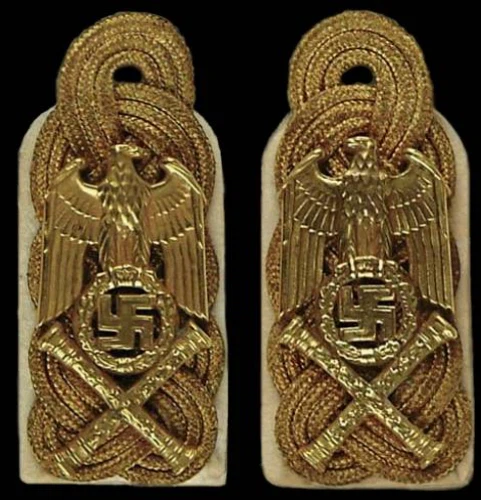
The late-pattern shoulder boards are the most iconic and commonly seen version of the Imperial Marshal's shoulder boards, worn consistently until the end of World War II in May 1945. The base plate of these shoulder boards is white, the branch color for air force generals, and is wrapped with three strands of gold thread. Each shoulder board features a gilded metal (silver or copper) eagle with spread wings perched atop a laurel wreath encircling a swastika emblem, beneath which lie crossed marshal's batons. The insignia on the late-pattern shoulder boards are more three-dimensional and exquisitely crafted than those on the early-pattern ones.
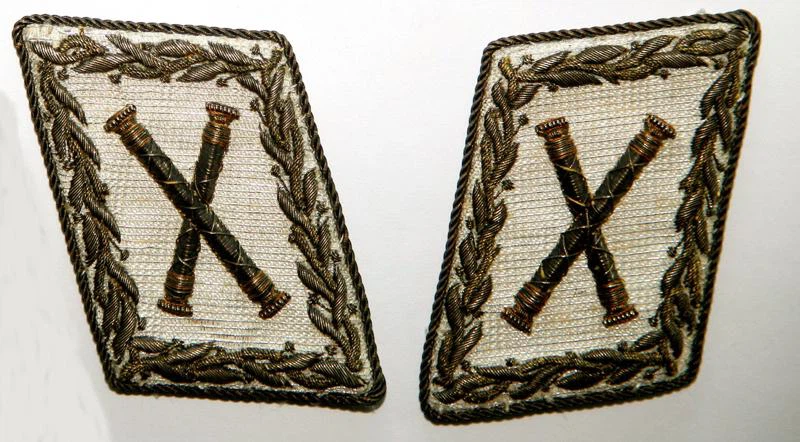
The late-pattern collar tabs are parallelogram-shaped, embroidered with gold thread on a brocade fabric. The designs on the collar tabs are mirror-image symmetrical: at the center lie crossed marshal's batons, surrounded by a laurel wreath, and the edges of the collar tabs are trimmed with a twisted gold cord.
Göring, dressed in the Imperial Marshal's uniform, wore the late-pattern shoulder boards and collar tabs.
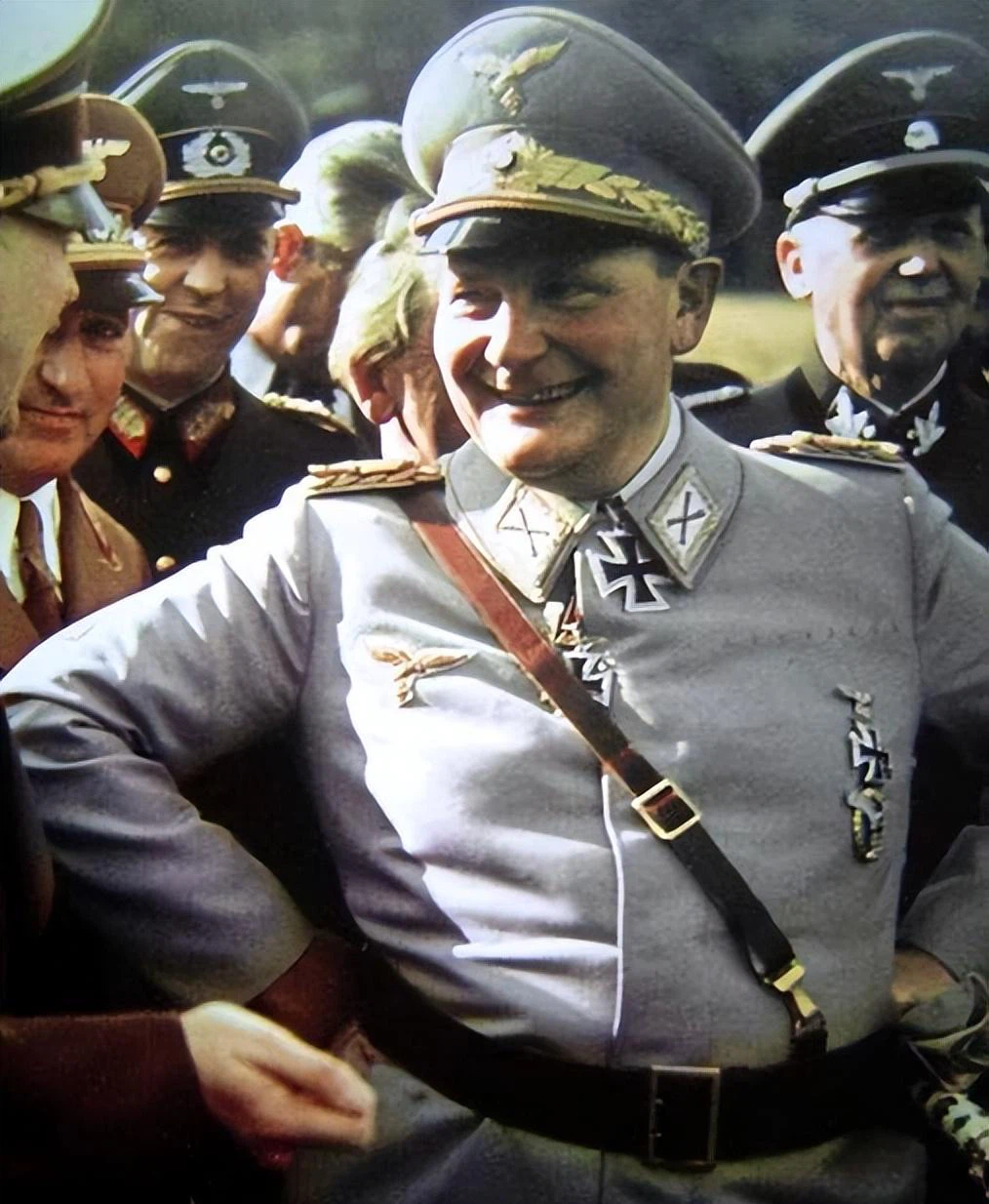
Embroidered Shoulder Boards
The Air Force Museum in Berlin displays an Imperial Marshal's uniform, whose shoulder board insignia feature a rare embroidered design instead of the commonly seen three-dimensional metal version.
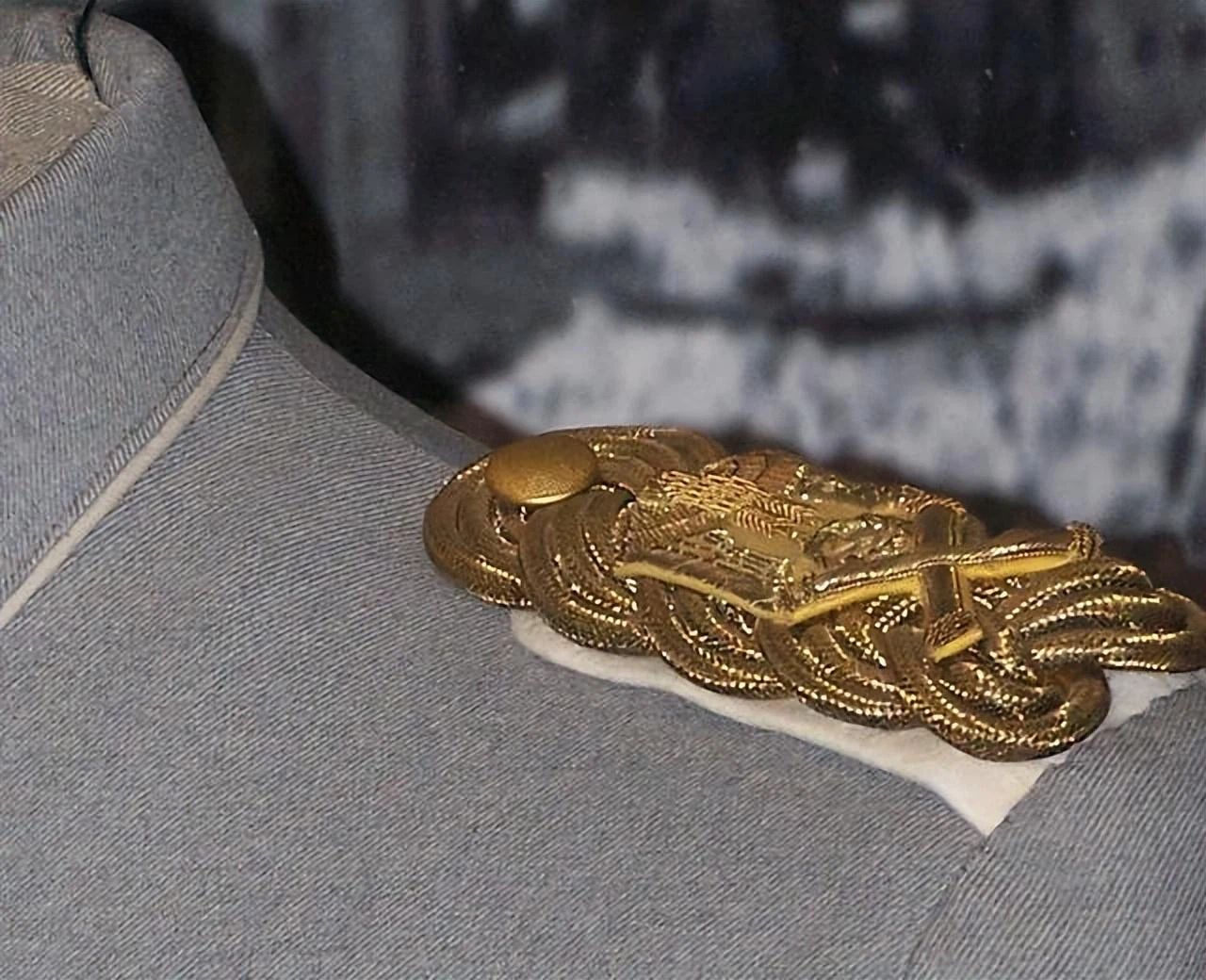
Field Service Shoulder Boards
The field service shoulder boards are of the rounded - end pattern, with a dark blue velvet base. They are embroidered with the late - pattern design in gold thread and edged with twisted gold cord. There are no corresponding collar tabs for these shoulder boards. First introduced in late 1944, they were mainly paired with the blue - grey field uniform. It was in a grey field uniform and field cap that Göring surrendered to the US military in 1945.
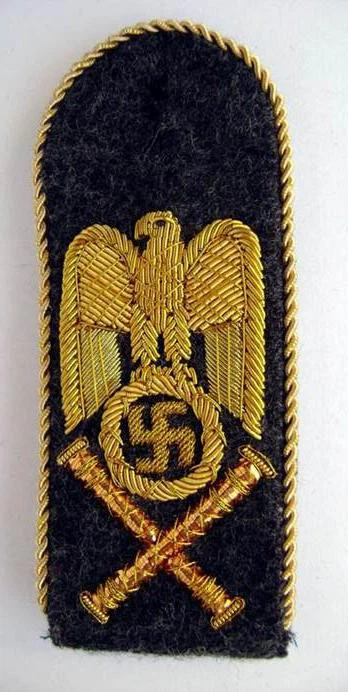
Göring was wearing the blue-grey field uniform on the very day he surrendered to the US military in 1945.
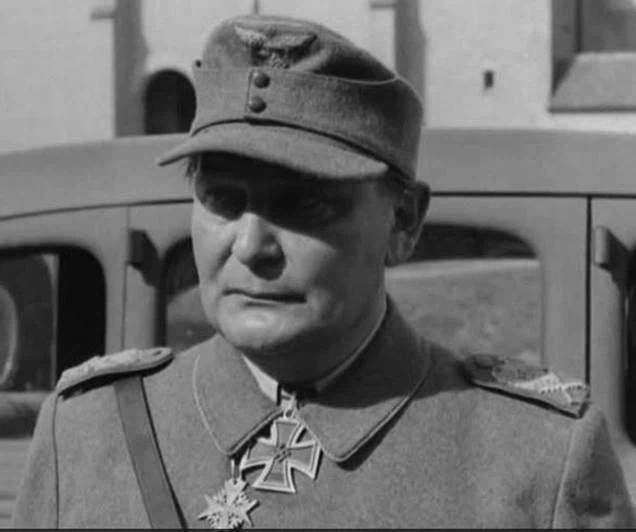
Imperial Marshal's Service Dress
Service Tunic
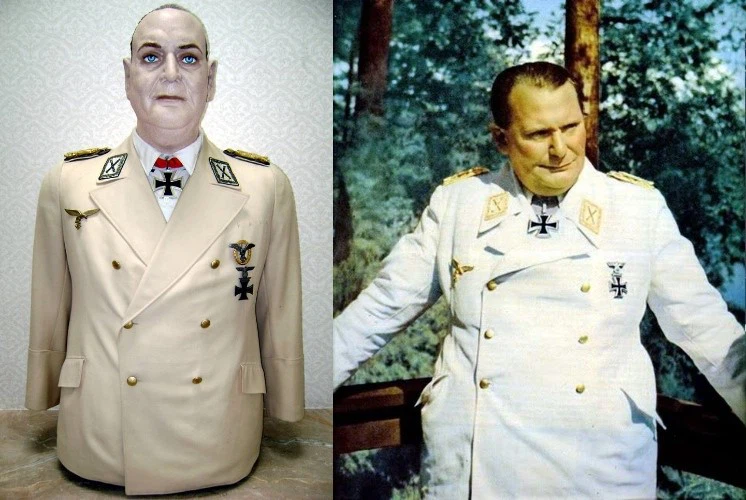
The service tunic was designed based on the pattern of the Air Force generals' service tunic (Kleiner Rock). It was a type of military uniform for off-duty wear. The Imperial Marshal's service tunic came in light grey or white (for summer wear), featuring a double-breasted design with three golden buttons on each row. It adopted a notched lapel style, with the white lining visible beneath the lapels. The tunic was equipped with two concealed hip pockets, which had pocket flaps but no buttons. The cuffs were designed as French cuffs.
Flight Tunic
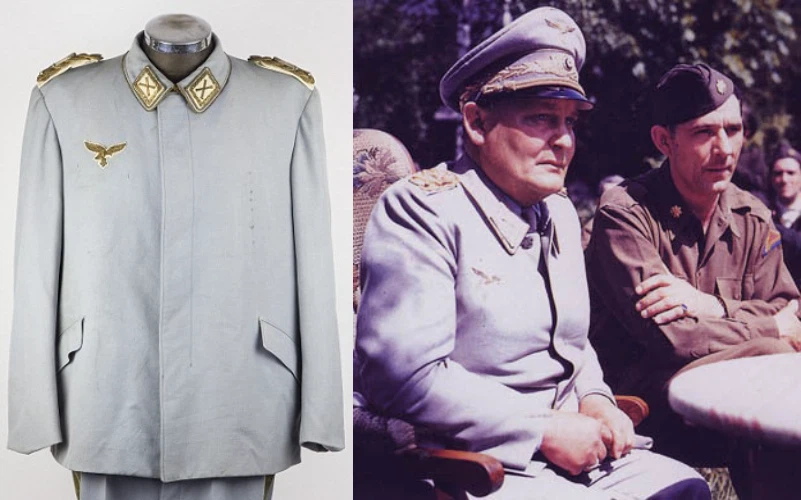
The Imperial Marshal's flight tunic was designed based on the pattern of the Air Force officers' flight tunic (Fliegerbluse). Originally intended for aircrew personnel, this flight tunic later became a standard uniform of the Air Force due to its comfort and practicality, and was also favored by personnel of other branches of service. It came in light grey or white (for summer wear), featuring a concealed placket fastened with four buttons. The collar was a convertible notched lapel that could be worn open or closed during daily use. The tunic was fitted with two concealed hip pockets with pocket flaps.
Light Grey Flight Tunic
White Flight Tunic

Summer Shirt
For hot summer weather or certain informal occasions, Göring would wear a white summer shirt. The shirt featured a placket with six buttons and two pleated breast pockets; the right breast pocket was adorned with a gold-embroidered Air Force eagle emblem. This summer shirt was paired with Imperial Marshal shoulder boards, with no collar tabs accompanying them. For the lower part of his attire, Göring would wear light grey trousers and white suede shoes. He would also pin the Knight's Cross of the Iron Cross to the shirt's collar button.

Military Greatcoat
Göring owned several light grey military greatcoats to wear with his Imperial Marshal's uniform. These greatcoats were very similar to one another, differing only in minor details. All of them featured a double-breasted design with five to six buttons per row and French cuffs. Each greatcoat was equipped with two concealed hip pockets with flaps, while some also had additional side pockets. A short waist belt at the back served to cinch the waist; it was fastened to the waist with two gilded buttons, and there was a slit below the center of the waistline. The collar edges were trimmed with gold piping, whereas the placket, the upper edges of the cuffs and the pocket flap edges were all trimmed with white piping. The Imperial Marshal's shoulder boards and collar tabs were worn on the greatcoats.


Cloak
Apart from being light grey in color, Göring's cloak was identical to that of Air Force officers. It featured a metal closure chain across the chest, secured to both sides of the cloak with large buttons. On the left sleeve of the cloak was a gold-embroidered emblem, depicting an eagle with spread wings perched atop a swastika, with crossed marshal's batons behind the swastika.

Left Sleeve Insignia

Light Grey Double-Breasted Service Tunic
The light grey double-breasted service tunic (Litewka) was designed based on the pattern of the vintage service tunic from the First World War period. Later, this style of tunic was replaced by the new service tunic (Kleiner Rock) in 1915. It was this light grey double-breasted service tunic that Göring wore during his imprisonment and trial in Nuremberg. Similar in style to the WWI vintage service tunic, it featured a double-breasted design with six buttons per row. The collar could be worn closed or open as a notched lapel. It was tailored with French cuffs, and the collar, placket, upper edges of the cuffs as well as the pocket flap edges were all trimmed with white piping.

Field Uniform
In March 1945, just weeks before Germany's defeat, Göring designed a new field uniform for himself. Armaments Minister Albert Speer once noted that on April 20, 1945, when Göring paid his final visit to the Führerbunker, he saw Göring wearing this field uniform for the first time-three days before Hitler's suicide.
The uniform was blue-grey and single-breasted, with a placket fastened by five matte blue-grey buttons. It was fitted with two breast pockets and two hip pockets, with the breast pocket flaps secured by buttons. The shoulder boards were a simplified embroidered version; there were no collar tabs on the collar, and the collar edges were trimmed with gold piping. This field uniform had no Air Force eagle emblem on the right breast, and it was paired with blue-grey riding breeches. It was this very field uniform that Göring wore when he surrendered to the US military.

Imperial Marshal's Military Cap
Peaked Cap
There are two versions of the Imperial Marshal's peaked cap in total: the formal peaked cap and the informal peaked cap.
The crown of the formal peaked cap is made of light grey fabric, and the cap band is crafted from light grey velvet. The peak is made of black vulcanized fiber with black stitching along the edge, while the underside of the peak is pale green.

The peaked caps were manufactured by Robert Lubstein of Berlin. All the emblems on them were hand-embroidered with gold thread. The edge of the cap crown was trimmed with gold piping, and the front was adorned with the Air Force eagle emblem. Initially, the emblem was embroidered on a light grey fabric base before being sewn onto the cap; later on, it was embroidered directly onto the cap itself. The size of this Air Force eagle emblem was slightly larger than that on the standard peaked caps of regular Air Force officers.

The top and bottom edges of the cap band are trimmed with gold piping. At the center of the cap band is a concentric circle cap insignia in black, white and red, surrounded by a laurel wreath composed of twelve leaves and four fruits. On either side of the laurel wreath are stylized wings, each consisting of two rows and four columns of feathers.

The remaining areas of the cap band are embroidered with laurel leaf and fruit motifs, with a total of 30 laurel leaves. The gold cord cap chinstrap is fastened to the left and right sides of the cap band with two pebble-textured buttons.


The informal peaked cap is a simplified version of the formal one. It shares the same basic design as the formal peaked cap, the only difference being the absence of the laurel leaf and fruit embroidery that encircles the cap band.

Field Cap
Göring's field cap was designed based on the M43 field cap version. It was blue-grey in color, with a gold-embroidered Air Force eagle emblem on the front and a gold piping trim around the crown.

Göring also had a special field cap designed exclusively for the Imperial Marshal, with gold laurel leaf embroidery added to the ear flaps of the cap.

Marshal's Baton of the Reich
Adolf Hitler presented Göring with a Marshal's Baton of the Reich on August 14, 1940. The shaft of the baton was made of white ivory. The Wehrmacht eagle emblem was crafted from gold, while the Iron Cross and the straight cross were made of silver and coated with black enamel. The cap and the finial at both ends were made of gold; the base plate of the inscription was platinum, and the lettering was gold. A diamond-studded decorative ring was added above and below the inscription respectively, with more than 600 diamonds embedded in the entire baton.


Göring also had a Marshal's Baton of the Reich miniature version. Its top was adorned with an acorn, below which were the motifs of the Air Force eagle emblem, the Wehrmacht eagle emblem and the Iron Cross. The inscription band connecting to the shaft was engraved with Göring's name. The shaft was made of white ivory. Attached to the miniature baton was a black, white and red tri-color cord, with a tassel at one end of the cord.