How effective is camouflage clothing in combat?
Nov 18, 2025
In reality, is there truly any technology or clothing that can help combat personnel achieve true "invisibility"? In fact, many people have pondered this question, including some of history's most famous generals and military engineers. From another perspective, camouflage is more like a paradoxical metaphysics, with its effectiveness remaining a subject of debate.
This is evident in the various wars of the 20th century: during World War I, soldiers of all nations generally wore gray uniforms, but individual camouflage appeared in World War II. In the 1910s, British warships commonly used two-tone camouflage paint, yet this was completely abandoned just 30 years later. Similar situations persisted into the 21st century. Over a decade ago, the U.S. military spent more than $5 billion on new camouflage, but it was soon criticized as "nothing more than a waste of taxpayers' money."
The origins of military camouflage date back to ancient times. The first forms of military camouflage emerged when ancient people realized that covert movement could give them unexpected advantages on the battlefield. For example, the "Trojan Horse" mentioned in The Iliad is a case of camouflage used by the ancients.

Undoubtedly, this was also the earliest concept of military camouflage: disguising personnel and equipment as harmless objects to catch the enemy off guard. It bears a striking resemblance to the "observation tree" developed during World War I. The latter was an interesting trench warfare device, covered with tree bark on the outside and lined with a layer of armor on the inside. During the day, soldiers would select a similar tree stump in front of their positions, then secretly dig it up at night and replace it with the "observation tree." Below the "observation tree" was a trench leading to the main position, where observers would hide normally and call for artillery strikes once enemy movements were detected on the opposing positions.

Naturally, camouflage similar to the "Trojan Horse" was extremely rare in the cold weapon era. Back then, combat distances were usually very close, so even the most ingenious camouflage was useless. Most historians therefore believe that the popularization of long-range firearms fueled the rise of military camouflage. During the Napoleonic era, the effective range of smoothbore muskets was only about 80 meters. By the time of the American Civil War, however, this figure had tripled-wearing bright military uniforms on open battlefields was equivalent to suicide.
It was precisely for this reason that armies around the world gradually figured out the secrets of battlefield camouflage. During the American Revolutionary War, George Washington's troops were able to defeat the well-equipped British army largely because their uniforms were grayish in tone, allowing them to blend better with the environment. In Europe, the Austrian army also developed camouflage-style clothing in the mid-18th century to facilitate elite units' stealth operations in jungles and mountainous areas.

This single-color camouflage eventually evolved into a well-known concept – "camouflage": around the late 19th and early 20th centuries, artists discovered a phenomenon: when faced with a chaotic combination of multiple colors and geometric shapes, observers cannot obtain a stable focal point and will ultimately experience visual disorientation.

Armies around the world quickly took note of this discovery and applied it during World War I. At the outbreak of the war, facing the three-dimensional fire network composed of machine guns and artillery, all armies suffered heavy losses. It was then that military strategists realized: if their forces could reach positions closer to the enemy undetected or cause enemy miscalculations, they would not only achieve surprise but also reduce the time exposed to enemy fire-helping to minimize casualties and win the war.
Like many famous innovations in military history, camouflage originated from groping in chaos. Initially, armies simply distributed paint to frontline troops and let them use their imagination. Meanwhile, most countries generally established "camouflage research associations," but the majority of their members were not scientists, but painters, sculptors, interior designers, gardeners, and stage set designers. They proposed many bizarre schemes, some even amusing. Unsurprisingly, the works of these "amateurs" did not gain much praise.

The phenomenon of laypeople leading professionals persisted until the 1940s. For example, during World War II, the camouflage uniforms of the U.S. Marine Corps were designed by editors from Better Homes & Gardens magazine. Troops were not impressed with them, and the American public even mocked them as "duck hunters" or "frog skins" due to their extremely exotic appearance. The art master Pablo Picasso also offered suggestions for this endeavor, proposing that camouflage should adopt colorful diamond patterns-yet this design had already been used by German pilots as early as World War I. However, the latter's goal was not camouflage, but to showcase individuality on the battlefield and even provoke enemy ace pilots.

Another creation of these amateur designers was the "dazzle camouflage" adopted by British warships during World War I. In those days, this type of camouflage often became a topic of conversation in pubs. Some sailors compared ships painted with this camouflage to "zebras running on the ocean," while others said the color blocks made them dizzy. The purpose of this camouflage was to confuse enemy submarines. At the time, the military claimed: "When observing the target, the enemy's vision will be disturbed by the interlaced color bands, leading to deviations in judging speed, course, and size."

Theory is ultimately just theory-the actual value of dazzle camouflage was far less magical than claimed, and at times it provided sailors with nothing more than psychological comfort. Additionally, during World War I, submarine attack methods were extremely primitive. They often surfaced brazenly and used deck guns to eliminate targets, only resorting to torpedoes when dealing with large ships or warships. To ensure a direct hit, submarines frequently closed in to a distance of 200 meters. At such ranges, camouflage was utterly pointless. However, some submarine commanders admitted that they did occasionally "mistake the bow for the stern"or "misjudge a large ship as two smaller targets"-but this only happened "when the distance was extremely great and the observer was drunk." During World War II, derivatives of dazzle camouflage remained in use, but frontline feedback generally indicated their effectiveness was limited.

At its inception, camouflage was mainly used on warships, aircraft, buildings, and vehicles-few imagined it for individual combat. In the mid-19th century, British military uniforms were predominantly red; they were gradually replaced with khaki after 1869. Yet at the outbreak of World War I, the French army still retained their traditional red trousers, which led to heavy casualties among soldiers. However, public opinion on the home front was indifferent to this. A famous newspaper at the time wrote: "Abolishing all bright colors... goes against the French sense of beauty and the army's purpose." A member of parliament even declared solemnly: "Red trousers are France!... They should never be abolished!" It was not until the mid-to-late period of World War I that these striking red trousers were gradually replaced by blue-gray ones.

In 1917, vivid camouflage patterns began appearing on the steel helmets of German soldiers. Meanwhile, the French army also conducted some valuable research, but a standardized individual soldier camouflage uniform never materialized. Generals were more focused on "high-value" targets such as tanks and aircraft; ordinary soldiers, regarded as cannon fodder and statistics, were not worth caring about at all.
After the end of World War I, research on military camouflage fell into an even deeper slump. Due to budget cuts, armies around the world struggled to get by, and many related projects were canceled. At the same time, conservative ideas resurfaced-many generals even openly claimed that using camouflage "violated chivalry." It was not until the late 1930s that research work got back on track.
This time, it was the Germans who took up the baton. As early as 1931, they issued a type of waterproof cloth to their troops, which featured a colorful camouflage pattern. When several pieces were joined together, it could be set up as a tent or draped over a uniform to serve as a camouflage cloak. The true camouflage combat uniform emerged in 1937: an officer named Wilhelm Brandt joined the SS-Verfügungstruppe (SS-VT, later the Waffen-SS) and was appointed battalion commander of a reconnaissance battalion. Drawing on his experience living in South America, he developed a unique camouflage system. Thanks to his influence among Nazi senior leadership, by the outbreak of World War II, the Waffen-SS had basically popularized camouflage uniforms.

On the other hand, the leadership of the German Army failed to recognize the great significance of camouflage uniforms-their attitude was highly dismissive, claiming that "the traditional German field gray uniforms made soldiers look like men, while camouflage uniforms would only turn them into cowards." This mindset delayed them for a full four years, costing the lives of tens of thousands of additional troops. It was not until 1943 that camouflage jackets were officially issued to the German Army-around the same time, the German Air Force also developed similar uniforms. By the end of the war, millions of sets of various camouflage uniforms had been produced for the German military, and they proved their worth on all fronts.

During World War II, another country at the forefront of camouflage research was the Soviet Union. By 1938, its camouflage uniforms had already entered small-batch production and were issued to arms with higher camouflage requirements, such as paratroopers, combat engineers, and snipers. Although the popularization of camouflage uniforms in the Soviet Army was significantly slowed down due to heavy losses in the early stages of the war, they still did not abandon their research. Compared with other countries, the camouflage designed by the Soviet Union during World War II was unique-one type resembled amoebas in appearance, while others imitated palm leaves and branches. Despite their limited appearance in the war, they were mass-produced after World War II and served in the Soviet Army for decades. Some were also supplied to other socialist countries, such as Albania and Romania.

In the early days of World War II, the U.S. military was also equally enthusiastic about camouflage. During the war, they launched a total of 4 different patterns, and soldiers had mixed reviews: veterans of the Pacific Theater believed it could save lives, but European Theater veterans often despised these camouflage uniforms because they "too closely resembled Waffen-SS uniforms," making friendly fire more likely.
Additionally, some smaller countries-such as Italy and the Hungarian Army-also developed their own camouflage attire, but the issuance quantity was extremely limited. As for the British and Japanese armies, they barely equipped any camouflage uniforms at all. However, whenever conditions permitted, frontline soldiers would use branches, paint, and other items as camouflage.

Some World War II soldiers didn't like camouflage at all-they believed incorrect camouflage would only make them more conspicuous on the battlefield. After the war, this skeptical attitude outweighed the supportive one. As a result, during the Korean War, most U.S. soldiers entered combat wearing traditional uniforms. A similar situation occurred with aircraft and warships, and sightings of them deploying with camouflage became increasingly rare.
However, this did not mean camouflage was destined to disappear-it still had a place in many militaries, and the U.S. military was no exception. For example, in the 1970s, aviation artist Keith Ferris obtained a patent: he painted fake canopies on the undersides of fighter jets, making it impossible for opponents to determine their maneuver direction during air combat. This invention was mainly used by the U.S. Air Force's training units, and Canada's F-18 Hornet fighter jets were also one of its loyal users.

Meanwhile, camouflage was also flourishing in civilian society. Its popularity was closely linked to two key factors: after the war, many garment factories sold surplus camouflage fabric to the civilian market; on the other hand, American hunting enthusiasts found that compared with traditional clothing, camouflage uniforms could indeed enhance the concealment of their movements.
In the 1950s and 1960s, camouflage gained great popularity among hunting enthusiasts. A designer named Jim Crumley added camouflage patterns to several styles of casual jackets and pants and launched them into the outdoor leisure clothing market. By the 1980s, this camouflage pattern known as Trebark had become somewhat renowned and frequently appeared in advertisements in outdoor magazines-it was particularly popular among young people and social figures, who believed that this attire could highlight their "masculinity." The most famous wearer was General Noriega, the ruler of Panama.

If Manuel Noriega had not angered the United States during his rule and ultimately been overthrown by U.S. forces, he would likely have faded into obscurity after stepping down-just like many other South American strongmen of his era-and would never have sparked a fashion trend. But in 1989, when he surrendered to U.S. troops wearing a Trebark camouflage jacket, Crumley had an immediate brainstorm: he designed an advertisement for his brand featuring Noriega in the Trebark camouflage, with the tagline below: "No wonder it took so long to catch him!"

In the late 1980s, a camouflage craze swept across the United States-many young people, just like hunting enthusiasts, wore spotted camouflage uniforms dominated by green, tan, and brown. This trend echoed the U.S. military's successes in Grenada and the Gulf War. At the time, a camouflage product manufacturer told Time magazine: "It's related to the younger generation's pride in the country-they're trying to look like soldiers."
This trend has continued to this day. From cars to underwear, from watch straps to toilet paper, so-called "camouflage versions" can be found in all the products you're familiar with. After the 1970s, armies around the world also began to reattach importance to the role of camouflage, though their research direction was completely opposite to that of the civilian sector.

The reason why armies around the world attach great importance to camouflage is largely due to the stimulus of the Vietnam War. At that time, the North Vietnamese army often used various means to launch attacks on U.S. troops and their allies under the cover of jungles. On the other hand, the U.S. military was seriously ill-prepared. The first batch of officers and soldiers deployed to Vietnam had no proper camouflage attire at all, and many had to privately purchase camouflage uniforms from hunting supply stores. Although later, the U.S. military put more than 20 different types of camouflage into the battlefield, none of them truly satisfied the troops.

At this point, the complaints from soldiers were much the same as during World War II: once they started moving, or changed their environment or angle, the effectiveness of the camouflage would be greatly diminished. As a result, some countries began developing what is known as "disruptive camouflage." This type of camouflage uses a dense combination of light and dark color blocks to make opponents misjudge the shape and outline of the target. However, starting from the 1980s, its position was gradually replaced by "pixelated camouflage"-the first design that could truly "remain unchanged to cope with all changes," though its texture always brings to mind the game Minecraft.

The birth of "pixelated camouflage" is largely credited to U.S. military officer Timothy O'Neill, with its development underpinned by advancements in physiology and neuroscience. Additionally, the design process of digital camouflage represented a significant improvement in rigor compared to previous methods. In the early 20th century, many camouflage patterns were created by painters or soldiers through chance. However, when developing pixelated camouflage, engineers first took numerous photographs of the intended environments. Based on these images, they determined the primary colors to use and the patterns most effective for camouflage-a process known as "sampling."
Meanwhile, they drew on the latest research findings: scientists at the time discovered that some objects stand out not only because of their prominent colors but also due to their contours. Specifically, the smoother the lines and the more regular the patterns, the easier the image is for the human brain to process, making the object more likely to be detected. According to this theory, small pixel blocks inherently offer numerous advantages in camouflage.

According to the new digital camouflage design, the composition of its color blocks is scattered and disorderly, with many angular edges. This requires more complex processing by the brain, thus making it more confusing. Moreover, some pixels may be misperceived by the human brain as ordinary noise and thus ignored. Therefore, their camouflage effect is far superior to that of traditional camouflage.
In fact, a survey conducted by the U.S. Office of Naval Research showed that it takes 2.5 seconds to detect a soldier wearing jungle digital camouflage, compared to 1 second for a soldier in solid-color or large-spot camouflage-a quite remarkable improvement. However, researchers are well aware that due to the complex and diverse landforms around the world, it is almost impossible to develop a one-size-fits-all camouflage for millions of soldiers and hundreds of thousands of pieces of equipment. This has led to two outcomes: on the one hand, many independent engineers and contractors have emerged in the civilian sector, each producing one or several camouflage patterns. Whenever the military has special needs, they will place temporary orders with these suppliers.

On the other hand, military forces around the world are also researching new methods beyond camouflage. The "invisible camouflage" from Metal Gear Solid is one of the directions scientists are exploring. What's more interesting is that the team that first proposed this concept came from the University of Tokyo-it's hard to say whether they inspired Metal Gear Solid or the game inspired them. Their "invisible camouflage" is actually a flexible display screen that can be draped over a soldier like a cloak. Meanwhile, this display is integrated with a full set of omnidirectional cameras, which can project the captured background images onto the other side of the garment.
Across the ocean in the United States, a research team from Duke University has turned its attention to bending light itself. They plan to develop an electronic device that can make light bend around it. However, progress on this project remains very limited so far.
In addition, some teams are focusing on electronic color-changing panels. Their principle is similar to that of "invisible camouflage" but can be seen as a technically simplified version. When installed on armored vehicles, these panels can automatically change colors upon receiving surrounding information, forming the most suitable camouflage patterns.
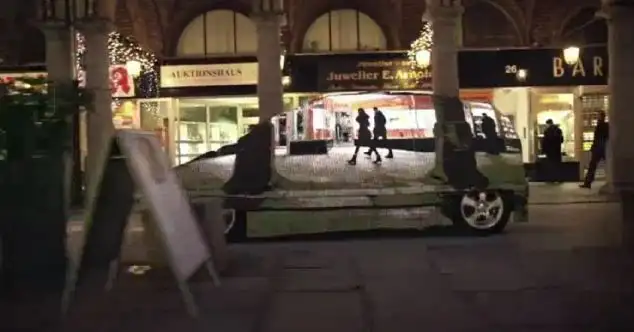
If the aforementioned technologies can be put into use, there will be invisible soldiers and invisible tanks on the battlefield. However, some people doubt their value, as these outfits would hinder soldiers' movements and carry an extremely high risk of malfunction. Moreover, the above-mentioned technologies only provide certain concealment against naked-eye observation; their effectiveness would be rendered meaningless if the enemy uses infrared detection equipment or radar.
Among the many new camouflage methods, the one that has truly achieved success is electromagnetic stealth technology. Its history dates back to the Cold War, when technicians discovered that reducing reflected signals could be achieved by designing equipment in specific shapes or using certain specially made coatings or materials.
For example, traditional radars now struggle to detect new-generation stealth fighters like the F-22 and F-35. Similarly, after adopting stealth designs, a destroyer over 100 meters long may produce a radar reflection similar to that of a fishing boat merely a dozen meters long. Even so, the stealth capability created by these technologies remains one-sided-whether it is a stealth fighter or a warship, they still cannot escape naked-eye detection. On the front lines, they still rely on darkness or distance for protection. For instance, if a stealth warship is spotted by a lookout on a submarine, its stealth measures become completely ineffective; in the latter's eyes, it is nothing more than a target with a peculiar shape.