

Origin of digital camouflage
Aug 01, 2024
Digital camouflage, also known as digitized or pixelated camouflage, is a modern type of camouflage pattern composed of "pixels." This new design leverages principles of visual psychology to adapt to the concealment needs across various environmental backgrounds. It is specifically designed for jungle, desert, urban, and anti-night vision equipment scenarios. Unlike traditional camouflage with smooth edges, digital camouflage features a scattered and disorderly pattern. In terms of concealment, digital camouflage offers superior effectiveness compared to traditional patterns. Additionally, under infrared detection and night vision, digital camouflage provides significant advantages over traditional camouflage.
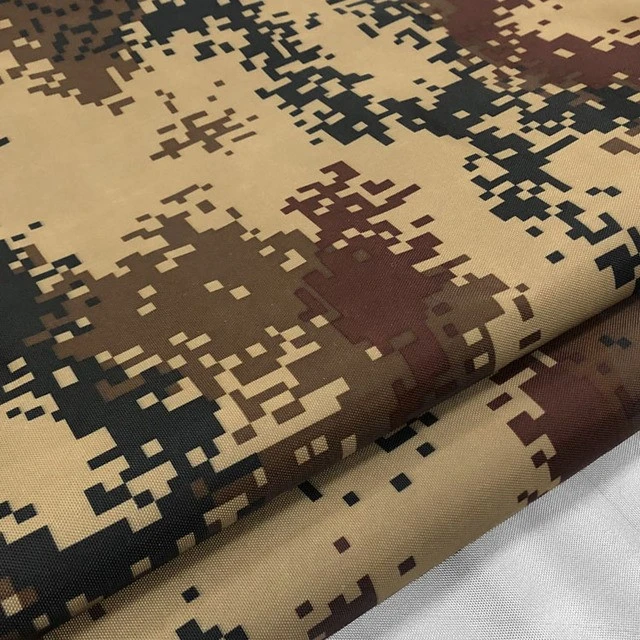
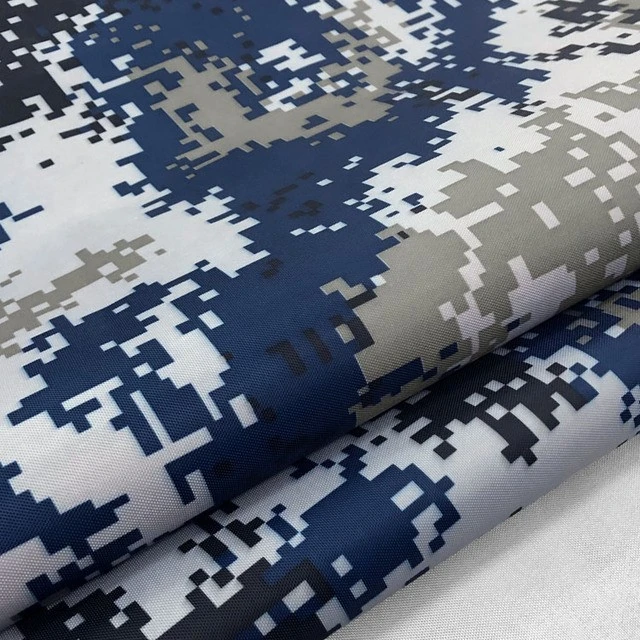
Digital camouflage utilizes the principle of "pixels," similar to those on television and computer screens. Patterns perceived by the human eye are composed of tiny squares called "pixels." Traditional four-color or six-color camouflage patterns consist of irregular spots or stripes. These spots or stripes have smooth edges and are primarily in green, yellow, brown, and black. They provide good concealment effectiveness in jungle conditions beyond 150 meters, but effectiveness diminishes at closer ranges. Digital camouflage successfully addresses this issue.
The Gestalt psychology principle known as "Pragnanz," roughly translated as "good figure," is relevant here. It suggests that the visual system interprets visual information in the simplest, most regular, and symmetric way possible. Modern views suggest that the best explanations often require minimal information for description, while complex information demands more intricate brain processing and can be more confusing.

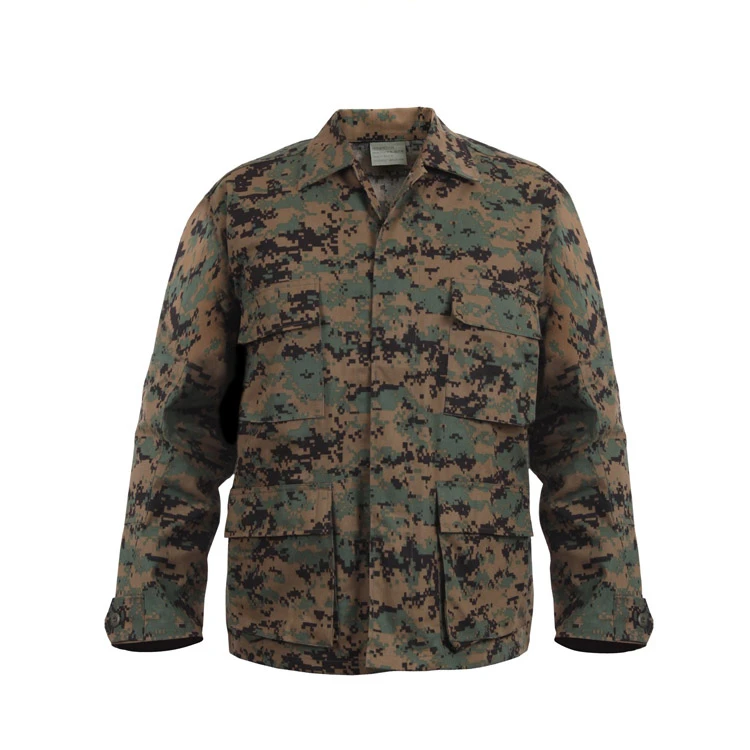
The fundamental reason for the increased contrast sensitivity of the human eye in traditional BDU uniforms lies in their smooth edges between colors. On the other hand, digital camouflage utilizes the pixelated visual principle, resulting in blurred edges between different colors and a gradient appearance. Similarly, jungles or deserts in different regions exhibit significant topographical differences. Traditional BDU patterns have distinct colors and clear edges for spots and stripes.