How to Quickly Identify Camouflage Patterns
Jan 05, 2026
Identifying camouflage patterns typically requires some foundational knowledge. However, regarding the terms you mentioned, I'll provide a concise explanation here.
Firstly, ACU itself is not a camouflage pattern. It refers to a cut, style, or uniform system of military clothing, standing for Army Combat Uniform.
The ACU uniform has primarily been issued in the following two camouflage patterns:
1.UCP: Universal Camouflage Pattern.
2.OCP: Operational Camouflage Pattern.


CP actually originated from CP company's MC camouflage. What is generally referred to as CP camouflage is actually MC (Multicam) camouflage, and the term "Multicam" is a registered trademark.
Back then, CP company designed the Scorpion camouflage for the U.S. military's "Land Warrior" program, but it was not adopted. CP later developed the Scorpion pattern into the MC camouflage.
In Afghanistan, the UCP pattern used on the U.S. Army's ACU proved highly unsuitable. The U.S. Army decided to change its camouflage pattern, initially purchasing a batch of MC as an emergency measure. Later, based on CP's original Scorpion pattern, the U.S. Army developed the Scorpion W2 pattern, which became OCP camouflage. This allowed the Army to avoid paying patent fees to CP for MC, even though OCP and MC are extremely similar.
Before the Army's ACU, there was the BDU uniform pattern, which came in many different camouflage varieties. The Marine Corps' current MCCUU primarily uses the MARPAT pattern series, while the Air Force's ABU uniform features various camouflage patterns. The Navy's NWU and NPU uniforms also have their own distinct camouflage patterns, and there is also the SEALs' AOR series... U.S. military camouflage and combat uniforms are a vast and complex topic. It is important to understand that abbreviations ending with "U" generally refer to uniform patterns rather than camouflage patterns.
Additionally, the 2007 pattern is also a very complex system.
PLA Type 07 Camouflage Uniform System


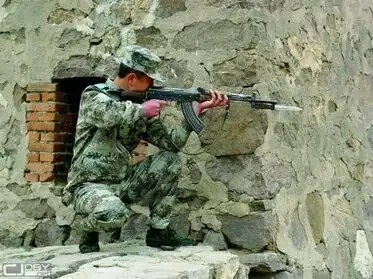
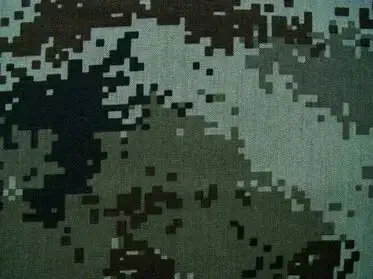
The earliest experimental version of the Type 07 Urban camouflage was developed but was never fielded.

The Type 07 Urban (Early Variant), which was primarily seen during the 2009 military parade and was rarely encountered elsewhere.

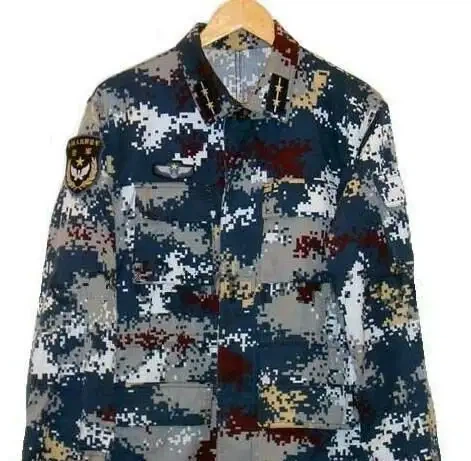
The Type 07 Aviation (or Type 09 Aviation) camouflage is a rarely seen pattern for the Air Force. I was fortunate enough to see a wearer.

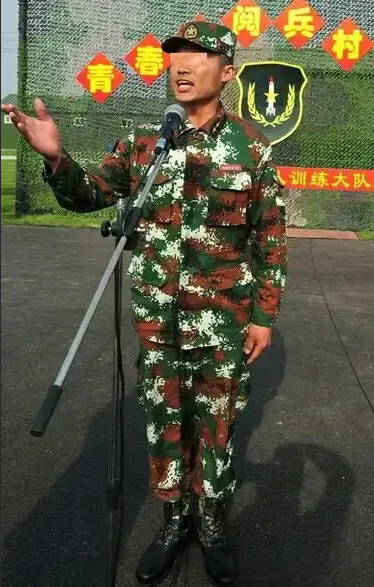
The Second Artillery Corps (now PLA Rocket Force) specific camouflage, which appeared at the 2009 military parade camp. It was essentially a digitized version of the corps' older tunnel suit pattern.


Beyond these, there are numerous special forces-specific patterns like the "Hunter" camouflage, along with an array of even more unconventional patterns used by the PAP (People's Armed Police). However, I wouldn't consider these part of the "Type 07 series"... In any case, PLA camouflage is an incredibly complex system.
From the early "Little Yellow Flowers" and experimental "Large Five-Color Leaf" patterns to the "All-Terrain" pattern seen at the 2015 parade, the camouflage used by the PLA and PAP is a vast and exceptionally intricate field.