

The 'Steed' of the German Army: A Review of All Types of Jeeps Used by the German Military in World War II
Oct 21, 2025
Germany has been one of the world's automotive powers, both in modern times and during World War II. During the Second World War, major domestic automobile manufacturers in Germany produced a large number of military vehicles for the German military, such as artillery tractors, transport trucks, military off-road vehicles, and military jeeps, among others.
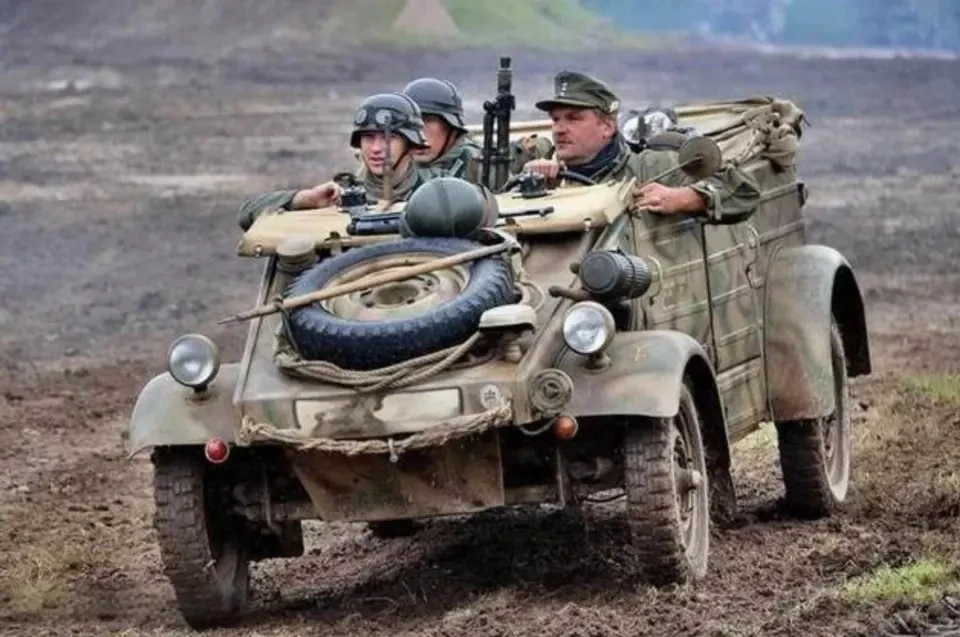
In particular, military jeeps were highly valued by the German military at that time. Thanks to their compact size, agility, and strong off-road performance, they could traverse any terrain. Moreover, jeeps were highly versatile: they not only served as passenger vehicles for officers but could also be fitted with weapons to act as weapon platforms, becoming combat vehicles for frontline soldiers. In short, whether on the front lines or in the rear, jeeps played a crucial role.
So in this article, we'll take a look at all types of military jeeps equipped by the German military during World War II.
There were many types of military jeeps in the German military during World War II, which can be categorized into three main classes:
The first class is the Volkswagen Kübelwagen series, which began to be adopted in the early 1930s.
The second class is the Mercedes-Benz series of military off-road vehicles, adopted starting from the mid-1930s.
The third class is the standardized vehicle series known as "Einheits-PKW", used from the mid-1930s to the mid-1940s.
The first class, the Volkswagen Kübelwagen series, can be regarded as an icon of the German military during World War II.
The most common among them is the Volkswagen Type 82. Its predecessor was the Volkswagen Type 62, and both were derived from the German "Beetle" series of civilian vehicles in the 1930s.
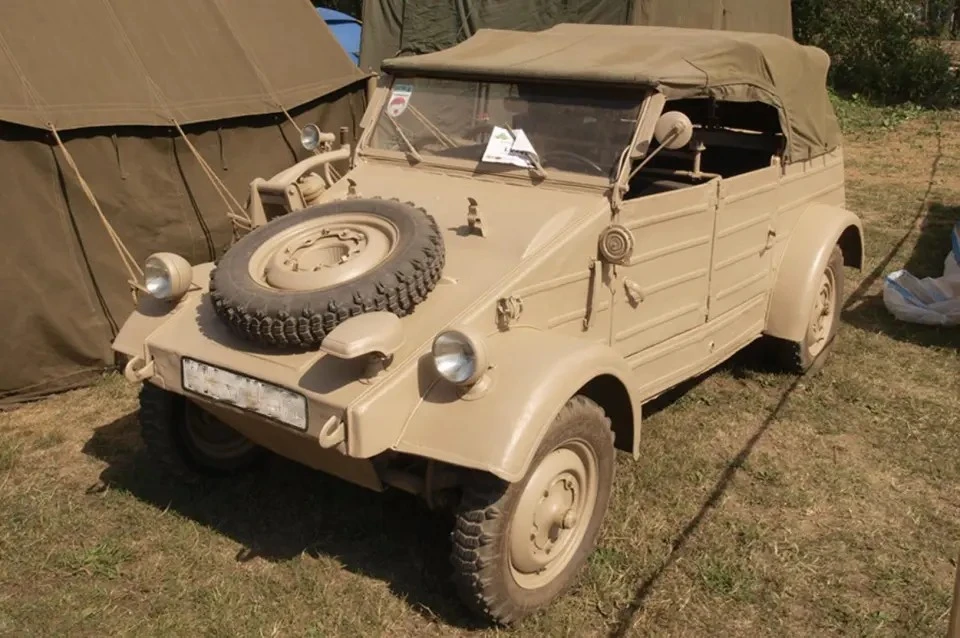
Because of its simple and compact shape, with an exterior resembling an iron bucket for holding water, it was thus called a "bucket car" (Kübelwagen).
The Volkswagen Type 82 Kübelwagen was equipped with a rear-mounted 4-cylinder air-cooled Type 1131C gasoline engine, with a maximum road speed of 85 kilometers per hour.
During World War II, the Volkswagen Type 82 Kübelwagen was heavily equipped by the German military across all battlefields, whether the Western Front, Eastern Front, or African Front. Among them, the open-top version was widely used by frontline combat units-for instance, as transport for officers and soldiers, battlefield support, ammunition delivery, or towing light artillery. Some were even fitted with an MG34 7.92mm general-purpose machine gun for on-board defense.
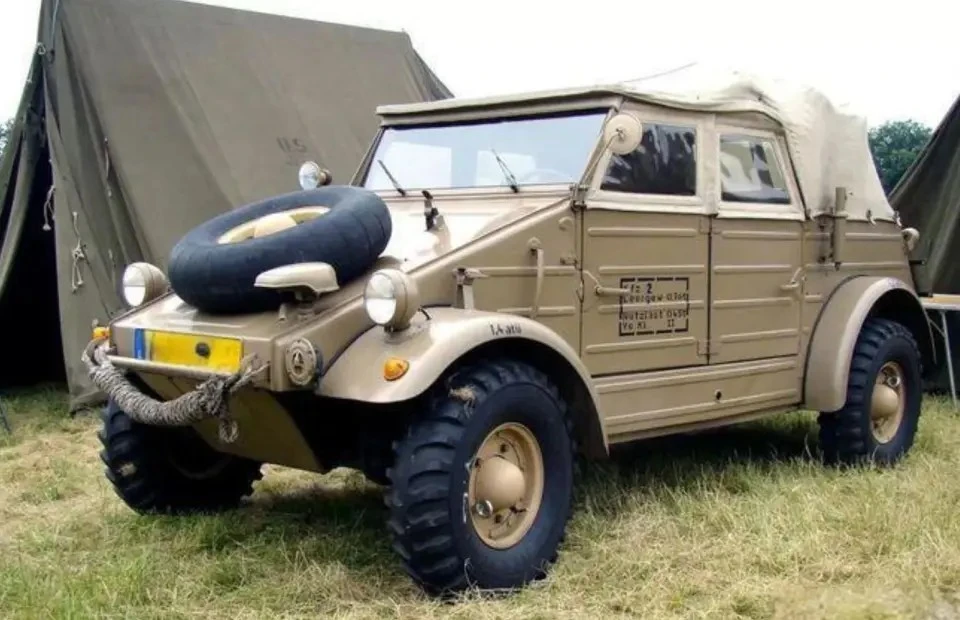
There were also many Volkswagen Type 82 Kübelwagens fitted with canvas soft tops and side windows, which were mainly allocated for use by senior officers.
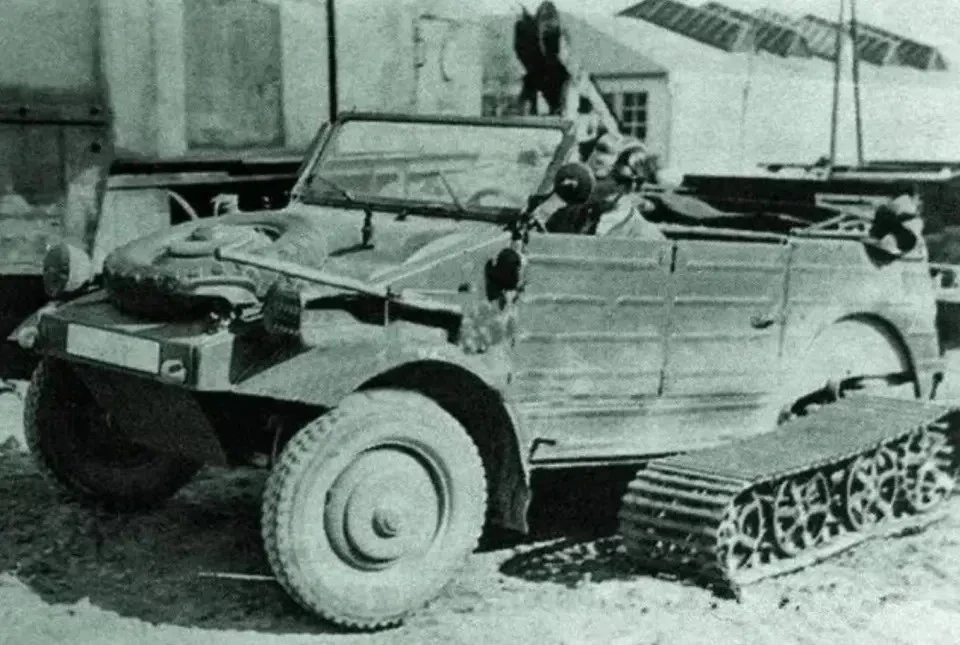
By 1941, to adapt to snowy environments, an improved version of the Volkswagen Type 82-the Volkswagen Type 115 snow jeep, which could be fitted with tracks-was developed. Its most distinctive feature was the removal of the rear wheels, replaced by two tracks, enabling better movement on snow and ice.
Naturally, the Volkswagen Type 115 could also serve as a railway patrol jeep. It could be fitted with special wheels that meshed with railway tracks, allowing it to travel smoothly on railways. Typically, an MG34 machine gun was mounted on the roof for defense.
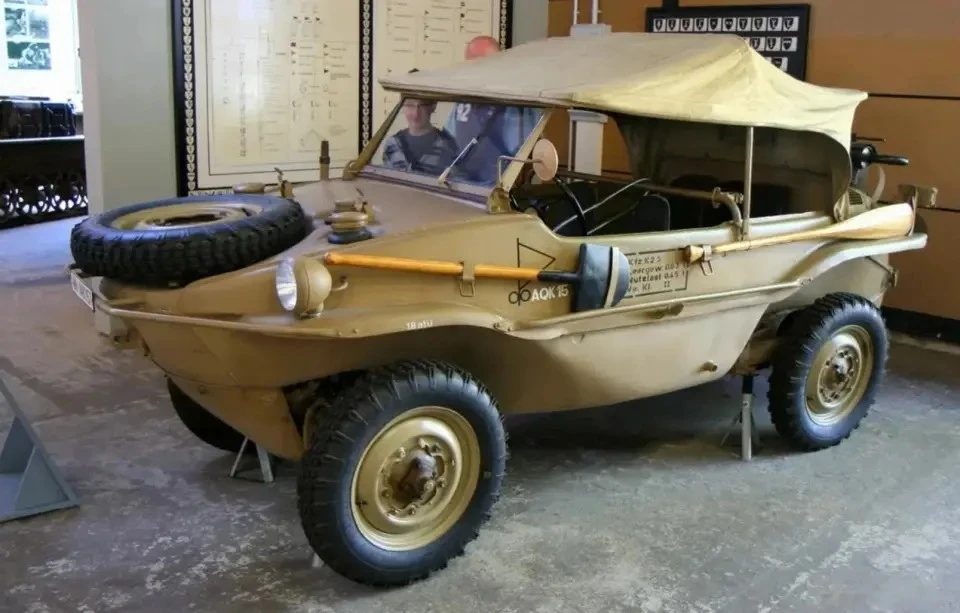
In 1942, another model with amphibious capabilities-the Volkswagen Type 166 Kübelwagen-joined the Volkswagen Kübelwagen family. Also improved from the original Type 82, its most significant change was the transformation of the originally boxy body into a boat-like structure, which allowed it to better adapt to water surfaces.
At the same time, its tires were replaced with wider and larger ones, and a propeller propulsion system was added to the rear of the vehicle, allowing it to travel on water at 40 kilometers per hour.
Although the second category, the Mercedes-Benz series, was not as iconic as the Volkswagen Kübelwagen, it was still one of the most important jeeps used by the German military during World War II.

The earliest model among them was the Mercedes-Benz 170VG, which began to be equipped by the German military in the mid-1930s and remained in use until the end of World War II.
The 170VG jeep was equipped with a 38-horsepower gasoline engine and featured 4×4 off-road driving capability. What's more, all four wheels could steer simultaneously, giving it better passability and off-road maneuverability compared to the Volkswagen Kübelwagen.

The second model was the Mercedes-Benz 170VL. In terms of appearance, this model was basically identical to the previous 170VG. The most significant changes in the 170VL were only the replacement of a different gearbox, adjustments to the wheelbase and tire size, and the installation of a more powerful engine, with a maximum road speed of 110 kilometers per hour. However, its production quantity was smaller than that of the previous model.

By 1937, the G5 model was launched in Mercedes-Benz's series of military off-road vehicles, inheriting the four-wheel drive and four-wheel simultaneous steering functions from the previous two models.
The G5 was equipped with a 45-horsepower Mercedes gasoline engine and adopted the 5-speed manual gearbox from the 170VL. During World War II, this model served both as a frontline command vehicle for German officers and a combat vehicle for small groups of soldiers.
The third category, the Einheits-PKW series-also known as "standardized four-wheel drive light vehicles"-was originally planned to replace the Volkswagen Kübelwagen series. However, as the battlefronts expanded, the German military needed more military vehicles. As a result, it never replaced the Kübelwagen; instead, the two coexisted.
Germany invested significant efforts in this series of military jeeps. At that time, multiple German manufacturers participated in its production, and each automaker produced its own model in accordance with the same specifications, the same appearance, and the requirements outlined in the plan.

In 1936, Stoewer produced the first standard model, which was equipped with a 42-horsepower four-cylinder gasoline engine. Initially known as the R180 Spezial, it was later upgraded with a 50-horsepower engine and renamed the R200 Spezial.

By 1937, BMW also joined the production plan for this series of jeeps, and the model it produced was named the BMW 325.
This model was equipped with a 50-horsepower six-cylinder gasoline engine manufactured by BMW itself, and all four wheels featured steering functionality.

In 1939, Hanomag produced the Typ 20B, whose overall appearance and dimensions were consistent with those specified in the plan.

In the early 1940s, Horch also joined the program, producing the Horch 901-40 off-road vehicle in accordance with the same specifications. However, this model rarely served as a combat vehicle; instead, it was generally allocated to frontline commanders and was also fitted with a soft top.

In 1940, Stoewer launched another simplified model, known as the Typ 40 off-road vehicle.
This model had only three doors that could be opened, and its rear two wheels were non-steerable.

In 1941, Adler also produced the V40T jeep in accordance with the same specifications, equipped with a 55-horsepower 6-cylinder 2.5-liter gasoline engine. However, the appearance of this model underwent obvious changes, as can be seen from the pictures.
The Einheits-PKW series of jeeps was also relatively successful in World War II. Though not as common as the Volkswagen Kübelwagen, their excellent performance and versatile features were recognized by German soldiers.
Moreover, the design of the GAZ-69 jeep produced by the Soviet Union after World War II also referenced Germany's Einheits-PKW series.
The above are all types of jeeps used by the German military during World War II. If there are any errors or shortcomings in this article, we would appreciate your comments and suggestions for improvement. For more information, please remember to follow us, and we will continue to update in the next issue.


