Detailed Explanation of U.S. Army Uniforms in World War II, Recreating the Classic Field Jacket Style
Dec 17, 2025
The U.S. Army service dress consisted of the olive drab wool winter service uniform worn in temperate climates and the khaki cotton summer service uniform worn in tropical climates. Winter and summer service uniforms were worn in the continental United States during their respective seasons. During World War II, the European Theater (Northwest Europe) was considered a year-round temperate region, while the Pacific Theater was regarded as a year-round tropical region. In the Mediterranean Theater, American soldiers wore both seasonal service uniforms.
From left to right in the image below: Brigadier General Jesse Auton, Supreme Allied Commander in Europe General Dwight D. Eisenhower, Commanding General of the U.S. Strategic Air Forces in Europe Lieutenant General Carl Andrew Spaatz, Commander of the Eighth Air Force in Europe and the Pacific Lieutenant General James Doolittle, Commander of the 2nd Bombardment Division of the Eighth Air Force Lieutenant General William Kepner, and Colonel Donald M. Blakeslee.
In the image, Eisenhower is wearing the Eisenhower jacket, while Spaatz is wearing the European Theater of Operations (ETO) jacket-a field jacket adapted by the European Theater Headquarters from British battle dress, which served as the prototype for the Eisenhower jacket. The other officers are all wearing the M1939 officer's service uniform.

The field uniforms of the U.S. Army include the M1941 Field Jacket, the M1943 Field Jacket, the Eisenhower Jacket, the HBT (Herringbone Twill) Fatigue Uniform, and the M1942 Paratrooper Uniform.

Winter Service Uniform for Soldiers
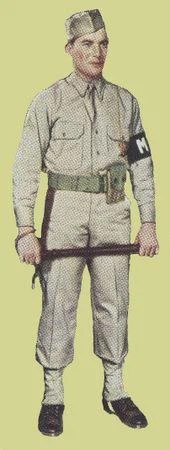
The winter service uniform for enlisted soldiers in 1941 was the M1939 service coat, made of wool serge in Shade 33 dark olive drab (OD 33). The uniform featured a notched lapel, four buttons down the front, and four patch pockets with buttoned flaps-two on the chest and two on the hips. It was paired with wool trousers and a long-sleeved shirt in Shade 32 olive drab.
Starting in 1941, leather belts were no longer issued as standard equipment to conserve leather, and as a result, the belt support hooks on the service coat were discontinued. However, many soldiers continued to attach these hooks and privately purchased leather belts to wear with their uniforms. Consequently, for a considerable period after 1941, it remained common to see service coats paired with leather belts.

The long-sleeved shirt features two patch pockets, no shoulder straps, and is made of either khaki wool flannel or cotton in the color OD 32. Shirts of both materials could be worn under the service coat, but when not wearing the service coat, the cotton shirt could not be worn as outerwear paired with wool trousers. Initially, the shirt was designed with a standing collar, similar to a standard dress shirt. In 1941, the shirt was redesigned so that the collar could lay flat without a tie when worn in the field. In 1944, the color of both the shirt and trousers was changed to OD 33
Khaki wool flannel shirt

Winter Service Uniform of the U.S. Army Air Forces in 1943

In 1941, the winter service uniform was paired with a black wool tie, while the summer service uniform featured a khaki cotton tie. In February 1942, a mohair tie in the color OD 3 replaced the previous two ties, and in August 1942, a khaki cotton-wool blend tie was adopted. When the shirt was worn as outerwear, the tie was tucked between the first and second buttons of the shirt.
Black Tie and Khaki Tie

All were changed to khaki ties.

Summer Service Uniform
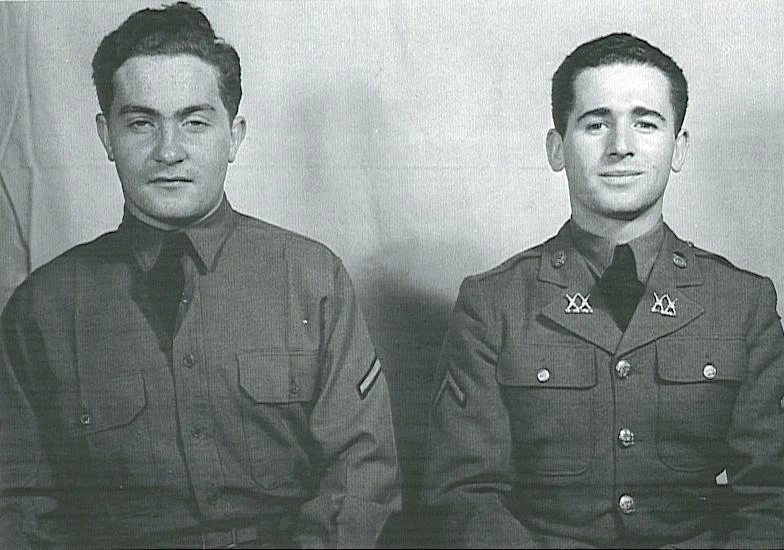
The summer service uniform for enlisted soldiers consisted of a khaki cotton shirt and summer trousers. Starting in the 1930s, the Army ceased issuing jackets for the summer service uniform. Initially, the khaki shirt could be worn both as summer field attire and as summer dress wear. From 1942 onward, the khaki shirt was largely replaced by the Herringbone Twill (HBT) fatigue uniform.
Military Hats
By the end of 1941, regulations stipulated that enlisted soldiers would no longer be issued visored caps (service caps). From then on, the only standard-issue military hats for enlisted personnel were the olive drab winter service cap or the khaki summer service cap.
Enlisted Soldier's Winter Service Cap

Enlisted Soldier's Summer Service Cap

When the U.S. Army first landed in France in 1917, they wore the M1912 visored cap (service cap). However, they quickly realized that this cap was ill-suited for battlefield conditions. Inspired by the caps worn by the French military at the time, the U.S. designed a simple, rectangular-shaped field cap, which was adopted in 1917. This cap was known as the "overseas cap" because it was issued exclusively to U.S. troops serving in Europe.
The overseas cap was discontinued in 1919 but gradually made a comeback and was worn by select units. Following the outbreak of World War II, it was reintroduced for widespread use across the entire army. Officially, this cap is known as the "garrison cap."
The garrison cap was made of olive drab or khaki cotton cloth. A distinctive unit insignia was worn on the left front, though after 1943, the production of newly commissioned distinctive unit insignia under government orders was suspended. The cap featured colored piping along its upper edge, with different color combinations representing different branches of the military.
Military Police Winter Garrison Cap

Armored Forces Summer Garrison Cap

Examples of U.S. Army Piping Colors


Officer's Service Uniform
In 1941, the winter service uniform for officers consisted of a wool tunic in the color OD 51-a deep olive green with a brownish tint. The tunic featured a four-button front closure and four flapped pockets (two chest pockets and two hip pockets), each secured by a button. Unlike the enlisted soldiers' winter service coat, the officer's chest pockets were designed with a box pleat, and the lower edge of the pocket flaps was shaped with two gentle curves.

The officer's winter service uniform was originally worn with a russet brown Sam Browne-style leather belt, which was not replaced by a cloth belt matching the uniform color until 1942. When wearing the winter service uniform, officers had the option to pair it with trousers made from the same fabric and color as the tunic. Alternatively, they could choose trousers in a light pinkish-brown shade known as OD 54, which created a distinct contrast with the uniform jacket. This combination was famously referred to as "pinks and greens." Officers were also authorized to wear the more durable enlisted winter service uniform in OD 33, though it was not to be mixed with the OD 51 or taupe-colored officer uniforms.

Service Uniform, Shirt, Trousers, and Shoes for Army Air Forces Officers

The officer's shirt differed from the enlisted version in that it featured shoulder straps secured by buttons. Officers also had a wider selection of shirt colors and materials to choose from. In 1941, the available shirts included khaki cotton or tropical worsted wool options, which could be worn with either summer or winter service uniforms. Wool shirts in OD 33 or OD 51 shades were intended to be paired with the winter service uniform. By 1944, shirts matching the trousers in OD 54 were also authorized for officers.
Similar to enlisted soldiers, officers wore black ties in winter and khaki ties in summer until February 1942, after which khaki ties became standard for all ranks. A khaki shirt was not to be worn as outerwear with wool trousers unless the shirt and trousers were of the same color.
Summer Service Uniform
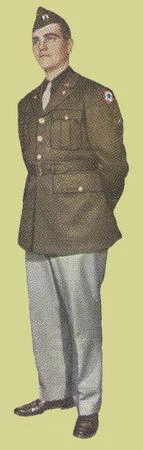
The officer's summer service uniform consisted of a khaki cotton tunic, similar in style to the enlisted soldier's summer uniform but distinguished by the addition of shoulder straps. Officers also had the option to purchase summer service uniforms made of khaki tropical worsted wool fabric. The cut and appearance of the summer uniform mirrored that of the winter service uniform, though it did not include the cloth belt typically worn with the winter version.

Summer Service Uniform
The officer's summer service uniform consisted of a khaki cotton tunic, similar in style to the enlisted soldier's summer uniform but distinguished by the addition of shoulder straps. Officers also had the option to purchase summer service uniforms made of khaki tropical worsted wool fabric. The cut and appearance of the summer uniform mirrored that of the winter service uniform, though it did not include the cloth belt typically worn with the winter version.
 Audie Murphy in 1948 wearing the officer's summer service uniform with full medals.

Military Hats
The service hats for officers included the service cap (visored cap) and the garrison cap.
The officer's service cap was in the color OD 51, with the cap band made of a checkered-pattern fabric. The visor and chin strap were crafted from russet brown leather, and the chin strap was secured on both sides of the cap band with two gold-colored buttons. A large metal United States coat of arms was prominently displayed on the front of the cap. For the officer's summer service uniform, there was a corresponding service cap with a khaki crown.
Inside the officer's service cap, a wire support was used to maintain the shape of the crown. If this wire support was removed, the crown would become very soft and could be easily reshaped by hand. This style of cap was known as the "crush cap" and was quite popular among officers.
Officer's Winter Service Cap with Wire Support

Officer's Winter Service Cap without Wire Support

Officer's Summer Service Cap without Wire Support

The officer's garrison cap was made of olive drab or khaki fabric, designed to be worn with the winter and summer service uniforms, respectively. The side upper edge of the officer's garrison cap featured gold and black piping, while general officers' caps were trimmed with gold piping only. The officer's rank insignia was worn on the left front of the cap.
Army Colonel's Summer Garrison Cap

Brigadier General's Garrison Cap

ield Uniform
During World War II, the U.S. Army continued the practice of using a standardized uniform system that combined elements of both service dress and field wear. It was believed that consolidating uniforms would save time and money. The field uniform configuration for temperate climates included the olive drab wool trousers, shirt, and russet leather boots from the service uniform, supplemented with canvas leggings, a helmet, and camouflage netting. Outerwear consisted of either the M1941 field jacket or the M1939 service coat. In the early stages of the war, the khaki cotton summer uniform served as the field attire for tropical climates.
M1941 Field Jacket
The M1941 field jacket was the field uniform used by the U.S. Army in the early years of World War II. Adopted in 1941, it gradually replaced the earlier field uniforms and was itself succeeded by the M1943 field jacket in 1943. Due to its widespread use, the M1941 field jacket became an iconic symbol of the American soldier during the war. Its official designation was "Jackets, Field, Olive-drab."

Before and after World War I, the U.S. Army required uniforms to serve a dual purpose: one set of clothing was expected to function as both service dress and field uniform. During World War I, the Army adopted the wool, stand-collar M1912 service coat. However, as time progressed, this uniform quickly proved inadequate for evolving wartime demands. By the late 1930s, the Army introduced a new uniform known as the M1939 service coat. Yet, it soon became evident that the M1939 service coat was still unsuitable for field use and was primarily worn during garrison duties.
On November 13, 1939, the Army Chief of Staff authorized the Army Uniform Board to develop a field jacket to replace the existing field uniform. Major General James K. Parsons suggested designing the field jacket based on civilian windbreakers (the first prototype was known as the "Parsons jacket"). Compared to earlier field uniforms, this jacket offered better wind and water resistance. Additionally, anticipating wartime wool shortages, it was designed to be made from alternative materials. In September 1940, an order for 15,000 field jackets was approved for testing. Formal testing of the field jacket began on October 7, 1940, and production approval was granted on November 26, 1940. The first mass-produced field jacket was manufactured on January 24, 1941, leading to its designation as the M1941 field jacket.

The M1941 field jacket was designed based on civilian windbreakers and consisted of an outer shell made of cotton poplin in color OD 2, paired with a dark olive wool flannel lining. The exterior of the M1941 field jacket was initially a light pea-green shade but would fade quickly with extensive use and sun exposure, turning into the more commonly seen khaki-green color.
The jacket featured a front closure with a combination of a zipper and buttons for dual fastening. The collar could be closed with a button at the neck. The hem on both sides and the cuffs were adjustable via buttons. The shoulders were equipped with shoulder straps and epaulets. Two large slanted handwarmer pockets were located on the front. Early versions of the field jacket lacked shoulder straps, and the two slanted pockets came with buttoned flaps. On May 6, 1941, shoulder straps were added, and the pocket flaps were removed.
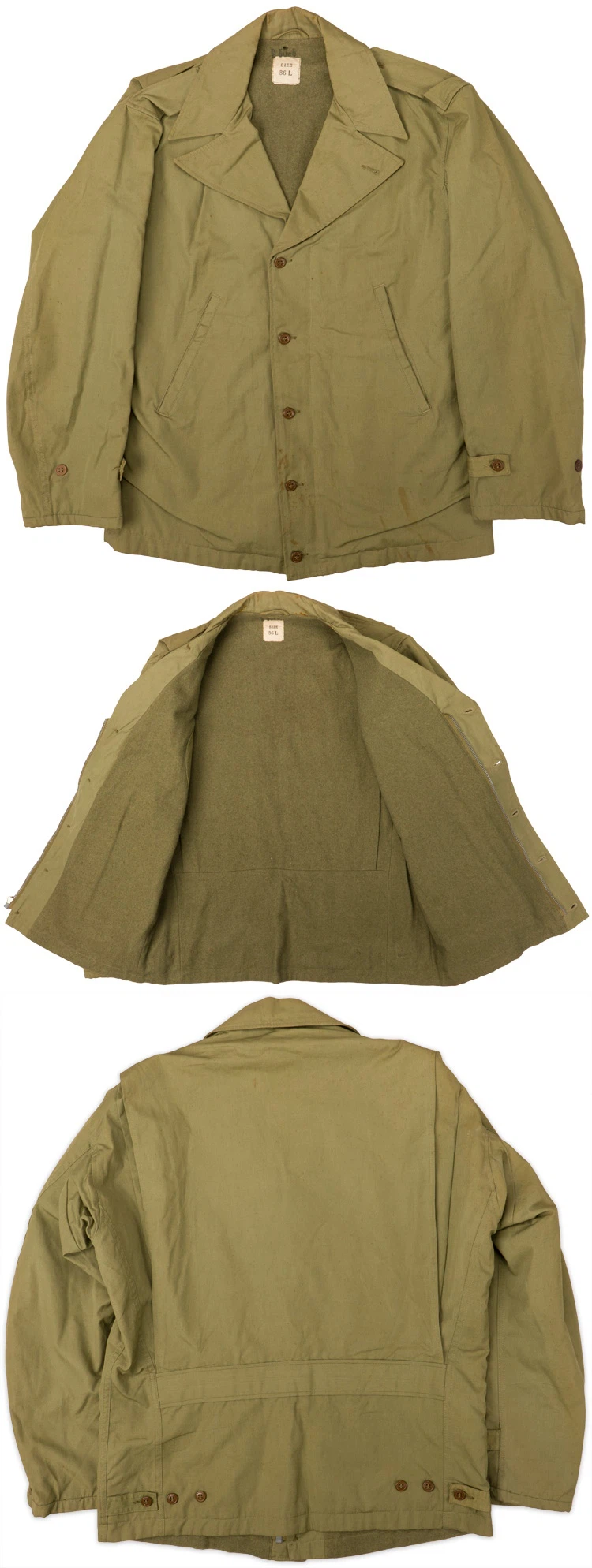
When the U.S. Army entered the war in 1941, the M1941 field jacket was worn by the majority of American soldiers, except for specialized units such as paratroopers and armored forces, which had their own distinct uniforms. However, in combat, the M1941 field jacket revealed several significant shortcomings. For instance, its lining provided inadequate warmth, and the lightweight outer shell offered little protection against wet weather and strong winds. Additionally, the jacket's exterior color faded quickly, compromising its camouflage effectiveness. Moreover, the outer fabric tended to reflect sunlight, leading many soldiers to wear the jacket inside out, with the darker olive-drab lining facing outward for better concealment.

On March 17, 1942, new specifications were issued, stipulating that the outer shell of the M1941 field jacket be made of khaki cotton twill. Procurement of this updated version officially began in April 1942. The M1941 field jacket was later replaced by the M1943 field jacket, with production officially discontinued on September 11, 1943, though existing stocks continued to be issued. The M1941 field jacket remained in use until the end of World War II and was even utilized during the Korean War.
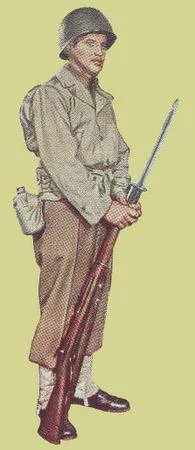
The M1941 field jacket also had a variant known as the Arctic field jacket. Its design was largely similar to the standard M1941 field jacket, but with an extended hem that reached the hips. The outer shell was made of waterproof cotton twill, and the lining was crafted from heavy wool. The waist and cuffs featured belt-style slide buckles for adjustment. The Arctic field jacket was issued during the Aleutian Islands Campaign, which took place from June 3, 1942, to August 15, 1943.

M1943 Field Jacket
The M1943 field jacket was a field uniform made of wind-resistant cotton sateen, introduced in 1943 with the aim of replacing various specialized uniforms and earlier field jackets, including the M1941 field jacket. It was primarily used during the later stages of World War II and throughout the Korean War.

Due to the numerous issues with the M1941 field jacket, and the fact that paratroopers and armored troops each had their own specialized uniforms-leading to difficulties in supply and production-the U.S. Army decided to adopt a standardized universal uniform. This became the M1943 field jacket.

The M1943 field jacket was longer than the M1941, with the hem extending to the upper thigh. It featured a detachable hood, a drawstring at the waist, and four buttoned-flap pockets-two on the chest and two on the hips. The jacket was produced in the color OD 7, which was darker and greener than that of the M1941 field jacket.

The trousers were made from the same cotton sateen material as the jacket, resembling khaki trousers but designed with a looser fit to enhance mobility and durability. The waistband included buttons for adjustment to tighten the waist as needed.
 To address winter warmth needs, the field jacket and trousers were originally designed to be lined with synthetic fur. However, the trouser linings were canceled in the final production stage, and existing wool trousers were used instead. The jacket lining consisted of a separate cotton jacket with two slanted pockets and large buttons for closure. In practice, this cotton liner was rarely issued and was soon replaced by the Eisenhower jacket.

To replace the earlier combination of leather boots and canvas leggings, the M1943 Combat Service Boot was introduced, which incorporated an integrated leather legging.
The M1943 Combat Service Boot stood approximately 10 inches tall (about 25.4 cm), with the shoe portion measuring 6 inches (about 15.24 cm) and the leather legging adding an additional 5 inches (about 12.7 cm). The shoe portion was made with a leather flesh side (inner surface), while the legging used a leather grain side (outer surface). The legging lining was constructed from canvas and featured two belt buckles, earning it the nickname "double-buckle boot." The outsole was made of synthetic rubber, while the midsole and insole were leather. The heel was also made of synthetic rubber.
Primarily intended for use with field uniforms in temperate climates, the M1943 Combat Service Boot was occasionally worn with both winter and summer service uniforms due to shortages of standard service footwear during the war.

Eisenhower Jacket
The Eisenhower Jacket, officially designated as the Olive Drab Wool Field Jacket, was a short wool field jacket developed by the U.S. Army in the later stages of World War II and named after General Dwight D. Eisenhower. It could be worn on its own, typically over a wool flannel shirt and wool sweater, or layered beneath the M1943 field jacket as an insulating garment.
 In the early stages of the U.S. military's involvement in World War II, soldiers wore both the M1939 service coat and the M1941 field jacket in combat. However, these two uniforms revealed significant shortcomings in the field, including inadequate warmth, poor durability, and limited mobility. As a result, in early 1943, the U.S. Army decided to develop a new universal field uniform to replace the earlier garments.

The European Theater of Operations (ETO) headquarters proposed the development of a short wool jacket. Based on the design of the British battle dress, this jacket was intended for both everyday and combat use. Made from heavy, coarse wool, it offered reliable warmth while also being stylish. Meanwhile, the Office of the Quartermaster General-the branch responsible for developing, procuring, and classifying clothing and equipment for the U.S. Army-recommended the creation of a separate field uniform. This uniform would be made from windproof and water-resistant materials and utilize a layering system, allowing soldiers to adapt to various climatic conditions. This concept later evolved into the M1943 field jacket.
Officer's Eisenhower Jacket

The final outcome was that the M1943 field jacket became the new generation of field uniform for the U.S. Army. General Eisenhower, aligning with the perspective of the European Theater of Operations headquarters, also strongly advocated for the wool short jacket and had adopted it early on as part of his own official military attire. As early as 1943, Eisenhower wrote to lobby Army Chief of Staff General Marshall on its behalf. On March 17, 1944, he once again urged the War Department to adopt the wool short jacket for use in the European Theater. Finally, on May 12, 1944, the U.S. Army officially approved the wool short jacket, designating it as the "Olive Drab Wool Field Jacket." Due to Eisenhower's persistent advocacy, it became widely known as the "Eisenhower Jacket."
Enlisted Soldier's Eisenhower Jacket

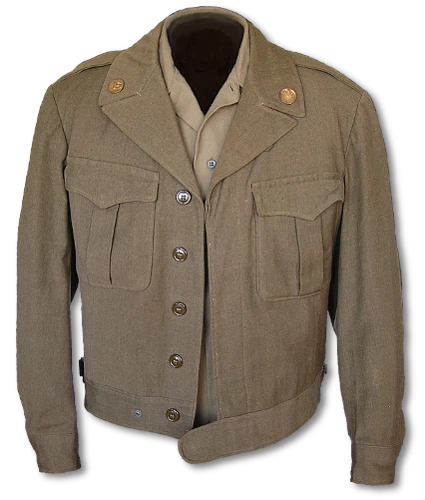
The Eisenhower Jacket was made of olive drab wool serge. It featured a notched lapel collar that could be buttoned closed. The length reached the waist, with a slide buckle at the waist for adjustment. The front closure consisted of six concealed buttons. The cuffs were equipped with buttons for size adjustment. The chest area had two buttoned-flap pockets, each with a box pleat in the center. Shoulder straps were also included.
Detailed Illustration of the Eisenhower Jacket

The Eisenhower Jacket was classified as a field uniform and could be worn on its own, typically layered over a wool flannel shirt and a wool sweater. During winter, it was worn underneath the M1943 field jacket as an insulating layer for added warmth.
Eisenhower Jacket Worn Over a Wool Flannel Shirt
Eisenhower and the original jacket he wore

Chris Evans, the actor who portrays Captain America, wears an Eisenhower jacket.

HBT Fatigue Uniform
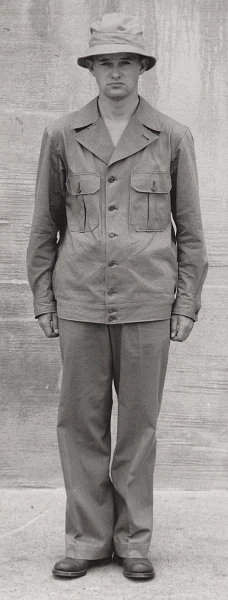
The U.S. Army issued a fatigue uniform made from 8.2-ounce heavyweight cotton herringbone twill (HBT) fabric. The HBT uniform consisted of a jacket, trousers, and a cap. Originally designed to be worn over wool or cotton service uniforms to protect them during work details, it was soon discovered that the HBT uniform was more suitable than wool garments in hot weather. As a result, American soldiers in nearly every theater adopted the HBT uniform as their summer field attire.

HBT Fatigue Uniform
The U.S. Army issued a fatigue uniform made from 8.2-ounce heavyweight cotton herringbone twill (HBT) fabric. The HBT uniform consisted of a jacket, trousers, and a cap. Originally designed to be worn over wool or cotton service uniforms to protect them during work details, it was soon discovered that the HBT uniform was more suitable than wool garments in hot weather. As a result, American soldiers in nearly every theater adopted the HBT uniform as their summer field attire.

HBT Round Cap

Paratrooper Uniform
In the early stages of the war, U.S. Army paratroopers wore a distinctive M1942 jump uniform designed to meet the specific demands of airborne operations. The M1942 jump uniform consisted of a jacket and trousers. The jacket featured four pockets in total-two on the chest and two on the hips-each with a flap secured by two snap buttons. Near the front closure below the collar, there was a double-zippered knife pocket specifically intended for carrying a spring-assisted knife. The trousers included five internal pockets, with one large patch pocket on each thigh, also fastened with two snap buttons.

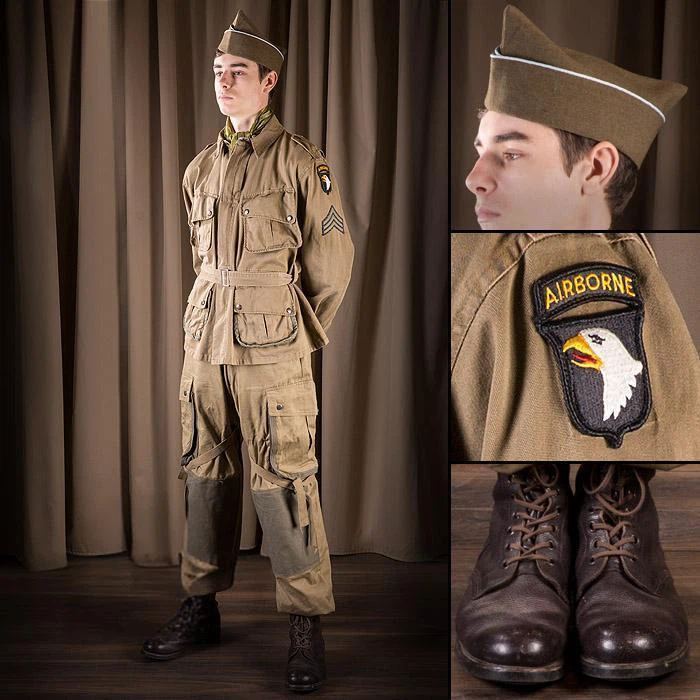
Prior to the Normandy landings, the U.S. Army issued an improved version of the M1942 jump uniform, reinforced with canvas patches at the elbows, knees, and shins. During the Normandy campaign, the majority of paratroopers wore the M1942 jump uniform, and it continued in use until the final stages of the war, when it was gradually replaced by the M1943 field jacket.

Military Boots
Before the introduction of the M1943 Combat Service Boot, the U.S. Army issued three main types of military boots, designated as Type I, Type II, and Type III.
The Type I boot was officially named the "Shoes, Service, Composition Sole." It was an ankle-high field boot made of russet-dyed tanned leather, featuring a synthetic rubber heel and a leather sole.

However, field exercises conducted between 1940 and 1941 revealed that the leather soles of the Type I boots would wear out after just two to three weeks of use. To address this issue, the U.S. Army introduced a synthetic rubber sole, which involved adding a layer of synthetic rubber over the forefoot of the leather sole. With this improvement, the expected lifespan of the sole was effectively doubled. This updated design became known as the Type II boot. The U.S. Army began procuring the Type II boot in September 1941, though procurement of the Type I boot continued until December of the same year.

In January 1943, the Type III boot was introduced, officially designated as "Shoes, Service, Reverse Upper, Composition Sole." The Type III boot was an improved version of the Type II, featuring a full synthetic rubber sole and heel. The upper was made with the flesh side of the leather outward and treated with waterproofing wax to enhance its water resistance. Once the Type III boot began to be issued to soldiers deployed overseas, the Type I and Type II boots were restricted to issuance within the continental United States only.

All three types of boots were intended to be worn with the M1938 olive drab dismounted canvas leggings.


The U.S. Army also issued the M1942 Jungle Boot for soldiers serving in the China-Burma-India and Pacific theaters. This boot featured a synthetic rubber sole, a canvas upper, and high lacing, designed specifically for use in tropical and jungle environments.

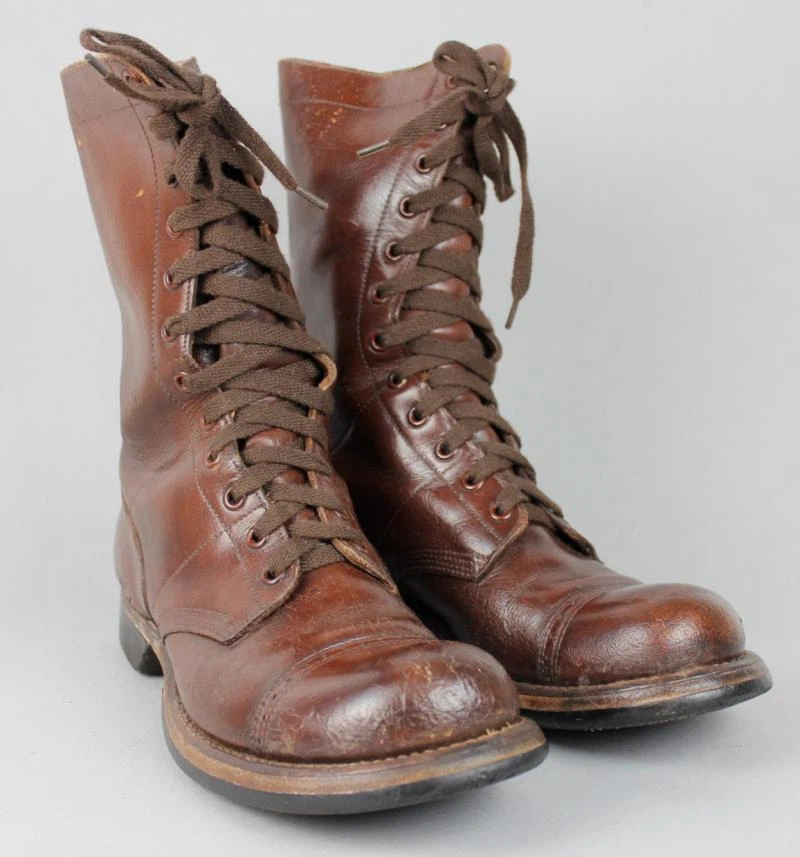
U.S. paratrooper units were also issued the M1942 Jump Boot in 1942, featuring a synthetic rubber sole, a leather upper, and high lacing. The jump boot was characterized by reinforced uppers designed to support the ankles during parachute landings, a black rubber lug sole for traction, and a beveled heel edge to prevent parachute rigging lines from snagging on the boot. Although the M1942 jump boot was soon replaced by the M1943 Combat Service Boot, it continued to be worn by U.S. paratroopers until the end of World War II.